
Favourite Shampoo
"This is my favourite shampoo bar because olive oil is the first ingredient and I find olive oil very good for my Mediterranean skin. I will surely keep buying it."


Un jabón facial y corporal sin perfume, perfecto incluso para las pieles más sensibles. Una mezcla de ingredientes naturales sencillos, como aceite de oliva rico en escualeno, manteca de cacao nutritiva y aceite de babasú hidratante, crea un jabón suave e hidratante que ayuda a calmar y reconfortar la piel.


Good For: All Hair Types · Frizzy Hair · Body & Bounce · Coconut Oil Sensitivity
Ideal for first-time shampoo bar users.
Cocoa Butter & Olive is a study in simplicity. This natural shampoo bar was created for people who appreciate minimal formulas and a gentle, uncomplicated approach to washing hair.
Extra virgin olive oil forms the foundation of the bar, lending a smooth, conditioning character. Babassu oil adds creaminess and lift to the lather, giving the wash a rich, satisfying feel. Unrefined cocoa butter contributes structure and softness, shaping the bar’s signature creamy wash and its naturally warm, comforting character.
The result is a nourishing shampoo bar that’s gentle enough for daily use, easy on sensitive scalps, and versatile across many hair types.
There are no essential oils and no added fragrance — just the subtle, familiar aroma of natural cocoa butter.
Soft, warm, and lightly sweet in a natural way, offering a comforting scent for those who prefer unscented hair care or are sensitive to essential oils.
The bar glides easily over wet hair, producing a lush, creamy lather that builds quickly without feeling fussy. The wash feels soft and cushioned on the scalp. After rinsing, hair feels clean yet comfortable — smooth through the lengths and lightly conditioned. Despite its simplicity, it’s the kind of bar that works beautifully across many hair types, often becoming a quiet favorite for people who never expected to love a shampoo bar at all.
Every ingredient has a purpose, working together to create a balanced, refined shampoo bar for hair and scalp.
Highlights of this formula:
Cocoa Butter & Olive is proof that a shampoo bar doesn’t need a long ingredient list to be exceptional. Its simplicity is intentional, its feel unmistakable, and its appeal surprisingly broad — making it a wonderful choice for both longtime bar users and those trying one for the first time
Creamy lather. Gentle simplicity. Quietly beautiful hair.
🍃 NATURAL, VEGAN & ECO-FRIENDLY
Made without synthetic ingredients, fragrance oils, dyes, sulfates, silicones, or preservatives.
Packaged plastic-free in recyclable boxes for a zero-waste, eco-friendly choice.
Crafted with biodegradable, cruelty-free ingredients, including Certified Organic and non-GMO materials, responsibly sourced and ethically traded.
🍃 BIG & TRAVEL-FRIENDLY
Each bar weighs 5.6 oz (159 g) — long-lasting and TSA-friendly. Suitable for travel, the gym, or camping, and versatile enough to double as a body soap or shaving bar.
A sulfate-free, silicone-free, paraben-free natural shampoo
👉 Learn more, read The Ultimate Guide to Natural Shampoo Bars: Answers to Common Questions
Finding the right bar is important but we believe that using the proper technique to wash your hair is the best way to ensure a successful transition from synthetic shampoo to natural shampoo bars.
Our natural shampoo bars are a lot more concentrated than liquid shampoos. They contain extra oils and butters to nourish hair.
If you do not build a nice lather and rinse really well you will have areas that remain coated with the soap oils, which can make it look or feel “gummy.”
***Notice in the techniques below that we do NOT recommend lathering up the length of your hair with the shampoo bar. As you use your fingers to rinse the lather through the strands, there is enough shampoo to clean the length. These techniques help prevent coating your hair strands with shampoo residue.
If you are new to shampoo bars please our blog, "How to Use a Natural Shampoo Bar" for more detailed information.
This technique helps prevent pockets of shampoo residue in the length of your hair especially if you have long or thick hair.
Wet Hair: One of the most important steps is to begin with thoroughly wet hair--I mean a lot of water. Be sure that the water saturates your hair all the way down to the roots.
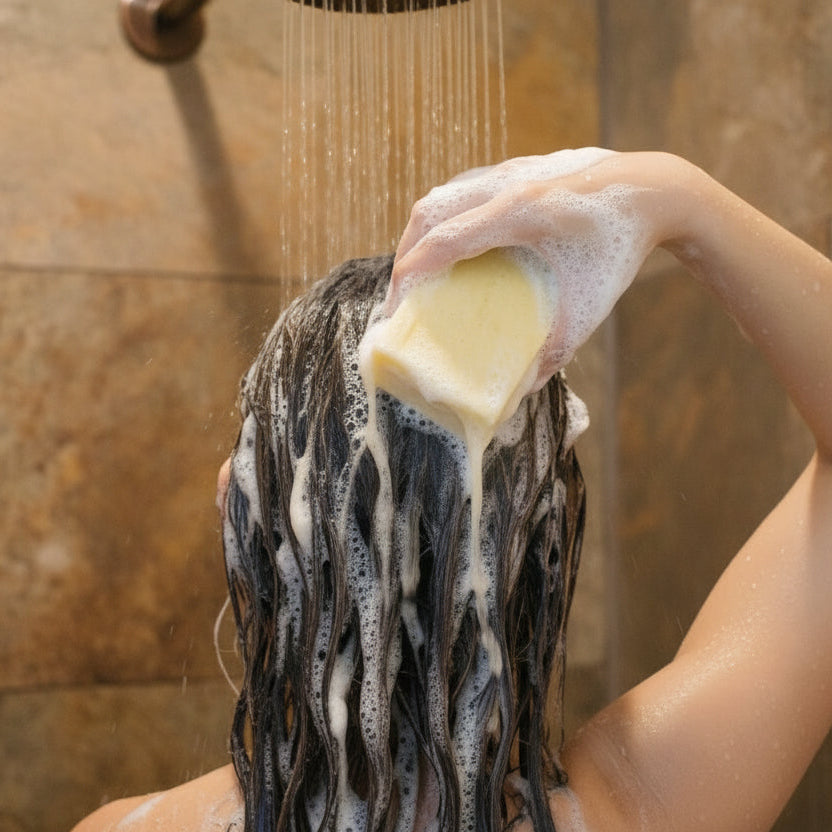
Create the Lather: There are two possible ways both of which help prevent pockets of shampoo residue left in your hair that can make hair feel tacky.
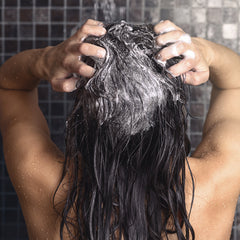 Massage the Lather into your Scalp only at the roots of the hair until you work up a really good lather
Using your Fingers like a Comb: smooth the lather down the length of your hair as you rinse with water. To prevent tangles, be sure to always work from the top down, use your fingers like a comb, not a mixer, and don't pile your hair on your head,
Rinse, rinse, rinse, rinse and rinse again. I cannot stress how important this step is to shampoo bar success. In order to remove the excess shampoo, which can leave a filmy feeling and weigh hair down, do NOT rush this step! The rinsing should take longer than washing and lathering time.
If your hair has a residue before or after shampooing, use an Apple Cider Vinegar Rinse or a baking soda clarifying rinse.

The goal is simple: to Harness the Power & Simplicity of Nature® to cleanse, soothe, heal, and protect your skin and hair!
Our unique formulas rely on moisturizing oils and butters, healing botanicals, and pure essential oils. We choose every ingredient with one end-result in mind….the BEST possible natural skin care for YOU!
 Organic Extra Virgin Aceite de oliva
 Organic Manteca de cacao*
 Organic Babassu Oil
|
*Ingredient is Fair Trade Certified ^Used in the saponification process to turn oil into soap and glycerin. None remains in the finished product.
Made with certified organic Extra Virgin Olive Oil, Cocoa Butter and Babassu Oil
|
Overall rating: 4.625 / 5 from 16 reviews.
Review topics: ["hair","ingredients","smells","shampoo bar","shampoo","bar","brand","curls"].
"This is my favourite shampoo bar because olive oil is the first ingredient and I find olive oil very good for my Mediterranean skin. I will surely keep buying it."
— Hiroshi (5/5)
"I have many bars now, and they r fragrance free, moisturizing, AND DONT MAKE MY FACE BREAK OUT!!! I love the brand :)"
— Jazmin R. (5/5)
"Having used shampoo bars for years I’ve found with my thin 2A hair that I have the best luck lathering on my hair. This is kind of hard with the shape of this bar (as when new it’s actually larger than my hand) - I think I’m going to cut it in half to make it easier to use. Really love the ingredients listed here as they’re not only natural but really good for hair health"
— Susan (4/5)
"I was searching for soap for my daughter who has reactions to soaps made with coconut products, which most soaps these days are. She tried the soap and is very happy with it. Thank you!"
— Mary V. (5/5)
"I really really wanted to like these bars but It left my hair so tangled (even when dry, no matter how much i brushed) and waxy. It's probably user error and i gave up after a week but even with a viniger rinse my hair was left waxy (too waxy to run my fingers through to de-tanlge while rinsing) and my hair ended up a bit of a sensory nightmare. Anyways, if youre willing to work through the tough phase im sure this is a great product, but if not, maybe try a brand with conditioner bars too? I dont know."
— Victoria (2/5)
"Great product. But every time you send me promo coupons they don't work. Soo. It's a bit disappointing"
— Julianna K. (5/5)
"I truly am enjoying the smell of the product and the fact it’s organic. I have 2a hair and I am struggling with the grimy feel."
— Rita K. (5/5)
"I’m loving this new shampoo bar! They’re right about a cushiony lather - it’s incredible! It rinses well, leaving my hair squeaky clean …but not in a stripped way. My hair is shiny and soft to the touch. This shampoo bar doesn’t leave a filmy build up like with other formulas."
— Christina R. (5/5)
"This is my first time using a bar shampoo. I made the switch to move away from harmful chemicals in other shampoos. It lathers very well and rinses clean. My hair hasn't felt this clean probably since I was a kid (I'm 55). I think it does take a bit of time to get used to it and I will buy this one again."
— Katherine K. (5/5)
"I have a new favorite shampoo!! It has a very mild smell. The feel of the shampoo is very nice!! I have wavy hair And this suits it nicely!! Thanks again for another great product!!!"
— Michelle B. (5/5)
¡Sí y no!
Aunque los jabones naturales hechos a mano suelen mejorar con el tiempo, recomendamos usarlos dentro de los 12 meses posteriores a su compra. Nuestros jabones perfumados deben usarse dentro de los 3 meses posteriores a su extracción de la caja.
Aunque los jabones no se "estropearán" después de ese tiempo, es posible que notes algunos cambios a medida que el jabón natural envejece.
Los cambios de color y aroma ocurren aún más rápido en nuestras barras de tamaño de muestra .
Estas pequeñas pastillas de jabón natural tienen una relación superficie-volumen mucho mayor, lo que permite que los aceites esenciales se evaporen más rápidamente. Sin embargo, el aroma puede permanecer presente al enjabonarse.
Encontré unas pastillas antiguas escondidas en mi armario. El aroma había desaparecido, ¡pero la espuma era increíble!
Para una discusión más detallada, lea nuestro blog, "La vida útil, el color y el aroma de un jabón totalmente natural".
El etiquetado de "certificado orgánico" fue desarrollado por el USDA y se refiere a las afirmaciones y al etiquetado de productos orgánicos en alimentos y productos de cuidado personal en Estados Unidos. El USDA tiene directrices muy estrictas sobre el porcentaje de ingredientes orgánicos necesario para obtener la certificación. Otros países tienen sus propios procedimientos, requisitos y estándares de certificación. Los criterios de etiquetado y los ingredientes permitidos difieren de los de EE. UU.
 La etiqueta del logotipo orgánico del USDA se puede utilizar en productos que cumplen con los estándares de los dos primeros niveles del sistema de etiquetado orgánico en el que entre el 95 y el 100 % de los ingredientes están certificados como orgánicos.
¡La mayoría de nuestros productos sin jabón entran en esta categoría y muestran el logotipo del USDA!
 En nuestra empresa utilizamos el sello de producto orgánico certificado por OEFFA por dos motivos...
Jabones y champús: Estos productos contienen al menos un 8% de hidróxido de sodio debido al proceso de elaboración . Nuestro jabón "orgánico" contiene entre un 87% y un 92% de ingredientes orgánicos, pero el estándar del USDA establece que un producto debe estar elaborado con un 95%-100% de ingredientes orgánicos para ostentar el sello de "Certificación Orgánica del USDA" (ver arriba). Tampoco se nos permite usar la palabra "jabón orgánico" en la etiqueta.
Ingredientes recolectados de forma silvestre: cuando se utiliza cualquier ingrediente agrícola (cualquier ingrediente que tenga un origen biológico) que no esté certificado como orgánico, se aplican las mismas reglas de etiquetado que usamos para el jabón.
Las normas del USDA para el etiquetado adecuado establecen que los productos pueden llevar el logotipo del agente certificador, pero no el logotipo orgánico del USDA. Nuestra agencia certificadora del USDA es la OEFFA (Asociación de Alimentos y Granjas Ecológicas de Ohio) . Su logotipo aparece en nuestros jabones y champús "orgánicos".
¿Por qué algunas empresas de jabón usan la palabra "orgánico" en sus etiquetas, aunque sea ilegal? ¡Haga clic aquí para leer más sobre las normas para el etiquetado orgánico de jabones!
En ocasiones, utilizamos un símbolo no oficial para productos elaborados con ingredientes "naturales" que no cumplen con los criterios de ninguna de las etiquetas mencionadas anteriormente. Es posible que vea este tipo de símbolo en productos como los jabones para pies de arcilla negra del Mar Muerto, carbón de bambú y lufa pómez, y nuestras barras de champú de barro y arcilla y carbón con romero y menta.
La certificación orgánica se basa en estándares de agricultura y ganadería orgánica. Por lo tanto, la lista de ingredientes no agrícolas permitidos (como arcilla, sal, lodo, etc.) se basa en las materias primas utilizadas en la agricultura o la producción de alimentos. Lamentablemente, ingredientes como algunas arcillas, piedra pómez, lodo del Mar Muerto y carbón de bambú no se utilizan en la agricultura ni en la producción de alimentos y, por lo tanto, no aparecen en la lista.
Aunque parezca larga, esta es en realidad una descripción muy breve. Para obtener información más detallada, lea " ¿Qué significan todas las etiquetas orgánicas? ".


Descubre los beneficios de las pastillas de champú naturales, desde sus ingredientes vegetales hasta su embalaje ecológico. Conoce su historia, su elaboración y la diferencia entre las pastillas de champú a base de jabón natural y las que contienen detergente.
Read Post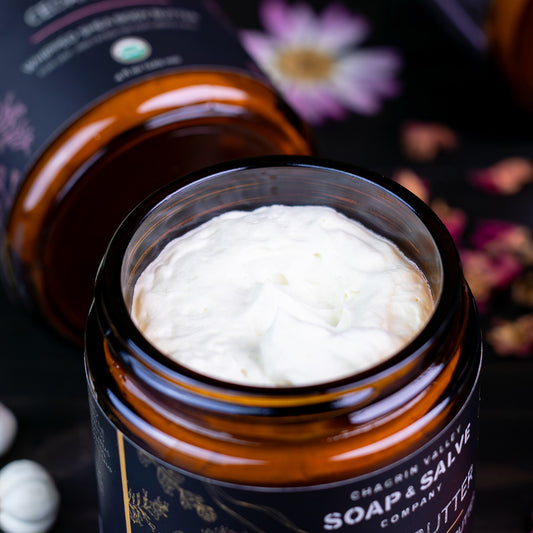
El cabello seco puede ser frustrante, pero comprender sus causas y tomar medidas proactivas puede ayudarte a revitalizarlo. Al reconocer los signos de sequedad, incorporar rutinas de cuidado capilar nutritivas y usar productos efectivos, puedes transformar un cabello quebradizo y sin brillo en una melena suave y vibrante.
Read Post
¿Qué es un champú seco? ¿Cómo funciona? ¿Cómo se usa un champú seco? ¿Son todos los champús secos iguales? En este blog, espero responder a todas tus preguntas sobre el champú seco.
Read Post