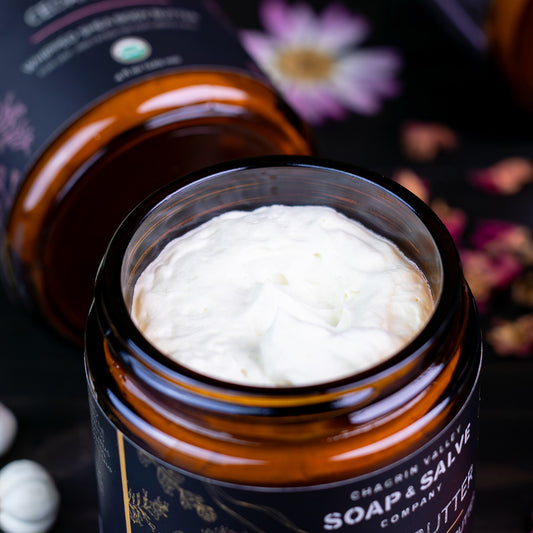
Cocoa Butter & Olive natural shampoo bar with packaging on a wooden surface.
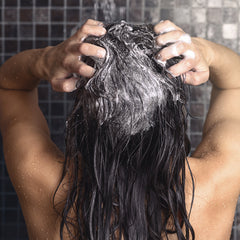
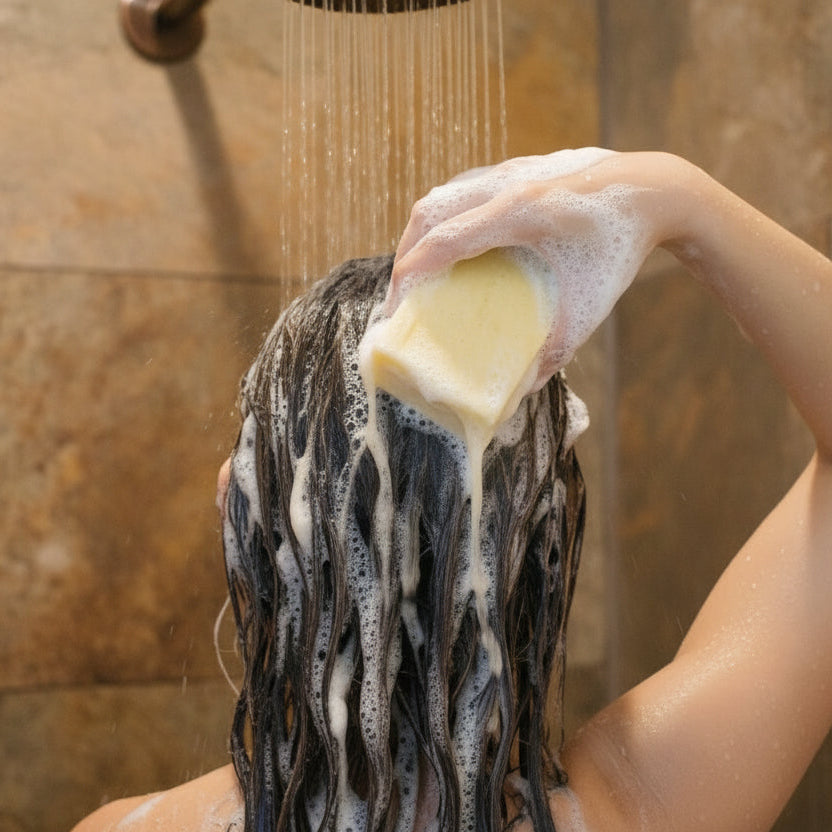
Person washing hair with a shampoo bar in a shower.

Naturseife: Kastilien & Kakao

Eine parfümfreie Gesichts- und Körperseife, perfekt für selbst empfindlichste Haut. Eine Mischung aus einfachen natürlichen Inhaltsstoffen, darunter squalenreiches Olivenöl, pflegende Kakaobutter und feuchtigkeitsspendendes Babassuöl, ergibt eine milde, feuchtigkeitsspendende Seife, die die Haut beruhigt und pflegt.

Titel:
$11.95
oeffa
vegan
cruelty-free
non-gmo
made-in-the-usa
Product Overview

Good For: All Hair Types · Frizzy Hair · Body & Bounce · Coconut Oil Sensitivity

Ideal for first-time shampoo bar users.

Cocoa Butter & Olive is a study in simplicity. This natural shampoo bar was created for people who appreciate minimal formulas and a gentle, uncomplicated approach to washing hair.

Extra virgin olive oil forms the foundation of the bar, lending a smooth, conditioning character that has been valued in traditional hair care for generations. Babassu oil brings creaminess and lift to the lather, helping the bar feel rich and satisfying in use. Unrefined cocoa butter adds structure and softness, contributing to the bar’s signature creamy wash and its naturally warm, comforting aroma.

There are no essential oils and no added fragrance — just the subtle, familiar scent of cocoa butter itself. The absence of added scent allows the ingredients to take center stage and makes this bar especially appealing to those who prefer unscented hair care or are sensitive to essential oils.

As you use it, the bar glides easily over wet hair and produces a lush, super-rich, creamy lather that builds readily without feeling fussy. Despite its simplicity, this is one of those rare bars that seems to work beautifully across many hair types — often becoming a quiet favorite for people who didn’t expect to love a shampoo bar at all.


Ingredients Behind the Bar

Every ingredient has a purpose, working together to create a balanced, refined shampoo bar for hair and scalp.

Highlights of this formula:

  • Extra Virgin Olive Oil: Contributes a smooth, lotion-like lather, brings a naturally soft conditioning quality to the bar, and supports a gentle, balanced wash.
  • Babassu Oil — Brings a light, airy smoothness to the lather and contributes a naturally soothing touch that helps the scalp feel calm and balanced,  while also adding body and manageability — especially to hair that feels dry or limp.
  • Cocoa Butter — Helps create a firm, long-lasting bar with a creamy, stable lather and a gentle, nourishing cleanse, along with its warm, familiar cocoa aroma

Cocoa Butter & Olive is proof that a shampoo bar doesn’t need a long ingredient list to be exceptional. Its simplicity is intentional, its feel unmistakable, and its appeal surprisingly broad — making it a wonderful choice for both longtime bar users and those trying one for the first time

Creamy lather. Gentle simplicity. Quietly beautiful hair.


🍃 NATURAL, VEGAN & ECO-FRIENDLY

Made without synthetic ingredients, fragrance oils, dyes, sulfates, silicones, or preservatives.

Packaged plastic-free in recyclable boxes for a zero-waste, eco-friendly choice.

Crafted with biodegradable, cruelty-free ingredients, including Certified Organic and non-GMO materials, responsibly sourced and ethically traded.

🍃 BIG & TRAVEL-FRIENDLY

Each bar weighs 5.6 oz (159 g) — long-lasting and TSA-friendly. Suitable for travel, the gym, or camping, and versatile enough to double as a body soap or shaving bar.

A sulfate-free, silicone-free, paraben-free natural shampoo

👉 Learn more, read The Ultimate Guide to Natural Shampoo Bars: Answers to Common Questions

How To Use

Why Is A Shampooing Technique Important?

Finding the right bar is important  but we believe that using the proper technique to wash your hair is  the best way to ensure a successful transition from synthetic shampoo to natural shampoo bars.

Our natural shampoo bars are a lot more concentrated than liquid shampoos. They contain extra oils and butters to nourish hair.

If you do not build a nice lather and rinse really well you will have areas that remain coated with the soap oils, which can make it look or feel “gummy.”

***Notice in the techniques below that we do NOT recommend lathering up the length of your hair with the shampoo bar. As you use your fingers to rinse the lather through the strands, there is enough shampoo to clean the length. These techniques help prevent coating your hair strands with shampoo residue.

If you are new to shampoo bars please our blog, "How to Use a Natural Shampoo Bar" for more detailed information. 


Our Favorite Technique

This technique helps prevent pockets of shampoo residue in the length of your hair especially if you have long or thick hair. 


Wet Hair: One of the most important steps is to begin with thoroughly wet hair--I mean a lot of water. Be sure that the water saturates your hair all the way down to the roots.


Create the Lather: There are two possible ways both of which help prevent pockets of shampoo residue left in your hair that can make hair feel tacky.

  • Create a nice foamy lather by rubbing the wet bar between your hands and use only the lather to wash your scalp. This is the best method for people with thick hair, curly hair, coarse coily/kinky hair, and those new to shampoo bars.
  • Create a nice foamy lather by rubbing the shampoo bar on the TOP of your head only. Rub in only one direction to prevent tangling. This method can work well for thinner hair types. 


How To Lather Using a Natural Shampoo BarMassage the Lather into your Scalp only at the roots of the hair until you work up a really good lather

  • It is very important to work the shampoo into your scalp with water and really build up a good lather so there are no patches of shampoo left on your hair.
  • Lathering up also allows the dirt and extra oils to be washed away.
  • If the lather is not foamy enough, add more water.

Using your Fingers like a Comb: smooth the lather down the length of your hair as you rinse with water. To prevent tangles, be sure to always work from the top down, use your fingers like a comb, not a mixer, and don't pile your hair on your head,


Rinse, rinse, rinse, rinse and rinse again. I cannot stress how important this step is to shampoo bar success. In order to remove the excess shampoo, which can leave a filmy feeling and weigh hair down, do NOT rush this step! The rinsing should take longer than washing and lathering time.

  • If your hair is long or thick, lift up sections of your hair to ensure that all of the shampoo is rinsed clean.
  • Don’t neglect parts of your head that are more difficult to reach, such as the nape of your neck or the back of your head.
  • Repeat if desired.

If your hair has a residue before or after shampooing, use an Apple Cider Vinegar Rinse or a baking soda clarifying rinse

FAQs

Häufig gestellte Fragen

Haben Ihre Naturseifen- und Shampoo-Riegel ein Verfallsdatum?

Die kurze Antwort

Jein!

Obwohl handgemachte Naturseifen mit der Zeit in der Regel besser werden, empfehlen wir, unsere Seifen innerhalb von 12 Monaten nach dem Kauf zu verbrauchen. Unsere Duftseifen sollten innerhalb von 3 Monaten nach dem Auspacken verbraucht werden.

Obwohl die Seifen nach dieser Zeit nicht „verdorben“ sind, können Sie mit zunehmendem Alter der Naturseife einige Veränderungen feststellen.

  • einige natürliche Farben können mit der Zeit verblassen
  • Die Düfte aus rein natürlichen ätherischen Ölen verfliegen mit der Zeit


Bei unseren Probierriegeln erfolgen die Veränderungen von Farbe und Duft sogar noch schneller.

Diese kleinen Naturseifenstücke haben ein deutlich größeres Verhältnis von Oberfläche zu Volumen, wodurch ätherische Öle schneller verdunsten können. Der Duft kann jedoch beim Einseifen noch vorhanden sein.

Ich habe in meinem Schrank ein paar uralte Seifenstücke gefunden, die schon Jahre alt waren. Der Duft war verschwunden, aber der Schaum war unglaublich!


Die lange Antwort

Eine ausführlichere Diskussion finden Sie in unserem Blog „Haltbarkeit, Farbe und Duft einer Naturseife“.


So können Sie die Haltbarkeit verlängern

  • Naturseifen müssen atmen. Luft fördert das Aushärten der Seife und trägt zu ihrer länger anhaltenden Qualität bei. Seife sollte unverpackt in der Schachtel aufbewahrt oder in atmungsaktives Material eingewickelt werden. Enge Verpackungen verhindern die Verdunstung von Feuchtigkeit und sorgen so für feuchte Bedingungen.

  • Unsere Seifen sind in atmungsaktiven, recycelbaren und nachhaltigen Verpackungen verpackt! Bewahren Sie Ihre handgemachten Naturseifen an einem trockenen, kühlen Ort auf, fern von Sonnenlicht, übermäßiger Hitze und Feuchtigkeit.

  • Unsere Duftseifen, beispielsweise Lavendel-Rosmarin, können in einen Musselinbeutel, eine alte, saubere Socke oder in ein Stück Stoff gewickelt in Ihren Wäscheschrank oder Ihre Kommodenschublade gelegt werden, um Ihrer Wäsche und Kleidung einen herrlichen Duft zu verleihen, während sie auf ihren Gebrauch warten.

View Answer Page
Was bedeuten die verschiedenen Bio-Symbole?

Wir verwenden auf unserer Website zwei verschiedene Bio-Symbole.

Jedes Symbol hat eine einzigartige Bedeutung!

Bio-Siegel

Die Kennzeichnung „Bio-zertifiziert“ wurde vom US-Landwirtschaftsministerium (USDA) entwickelt und bezieht sich auf Bio-Aussagen und -Kennzeichnungen auf Lebensmitteln und Körperpflegeprodukten in den USA. Das USDA hat sehr strenge Richtlinien für den Anteil an Bio-Zutaten, der für eine Bio-Zertifizierung erforderlich ist. Andere Länder haben eigene Zertifizierungsverfahren, Anforderungen und Standards. Kennzeichnungskriterien und zulässige Inhaltsstoffe unterscheiden sich von denen in den USA.

USDA-Logo für zertifizierte Bio-Hautpflege Das USDA Organic Logo Label kann auf Produkten verwendet werden, die den Standards der ersten beiden Stufen des Bio-Kennzeichnungssystems entsprechen, bei dem 95 – 100 % der Zutaten aus kontrolliert biologischem Anbau stammen.

Die meisten unserer Nicht-Seifenprodukte fallen in diese Kategorie und tragen das USDA-Logo!

OEFFA ist eine vom USDA akkreditierte Bio-Zertifizierungsstelle Das Label „Certified Organic by OEFFA“ wird in unserem Unternehmen aus zwei Gründen verwendet …

Seifen und Shampoos: Diese Produkte enthalten aufgrund der Seifenherstellung mindestens 8 % Natriumhydroxid. Unsere Bio-Seife besteht zu 87 bis 92 % aus biologischem Anbau . Der USDA-Standard schreibt jedoch vor, dass ein Produkt zu 95 bis 100 % aus biologischen Inhaltsstoffen bestehen muss, um das oben abgebildete USDA-Siegel „Certified Organic“ tragen zu dürfen. Wir dürfen den Begriff „Bio-Seife“ auf dem Etikett nicht verwenden.

Wild geerntete Zutaten: Bei der Verwendung landwirtschaftlicher Zutaten (Zutaten biologischen Ursprungs), die nicht als biologisch zertifiziert sind, gelten die gleichen Kennzeichnungsregeln wie für Seife.

Die USDA-Regeln für eine ordnungsgemäße Kennzeichnung besagen, dass die Produkte das Logo der Zertifizierungsstelle, jedoch nicht das USDA-Bio-Logo tragen dürfen. Unsere USDA-Zertifizierungsstelle ist die OEFFA (The Ohio Ecological Food and Farm Association) . Ihr Logo ist auf unseren Bio-Seifen und -Shampoos abgebildet.

Warum verwenden manche Seifenhersteller den Begriff „Bio“ auf ihren Etiketten, obwohl dies gegen die Vorschriften verstößt? Klicken Sie hier, um mehr über die Vorschriften zur Bio-Kennzeichnung von Seife zu erfahren!

Inoffizielle Labels

Wir verwenden manchmal ein inoffizielles Symbol für Produkte mit „natürlichen“ Inhaltsstoffen, die die Kriterien der oben genannten Bezeichnungen nicht erfüllen. Sie finden dieses Symbol beispielsweise auf Produkten wie den Fußseifen mit schwarzer Tonerde aus dem Toten Meer, Bambuskohle und Luffa-Bimsstein sowie unseren Shampoo-Riegeln mit Schlamm & Tonerde und Rosmarin-Minz-Kohle.

Die Bio-Zertifizierung basiert auf den Standards des ökologischen Landbaus und der Landwirtschaft. Daher basiert die Liste der zulässigen nichtlandwirtschaftlichen Inhaltsstoffe (wie Ton, Salz, Schlamm usw.) auf Rohstoffen, die in der Landwirtschaft oder Lebensmittelproduktion verwendet werden. Leider werden Inhaltsstoffe wie bestimmte Tone, Bimsstein, Schlamm aus dem Toten Meer und Bambuskohle weder in der Landwirtschaft noch in der Lebensmittelproduktion verwendet und erscheinen daher nicht auf der Liste.

Obwohl es lang erscheinen mag, ist dies wirklich eine sehr kurze Beschreibung. Für detailliertere Informationen lesen Sie bitte Was bedeuten die verschiedenen Bio-Siegel?


View Answer Page

Kürzlich angesehene Produkte