
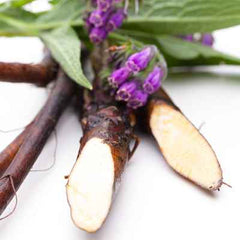
Comfrey Root
Restorative Support for Stressed Skin and Hair
Comfrey, Symphytum officinale, has been valued for centuries as one of herbalism’s most respected skin-repair and tissue-support herbs. A perennial plant native to Europe, comfrey grows in damp, grassy areas such as riverbanks and ditches and is recognized by its thick, hairy stems, clusters of purple, blue, or white flowers, and a dark, turnip-like root.
The name comfrey comes from the Latin con firma, meaning “with strength,” reflecting the plant’s long-standing association with healing and repair. It is a potent herb deserving of respect.
Topical Benefits of Comfrey Root
Traditionally known as knitbone, comfrey root has long been used to support the healing of bruises, sprains, strains, and stressed or damaged skin. When used topically, the root is especially valued for its ability to support deeper repair and recovery, helping comfort areas affected by physical stress, overuse, or injury.
Comfrey root contains a higher concentration of allantoin than the leaf. Allantoin is a naturally occurring compound known to support skin cell regeneration and repair, making the root particularly well-suited for applications where more intensive skin support is desired. This higher allantoin content gives comfrey root its long-standing reputation as one of the most powerful botanical allies for topical repair.
The root is also exceptionally rich in mucilage, a thick, soothing, gel-like substance that coats and protects the skin. This high mucilage content helps soften rough or compromised skin, retain moisture, and create a protective barrier that supports the healing process. The result is deep comfort combined with lasting skin-conditioning benefits.
Because of its strength, comfrey root was traditionally used more selectively than the leaf, often in preparations focused on targeted support rather than broad or frequent application. Its benefits are best described as deeply restorative and reparative, offering concentrated botanical support for stressed or overworked skin.
How We Use Comfrey Root
In Natural Soap Bars
We use comfrey root in natural soap to support troubled, dry, or stressed skin. Its high allantoin content helps encourage skin renewal, while its abundant mucilage creates a rich, silky feel that helps soften rough patches and comfort irritated skin. The root’s natural tannins provide mild astringent and cleansing support, making it especially beneficial for skin in need of extra care during cleansing.
In Natural Shampoo Bars
In natural shampoo, comfrey root provides intensive conditioning and scalp support. Its high mucilage content acts as a natural plant-based conditioner, deeply hydrating the hair shaft, improving slip, and reducing tangles.
Comfrey root helps soothe dry, irritated scalps, supports scalp health, and contributes to stronger, smoother, more resilient hair. Nutrients and botanical compounds help restore shine, body, and manageability, making hair feel healthier and more balanced.
