Natural Soap: Sea Buckthorn & Tea Tree
$4.27 - $13.05
- Out Of Stock
Nearly 16 million people suffer from a constant red complexion due to a vascular skin condition called rosacea.
 The cause of rosacea is still not entirely understood, though there are many contributing factors.
Rosacea is a chronic, inflammatory skin condition that principally affects the face.
Rosacea symptoms can vary greatly from one individual, but it often begins with a tendency to blush or flush more easily than other people and is often characterized by flare-ups and remissions.
When it comes to skin flare-ups there are often specific triggers that cause rosacea symptoms to emerge. Try and note any possible triggers so you can limit your exposure to factors that increase inflammation. This may help naturally prevent flare-ups or at least stop them from becoming worse.
While rosacea may begin in the teenage years, it most often affects middle-aged and older adults. It is more common in women (particularly during menopause) than men. There is no typical skin type for people with rosacea. While many experience dry, flaky skin, others may have normal or oily skin.
Always talk with your doctor about changes to your skin. While rosacea is typically fairly benign, skin changes may indicate a more serious underlying condition that needs medical treatment.
Symptoms Will Vary From One Individual to Another
Redness: Facial rash, redness, or flushing in the central part of the face (forehead, nose, cheeks, and chin).
Senstive Skin: Sensitive and/or dry skin can cause a burning or stinging sensation.
Spider-like Blood Vessels: Small, dilated blood vessels (capillaries) that look like thin red lines, called telangiectasias, may become visible. This area of the skin may become swollen, warm and red.
Pimples: Swollen red bumps that may develop into pus-filled pimples may appear. They may feel warm and tender or become painful.
Eye Problems: Some experience dry, irritated, itchy eyes and swollen, reddened and inflamed eyelids.
Skin Thickening: Skin on the chin, cheeks or forehead can become thicker and coarser with a bumpy texture.
A Swollen Nose: Most often seen in men, over time the nose can become red, larger and bumpy due buildup of tissue on and around the nose. This condition is called rhinophyma.
As a skin care company we are not trying to treat the condition, the best we can hope for is to help ease some of the symptoms associated with rosacea. Our recommendations are based on customer experience--not everything works for everyone and what works well for one person might be ineffective for someone else.
People with rosacea have a fragile stratum corneum, the topmost layer of skin. This means that vigorous scrubbing, harsh cleansers and products with synthetic additives will often make matters worse.
Because the signs, symptoms and severity of rosacea vary from one person to another, you should check with your health care provider to ensure your skin-care routine is compatible with rosacea.
To cleanse without further irritating your skin, dermatologists recommend that you: Apply the cleanser gently with your fingertips, using a circular motion.
Rinse off the cleanser with lukewarm water, using only your fingertips. You want to thoroughly remove the cleanser. If some of the cleanser stays on your skin, it can cause irritation.
Pat your face gently with a clean, cotton towel.
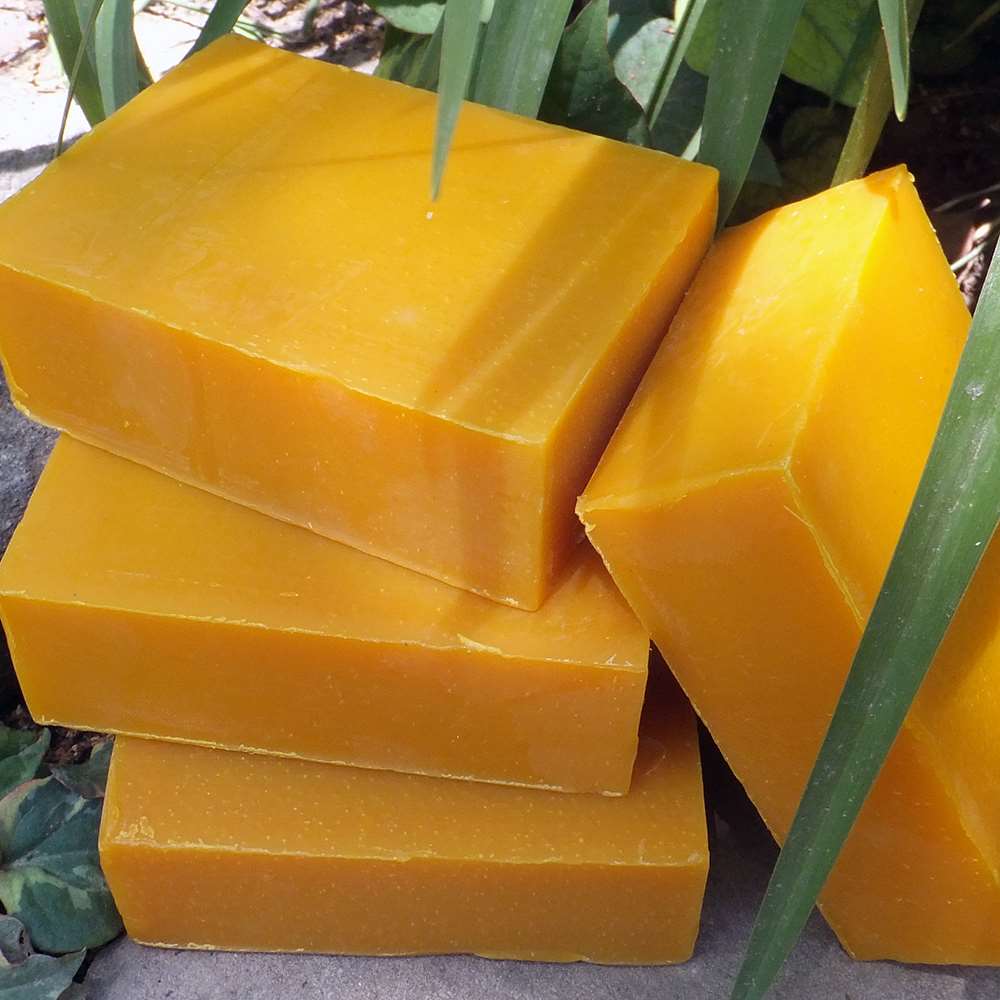
 We recommend our Sea Buckthorn & Tea Tree Soap to help control flare-ups. It contains many of the natural ingredients often recommended for rosacea such as:
Anything that irritates your skin can worsen rosacea so be gentle when you wash. Do not rub or scrub the skin. Using fingertips only, gently massage skin moving in a circular motion. (Save the washcloth for times you want to gently exfoliate only.) Rinse with lukewarm water and blot dry with a clean cotton towel.
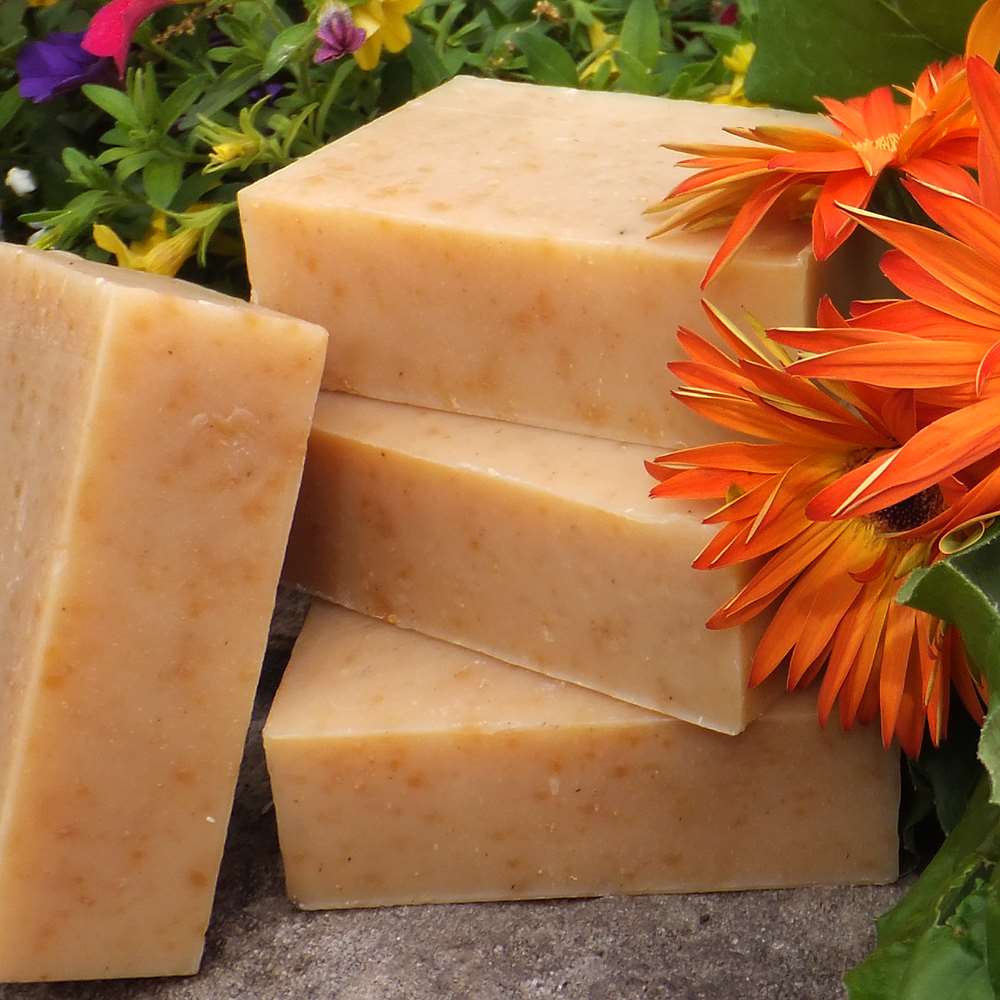
We also recommend our Chamomile Calendula Soap made with organic turmeric.
 Whether rosacea makes your skin dry or oily, it is very important to moisturize.
Moisturizing can help prevent some of the sensitivities associated with irritated skin such as burning, stinging and itching which makes your skin feel more comfortable.
It also helps hold in moisture to maintain and restore the the natural lipid moisture barrier of the skin.
If the lipid barrier is damaged, tiny, invisible cracks can develop in the skin that allow moisture to escape, causing dry skin, and allowing irritants to enter more easily which exacerbates sensitive skin.
There are great natural ingredients in moisturizers that can help maintain and repair the moisture barrier. Products that contain sea buckthorn oil, tamanu oil, rosehips oil, borage oil or jojoba oil can be especially helpful. Shea butter and squalane (found in our Whipped Squalane Face Cream) also soothe irritated skin and help repair the moisture barrier.

When you have rosacea, many skin care products and cosmetics can irritate your skin so choose your skin care products carefully.
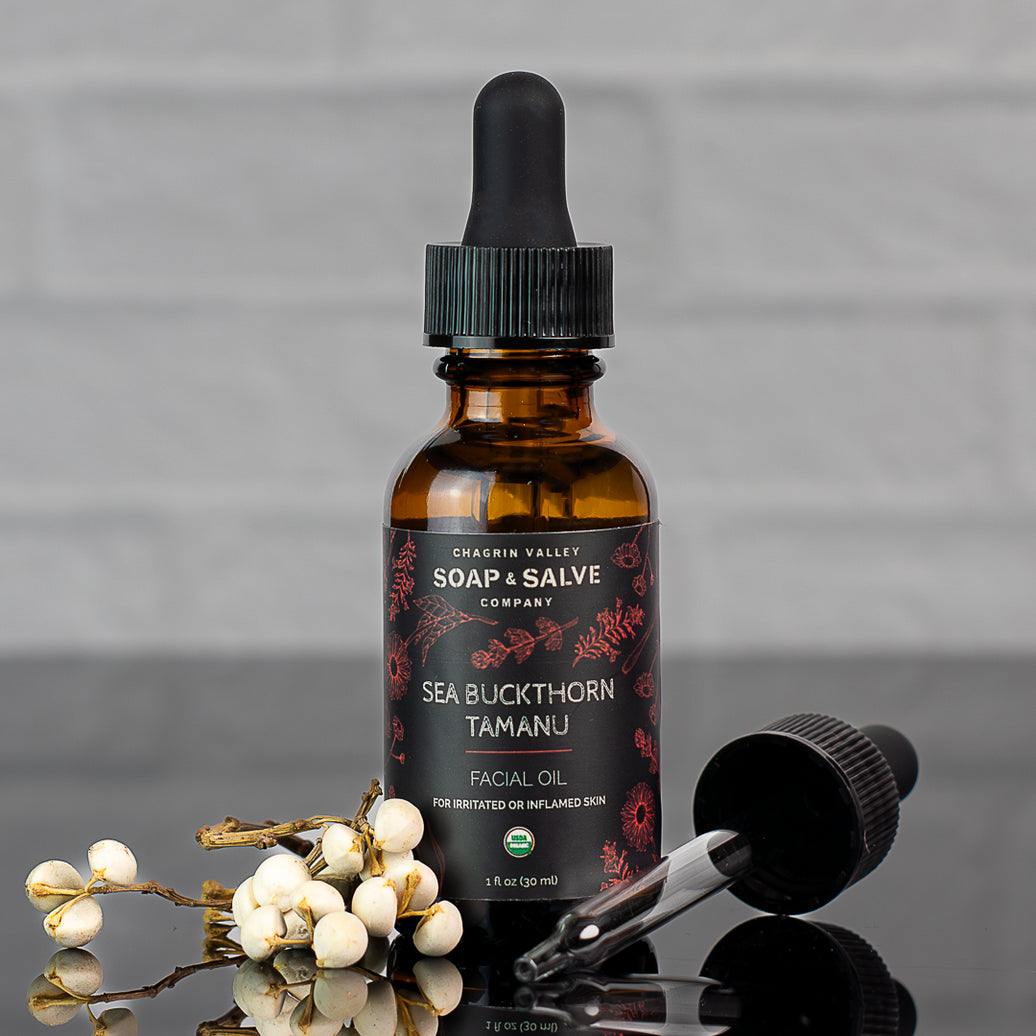
Use pure, unrefined oils that retain their natural color and nutritional benefits. We recommend our Sea Buckthorn Tamanu Facial Oil.
These oils soften and strengthen the skin, help reduce scarring, help reduce swelling and inflammation, and moisturize.
They are remarkable and healing and have anti-inflammatory, antimicrobial, antibiotic and antioxidant properties. Always use products made with pure, organic, virgin oils. Unrefined oils retain their natural color and nutritional benefits.
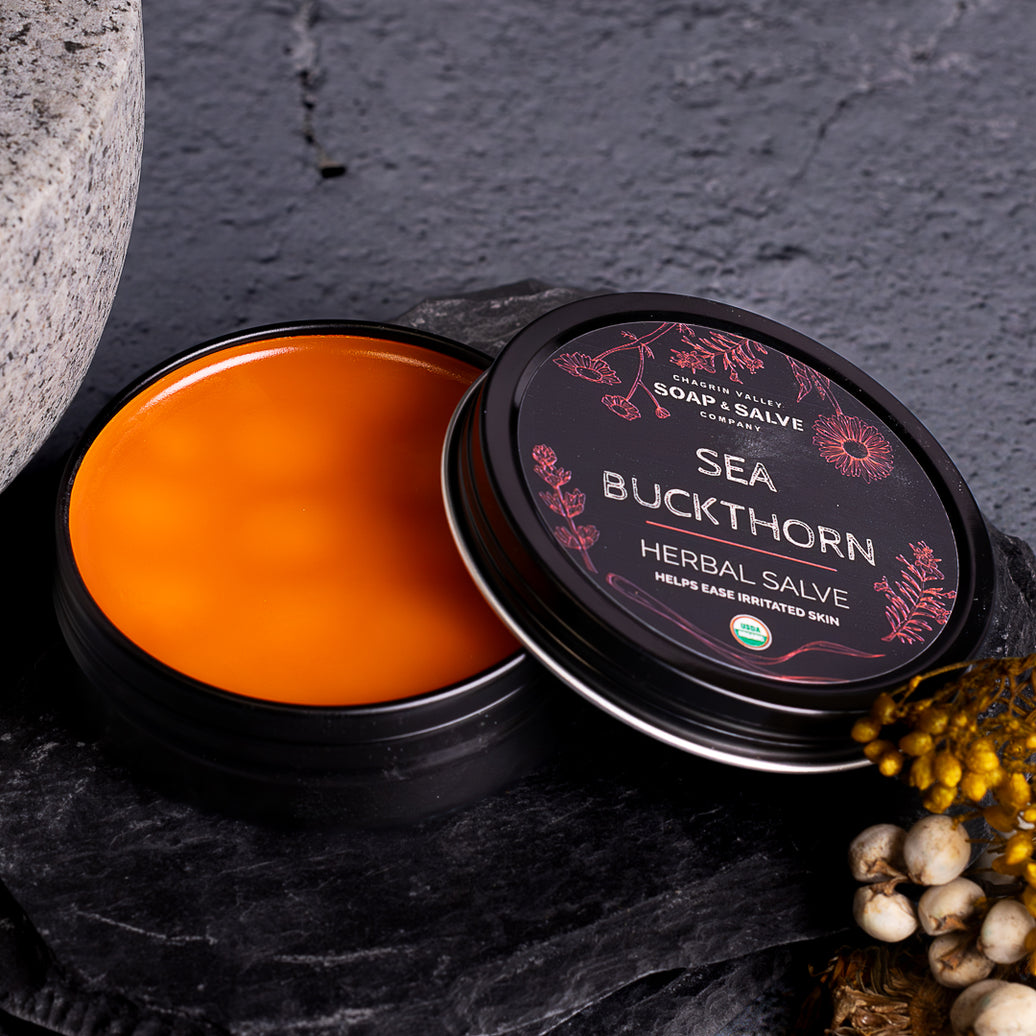
We also recommend our Sea Buckthorn and Rosehips Salve it's an excellent all natural anti-inflammatory treatment for red, inflamed, and flaking skin. An infusion of chamomile, calendula and lavender combined with organic sea buckthorn oil helps calm and protect Rosacea inflamed skin. The salve also soothes and softens skin.
If you have extremely sensitive or allergic skin, it is always recommended to do a patch test for compatibility prior to using any new products.
HINT: If you are trying a new product never or it seems that everything you apply to your face aggravated your rosacea, test the product before applying it to your face. Simply dab a small amount near (but not on) your rosacea-prone skin. If it irritates your skin within 72 hours, do not to use it.
Some rosacea sufferers feel self-conscious and try to cover up their rosacea with a lot of make-up. Unfortunately, many commercial cosmetic products can further aggravate rosacea symptoms. Use only gentle cosmetics made with natural, and organic ingredients.
The American Academy of Dermatology suggests staying away from products that contain synthetic fragrances, colors, and additives which are common irritants for sensitive skin.
Detergent based soaps, artificial fragrances, artificial colors, propylene glycol, and other synthetic ingredients are common skin irritants and can cause flare-ups or exacerbate rosacea symptoms.
It is important to patch test skincare products on the inner arm before applying a new product to test for sensitivities. Just remember your facial skin may be more sensitive than the skin on your arm.
Some rosacea sufferers develop acne. The problem, most acne treatment methods will only aggravate a rosacea sufferer’s skin, worsening the condition instead of helping it. Alcohol-based products and harsh astringents strip natural oils and cause excessive dryness which makes the natural barrier more susceptible to irritation.
It might be tempting to avoid using moisturizer if you have oily skin that is prone to acne breakouts, but moisturizers made with organic unrefined oils can provide essential nutrients to the skin without causing breakouts or further irritations.
Abrasive chemical and mechanical exfoliation can be very damaging to the sensitive and fragile skin of rosacea sufferers.
If you suffer from dry, flaky skin, extremely gentle exfoliation may be helpful to dry skin cells that accumulate on the surface of the skin.
For many folks there are factors that trigger rosacea flare-ups. It is important to learn what triggers the flare-ups and avoid them. A number of factors appear to contribute to dilating blood vessels in the skin which can worsen the symptoms of rosacea.
According to a survey conducted by the National Rosacea Society, the top six triggers are:
Other common triggers include:
We often receive emails and phone calls from customers with chronic irritated or inflamed skin problems.
While we cannot promise that our products will help heal your inflamed or irritated skin conditions, we have received a lot of feedback from customers telling us that our products have helped ease or soothe symptoms associated with irritated skin problems.
We have learned that for some people simply switching to a natural product may help.
We believe that natural ingredients are usually milder and gentler on the skin. I often say that what is NOT in our products, that is often the most helpful.
We have used this feedback to create "Help Me Choose" pages for a variety of skin issues.
Pure essential oils, herbs, and other natural ingredients have been used for centuries. Their folklore and uses have been passed down through generations.
Please note that our products are NOT drugs or medicines meant to treat or cure illness, which would require FDA testing and approval. Our products are intended to help ease symptoms associated with irritated skin. Always consult your health care provider if you are concern about a skin issue.
If you have sensitive skin issues, always try an allergy patch test before using a new product.
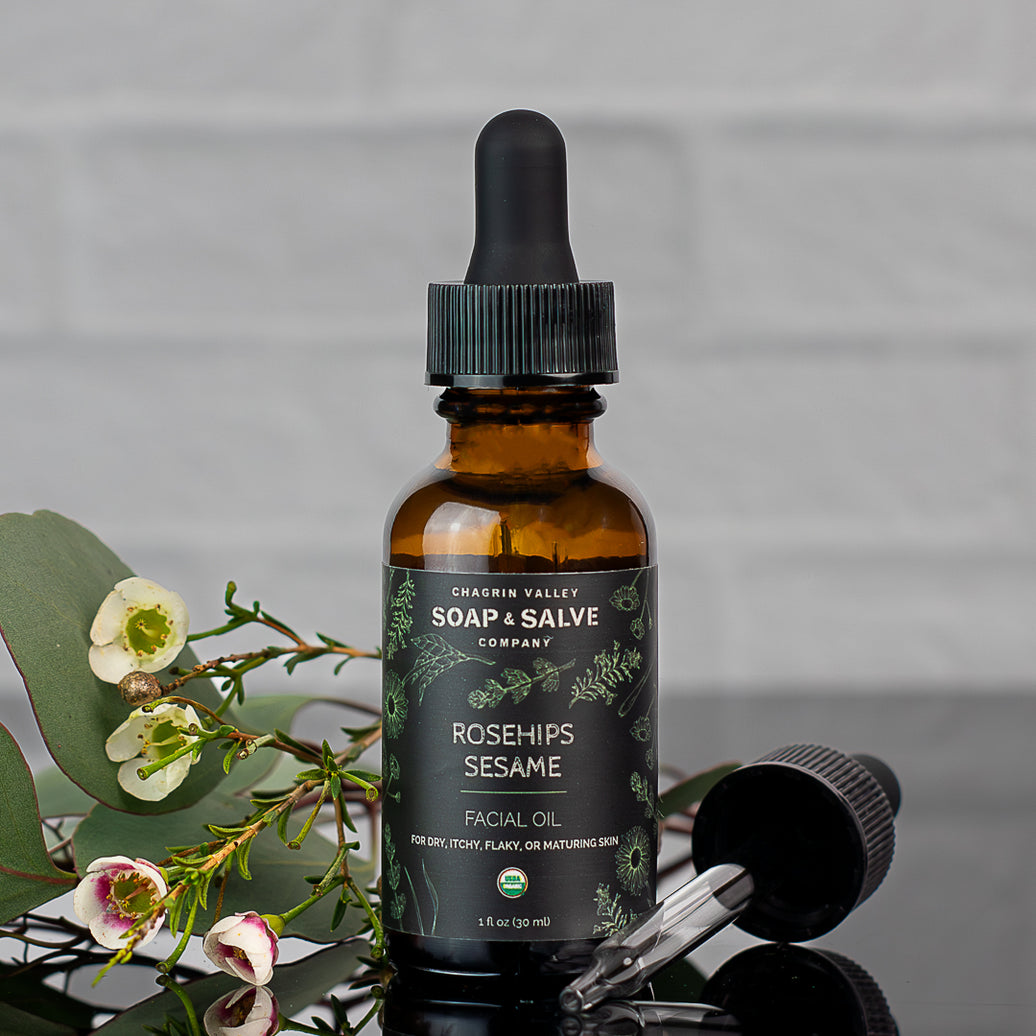
Whether you call them "face oils" or "facial serums," nourishing, unrefined organic oils can moisturize, soothe and help restore natural balance to facial skin.
Our skin naturally loses the ability to retain moisture as we age. Our facial skin tends to become thinner and lose its elasticity. Our skin also produces less oil, which means it dries out more easily. This can exaggerate the look of fine lines and wrinkles. Facial oils can help prevent water loss and keep skin plump.
 Application Hint: Apply facial oil right after washing skin and right before any other moisturizer to hold the water on the skin and seal in moisture.
While many people, especially those with oily or acne-prone skin tend to shy away from oil-based moisturizing, it can be a very important step in daily skin care. An organic facial oil helps to increase the moisture content in the skin and prevent further moisture loss.
If you have oily skin, nourishing organic oils can help mimic the natural skin sebum which in turn sends signals to oil-producing cells that say, "Hey my skin is moisturized so stop producing oil."
Using products created to "dry out" oily skin, in an attempt to get rid of oily shine, will actually trigger the oil glands to increase oil production, which only exacerbates the oily skin problem. A wholesome moisturizer helps balance skin oil production.
If you have dry skin an organic facial oil made from unrefined botanical oils creates a protective but breathable barrier that slows moisture evaporation and thus helps lock in moisture.
A natural face oil is ideal for sensitive and irritated skin. Sometimes, adequate hydration alone can help calm inflammation and soothe red irritated skin.
It is especially important for those (like me!) with maturing skin to keep your face adequately moisturized to help with fine lines and wrinkles. As we age, the skin's natural oils decreases, the skin dries out more easily and wrinkles appear deeper. A nourishing oil helps prevent water loss and plump the skin.
The main thing is to make sure that you are using the right kind of moisturizer.
The most nourishing face oils are those made with unrefined, certified organic plant-based oils. Unrefined oils are either cold-pressed or expeller-pressed.
They are minimally processed without chemicals under temperature-controlled conditions which ensures a nutrient-rich, high-quality natural oil.
USDA Certified Organic means the botanical oils are free of synthetic additives, pesticides, and preservatives.
Stay away from petroleum-based products that contain mineral oils that clog your pores and cause breakouts.

Creating A Facial Skin Care Routine
What Is A Facial Cleansing Oil? How Do I Use It?
 A cleansing oil works its magic in two simple ways . . .
1. The concept of the oil cleansing method is rooted in one of the most basic principles of chemistry, “like dissolves like.”
Since water does not dissolve oil, if you wash with water you need some sort of soap or detergent. Think of soap as the middle-man that helps bring oil and water together so that the dirt and grease on your skin can be easily rinsed away.
Oils are what chemists call lipophilic, meaning that they are naturally attracted to other oils, including the excess skin oil (sebum) that causes breakouts and the oil by-products found in most makeup.
Even if you use water-based makeup, throughout the course of a day the makeup will mix with your natural facial oil.
A facial cleansing oil will dissolve away the dirty oil and makeup from your face and replenish it with clean, nourishing oil that protects and moisturizes throughout the day.
2. Using some good, natural, organic oil on your skin actually slows down its own oil production to maintain balance.
There is a huge misconception that using any oil on your face only creates more oil, more breakouts and leaves an oily residue. For years commercial skin care companies have told us we need to remove the oil from our skin, especially our faces.
The problem is that drying out your facial skin actually stimulates increase oil production--which is the opposite of what you are trying to achieve.
Our facial cleansing oil is formulated with a blend of organic oils and herbal infused oils that will balance sebum production and bind with the existing oil to unclog pores and cleanse impurities.
Using pure, organic oils whether to cleanse or simply moisturize will help balance sebum (natural skin oil) production, protect skin and keep it soft, smooth, and hydrated.
For more information please read our blog, "What Is A Facial Cleaning Oil? How Do I Use It?"

The most important consideration in any business is its customers. Today's world of misleading claims, false advertising, and simple deception, often leaves consumers trying to discover the truth about personal products and their ingredients.
Some of my favorite products are made with ingredients that just do not exist as certified organic. Why? At this time there are no standards created for ingredients specifically used in the personal care product industry. Organic certification of personal care products is based on the organic food standards set by the National Organic Program of the USDA.
But since we are a certified organic company, we are required to submit documentation that even our "non-organic ingredients" were produced without the use of toxic pesticides, genetically modified organisms (GMOs), sewage sludge, or irradiation.
Why Did We Become a Certified Organic Company?
What Do All of the Organic Labels Mean?
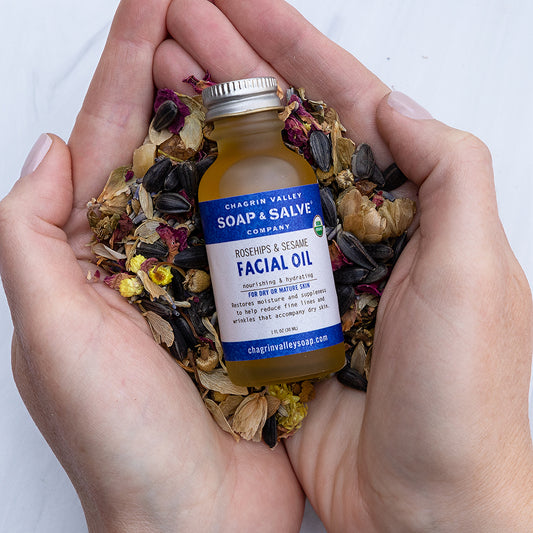
Whether you call them face oils or facial serums, a nourishing organic, unrefined oil can moisturize, soothe and help restore natural balance to facial skin. They are nourishment for beautiful skin.
Read Post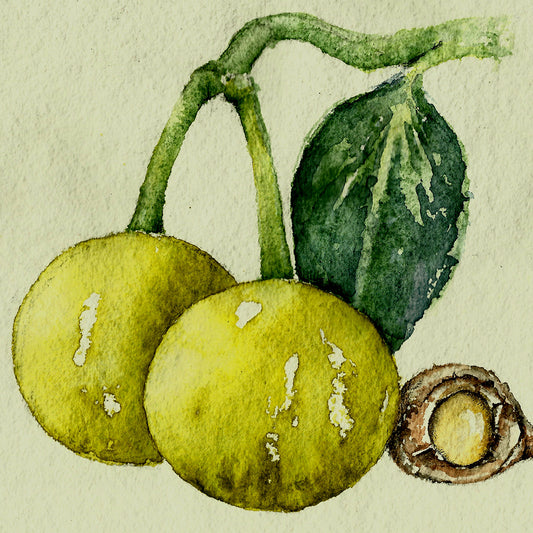
Although, it seems like every day we hear about some new age-defying plant, tamanu oil is not a passing fad for the communities who have been using it for medicinal purposes for centuries.
Read Post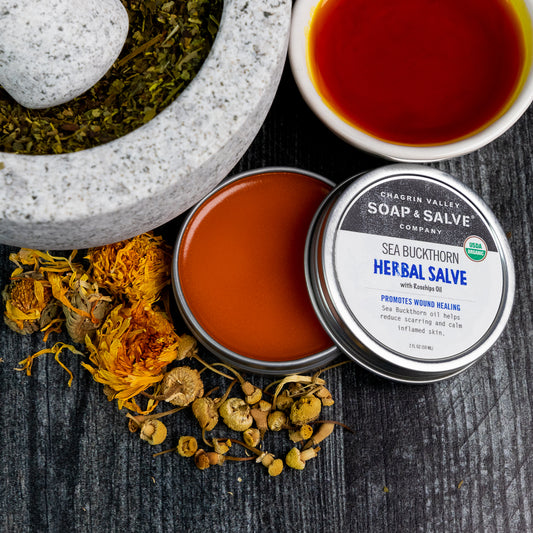
Sea Buckthorn oil applied topically, can help ease acne, dermatitis, rosacea, and eczema, as well as heal cuts, surgical scars, rashes, and minor burns, including sunburn.
Read Post
People with severe allergies—please note: If you have severe anaphylactic-type reactions to ANY of the ingredients in ANY of our products, please do not buy our products. We have dedicated soap rooms and product rooms that are kept meticulously clean, but we cannot guarantee against possible cross-contamination of individual ingredients.
Chagrin Valley Soap & Craft is not responsible for any individual reaction to any particular ingredient. Each product description on our website includes a complete list of ingredients. People with sensitivities to any listed ingredient should not use the product. In case you are in doubt always try an allergy patch test and if at any time irritation occurs, discontinue use of the product.
The content and information on this website, provided by The Chagrin Valley Soap & Salve Company, is for educational purposes only and is in no way intended and should not be construed as medical advice to diagnose, treat, cure, or prevent any disease or health condition. The information regarding folklore or health-related benefits of certain ingredients is for educational purposes only. The information provided is not intended to prescribe or be taken as medical advice.
The information provided is not meant to substitute the advice provided by your personal physician or other medical professionals. Do not use the information found on this website to self-diagnose any medical conditions or treat any health problems or diseases. If you have medical concerns regarding yourself or your family you should seek the advice of qualified, licensed health professionals. Never disregard professional medical advice or delay in seeking it because of something you have read on this website.
This information has not been evaluated by the Food and Drug Administration. This notice is required by the Federal Food, Drug and Cosmetic Act.
Read our Full Medical Disclaimer.