Tips to Help the Transition from Detergent Shampoos to Natural Shampoo Bars
So, you are ready to — or thinking about — switching to natural shampoo bars.
That’s wonderful. For many people, the transition is smooth and effortless. Their hair adjusts quickly and feels cleaner, lighter, and more natural right away.
But if your first reaction after using a natural shampoo bar is “why does my hair feel… different?” you’re not alone.
 Natural shampoo bars don’t act like detergent shampoos. Instead of coating hair with synthetic softeners for a temporary “slip,” they interact with your scalp and strands as they truly are.
That shift doesn’t mean something is wrong — it means your scalp is recalibrating.
Your scalp has a microbiome, much like your gut and skin — shaped by years of detergents, conditioning films, styling products, and habit.
When you remove synthetics, the scalp pauses, adjusts, and gradually returns to balance.
Some people barely notice this shift at all. Others may move through a short period in which hair can feel weird before it feels wonderful.
Before we go deeper, one important note…
This guide is thorough — intentionally. Over the last 20 years, we have seen many different transition experiences, and we want you to feel supported regardless of what your hair journey looks like.
You may experience NONE of what follows and transition effortlessly.
Or you may notice one or two changes as your scalp finds balance.
Every scalp, every microbiome, every strand of hair is beautifully unique — and this guide simply gives you tools if you need them.
PART 1 — What Affects the Transition to Natural Shampoo Bars
Why hair may behave differently when switching away from detergents
Switching to a natural shampoo bar is not just a product change — it’s a biological reset.
Your hair, scalp, and microbiome have adapted to a synthetic cleansing system over time. When you remove those synthetics, your hair begins functioning the way nature intended — but that transition can come with temporary quirks.
Some people adjust in a few washes. Others need weeks. Neither is wrong — it’s simply your hair and chemistry.
Here are the core reasons the transition can feel bumpy, with a deeper explanation behind each one.
Shampoo Technique Matters — More Than People Think
Before choosing a shampoo bar, there’s one factor many people overlook — how you wash your hair matters just as much as what you wash it with.
Natural shampoo bars are concentrated, rich in oils and butters, and work differently from liquid detergents. A great bar can perform poorly if technique gets in the way.
 The key is simple: You are cleansing the scalp — not the entire length of your hair.
- Wet hair thoroughly.
- Lather the bar at the scalp only (don’t rub down the length).
- Massage with fingertips.
- Rinse, letting the lather flow through the rest of your hair — that’s enough to clean the strands.
Focusing lather at the scalp helps prevent residue pockets, especially in long or dense hair, and allows bars to rinse cleanly.
📘 For a step-by-step method, visit our blog: "How to Use a Natural Shampoo Bar".
🌿 Common technique-related issues:
- Heavy feeling mid-strand
- Sticky spots only in certain areas
- Tangles caused by residue at the ends
Your Scalp Microbiome is Rebalancing
Your scalp is not just skin — it is a living ecosystem that has developed over many years.
It hosts a delicate balance of beneficial bacteria, yeast, and fungi that keep the scalp healthy. The microbiome influences many aspects of hair and scalp health, and while yours may not be the best microbiome for healthy hair, it is the only one your scalp knows.
Since the use of hair care products impacts the diversity and abundance of microbial populations, as you transition to a completely new product, your microbiome will change.
Your scalp needs time to rebalance its natural microbiome as it adapts to a new routine without synthetic chemicals, especially preservatives, in conventional products.
Your microbiome must retrain itself as your hair learns how to live without the chemicals.
🌿 What may happen during this reset
- The scalp may feel oily one day, dry the next
- Hair may appear weighed down even though you’re cleansing normally
- You may feel like your scalp is in “overproduction mode”
This isn’t failure — it’s adaptation. The scalp is simply finding equilibrium again, usually within days or weeks.
Silicone and Other Product Residue Are Lifting Off the Hair Shaft.
Most commercial shampoos remove oil aggressively — then replace the slip with silicones, polymers, and other coatings. These coat the hair to feel smooth, even when the strand underneath is dehydrated.
 Natural shampoo bars lift and release residue slowly.
The artificial coatings that were giving your hair artificial slip are washing away, revealing your hair's authentic texture, which might initially feel less manageable.
As residues break down, you may feel the real hair texture you haven’t touched in years.
🌿 What you may experience:
- Increased flakiness
- Waxy or tacky feel
- Lack of slip or glide
- “Strange” texture even when hair is clean
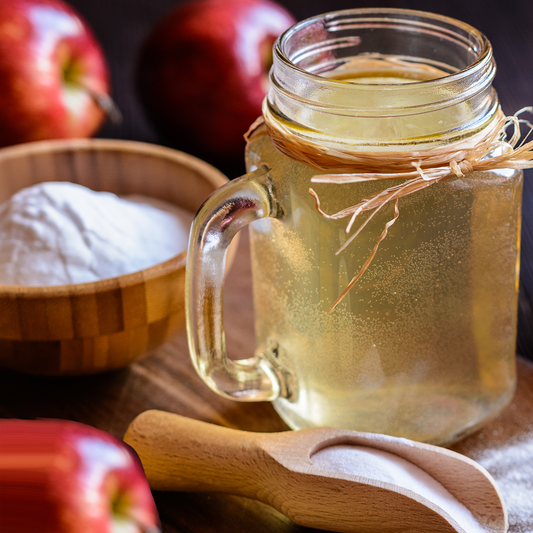
This stage often improves dramatically after the first few weeks — especially with proper rinsing and occasional ACV (apple cider vinegar) rinses to remove residue. You can also try a baking soda clarifying rinse to reset.
Note: Before making the switch, it may be helpful to remove product buildup from your hair. Many people who have problems adjusting to shampoo bars often skip this step, which is especially important if they use lots of products on their hair.
📘 Learn More: Hair & Scalp Build-Up — What Helps?
Your Hair’s Porosity and Age of Strands Matter
Hair is not uniform from root to tip. Roots are new growth — smooth, hydrated, resilient. Ends are years older, more porous, sun-exposed, and sometimes chemically processed.
When detergent shampoos are removed, porous ends may feel dry or rough before they stabilize, because they were previously sealed under a synthetic coat.
🌿 What you may notice:
- Soft roots but dry/rough ends
- Uneven texture across the strand
- Frizz where cuticles aren’t sealed yet
This is not damage — it’s exposure.
The true strand is emerging for the first time in a long time.
Hard Water Changes How Shampoo Bars Rinse
Detergent shampoos rinse easily, even in the presence of minerals, because they are engineered to perform in hard-water conditions.
In a natural shampoo bar, soap molecules can bond with minerals like calcium and magnesium, which can leave residual soap salts on the hair, especially in long or dense hair.
Developing a proper shampoo technique can help prevent pockets of shampoo residue that can make hair feel gummy, especially if your hair is long.
🌿 Signs your water may be a factor:
- You feel a slight “grab” or coating when rinsing
- Hair looks dull or stiff even after cleansing
- Certain areas (nape, crown) feel sticky or gummy
✨ A few tips if you have hard water:
- Try using distilled water to rinse your hair
- Use an inexpensive shower filter head
- Add a pinch of baking soda to a quart of warm water and use this to wet hair before shampooing
- Use an ACV rinse
📘 Learn More: How Does Your Water Affect Your Hair?
⭐ A Quick Note About “Soap-Free” Shampoo Bars
You may see some solid shampoo bars proudly labeled "soap-free". That isn’t necessarily bad — but the difference is important.
If a shampoo bar is not real soap, it must rely on synthetic surfactants (detergents) to cleanse. That’s simply the chemistry.
These bars, called syndet (synthetic detergent) bars, are essentially a bottled shampoo without the water or the plastic bottle.
Because syndet bars use the same cleansing agents found in liquid shampoos, they often rinse more easily in hard water and feel more familiar to those accustomed to conventional products. For many people, this means little or no transition at all.
If your goal is truly natural hair care — not just eliminating the bottle — it’s helpful to know that only soap-based shampoo bars are free of synthetic detergents.
Both options are plastic-free. Both are valid.
The difference is simply what’s cleansing your hair.
You Might Not Be Using the Best Bar — Yet
Just like liquid shampoos, not every shampoo bar is suitable for every scalp. Some bars cleanse more deeply, others moisturize more intensely.
 Part of the magic (and sometimes frustration) of switching to a natural shampoo bar is providing a uniquely personal experience tailored to your individual chemistry.
Listen to YOUR hair and scalp.
If one bar is not right, try another before giving up. It's essential to remember that everyone’s hair type is unique, and each of our shampoo bar recipes is unique.
Our trial-size bars make exploring easy, and every bar can become a beautiful hand or body soap — so it's never wasted.
👉 Need help? Read Help Me Choose: Shampoo For My Hair Type & Concern
PART 2 — Common Shampoo Bar Transition Symptoms & How to Fix Them
What you may experience and how to support your hair through the reset
Not everyone goes through a transition period. Some glide through quickly, others need time. None of these signs means that using a natural shampoo bar is “wrong” for you. They are simply indicators of where your scalp and hair are in the adjustment and realignment cycle.
HAIR FEELS WAXY, TACKY, OR COATED
This is the most common early transition experience.
Why it's happening
Residues from past hair care products are loosening, while sebum production is still high. A natural shampoo bar does not strip oils, so what you feel is your real hair, plus old residue in the process of leaving.
🌿 How to help
1. Rinse more — much more than you think. Natural soap binds to excess oil and buildup as it lifts from the hair shaft. If the rinse isn’t thorough, loosened residue can redeposit and feel waxy or gummy.
- Aim for 30–60 seconds longer than usual, especially at the scalp and crown.
- Use warm water first (it helps the cuticle open and allows oils to move), then cool at the end to close the cuticle.
2. Lather only at the scalp — not the length. Shampooing the length of your hair can overload strands with soap, leaving a clingy film. Allow the suds to cleanse the rest of the hair as it rinses out.
3. Add an Apple Cider Vinegar (ACV) rinse once or twice weekly. ACV helps break down old residue film and tightens the cuticle so hair feels smoother and cleaner. You may notice improvement after the very first rinse.
- Mix 1–2 tsp ACV with 1 cup warm water
- Apply mid-shaft → ends first, then scalp last
- Rinse out or leave partially in, depending on hair type
4. Try a clarifying reset if the buildup is heavy. If you previously used silicones, polymers, serums, or “smoothing” shampoos, buildup removal may take time. A single baking-soda rinse can speed the reset. (Used sparingly — only as needed.)
5. Don’t add any type of conditioner too early. Conditioner can trap loosened buildup and prolong the waxy stage.
- Use ACV before reaching for conditioner
- If you need to moisturize, apply only to the ends, not the roots
HAIR FEELS HEAVY, LIMP, OR GREASY
Very common in the early stages, especially at the roots.
Why it's happening
When you switch from detergent shampoo to a natural soap-based bar, your scalp is essentially going through oil-production withdrawal.
Commercial shampoos contain synthetic surfactants that can strip away sebum — the natural oil your scalp produces for protection. Hair may feel soft after washing because conditioners leave behind coatings, but your scalp is actually receiving mixed signals:
- Shampoo strips oils → scalp becomes dry.
- The scalp responds by making more oil to compensate.
- This cycle repeats for years → causing the scalp to become trained to overproduce sebum.
When you stop stripping the oils, the scalp continues producing them out of habit — even though the hair is no longer being dehydrated. Meanwhile:
- Synthetic coatings have not fully rinsed away
- Synthetic conditioners and softeners no longer mask natural oils
- The microbiome and moisture barrier are normalizing
So hair may feel oily at the roots, flat through the mid-lengths, heavy, or like it gets greasy faster than before.
This is a regulation period, not failure. Your scalp is learning how to function naturally again. The over-production phase passes — once oil levels stabilize.
🌿 How to help
1. Wash more frequently in the beginning — then stretch slowly. The scalp needs time to recognize that it no longer needs to overproduce oil.
- Try washing every 1–2 days at first
- Then increase spacing gradually (every 3–4 days, then more if desired)
- This allows the scalp to retrain itself at a natural pace
2. Avoid applying conditioners or oils to the scalp. Conditioner can attach to loosened residue and weigh hair down.
- If you condition, apply only to the bottom third of your hair
- Skip conditioner entirely for a week or two if scalp oil is high
- Once sebum production settles, you can slowly reintroduce moisture to the ends

3. Use dry shampoo strategically — it supports balance, not just aesthetics.
Dry shampoo helps absorb excess oil while your scalp is learning that it no longer needs to produce so much.
- Use between washes to extend time without overwashing
- Light dusting at the roots is enough — too much can cause dullness
- Dry shampoo isn’t just a styling tool during transition — it’s a retraining aid
- 📘 Learn More: How To Use a Natural Dry Shampoo Powder
4. ACV rinses help reduce excess sebum. Diluted apple cider vinegar helps dissolve buildup and tighten the cuticle.
- Try 1–2x per week
- Rinse thoroughly
- Especially helpful for oily scalps + limp roots
- If hair feels cleaner after ACV, that’s your signal that buildup is part of the problem.
5. Consider alternating bars until balance returns. Some bars are richer, some lighter — alternating can smooth the learning curve.
- A lighter shampoo bar every other wash may help roots reset
- Save richer bars for later once oils stabilize
- Your bar may not be wrong — it may simply be too soon for richness
TANGLES, ROUGH TEXTURE, OR “NO SLIP” FEELING
Your hair may suddenly tangle more easily, feel grabby, or lose that slippery glide you're used to — especially when wet.
Why it's happening
Commercial shampoos and conditioners contain synthetic additives like silicones, polymers, special surfactants, and conditioning alcohols that coat the hair shaft and fill microscopic gaps in the cuticle. This coating gives the illusion of smoothness — artificial slip, softness, and "easy combing" even in silicone-free formulas.
When you stop using synthetic products, that coating begins to rinse away, the natural cuticle is exposed again for the first time in years, and moisture must now be absorbed rather than applied.
Early in the transition, hair may feel rougher to the touch — less slippery, harder to glide a comb through, and more prone to snagging.
This is not damage — this is your real hair becoming unmasked.
Over time, as oils balance and buildup clears, hair becomes smoother naturally and needs less artificial conditioning.
Your natural hair cuticle feels rougher until it adjusts and moisturizes properly.
🌿 How to help
- Detangle only while hair is fully wet, not half-dry or damp
- Use Apple Cider Vinegar rinse — it flattens and smooths raised cuticles naturally
- Apply oil or balm only to the lower half of the hair, never the roots
- Use a wide-tooth comb or fingers — avoid brushes until hair is fully adjusted
- Be gentle — tension/friction is amplified during rebalancing
DRY OR FRIZZY ENDS
The roots seem fine… but the ends? Dry, puffy, unruly, frizzy, even straw-like. This uneven texture is one of the most common transition patterns.
Why it's happening
The ends of your hair are the oldest part of the strand. Depending on your length, those ends may be several years old, and over that time, they have been exposed to:
- heat tools & blow drying
- brushing, friction, pillowcase wear
- sun, wind, hard water minerals
- coloring, bleaching, highlights
- Synthetic conditioner coating
Over time, the cuticle becomes more porous, with tiny gaps that allow oils and moisture to escape.
When synthetic conditioning additives were part of your routine, they temporarily filled those gaps, giving hair a smooth, slippery feel — but not actually repairing anything.
Once you stop using synthetic conditioners, the coating begins to wash off, moisture escapes faster than it is replaced, and the ends can feel rough, dry, or untamed
Basically, two things happen at once:
- As the scalp is adjusting to normal oil production, the roots may have more oil than needed at first
- The ends are no longer artificially coated, and they feel drier, frizzier, and rougher until oils redistribute
It may feel like damage appearing overnight — but really, you are just meeting your real hair for the first time. As natural oils move down the strand and hydration improves, ends soften, curl patterns form, and frizz quiets.

This is healing — not damage. The strand is learning to function without synthetic conditioners.
🌿 How to help
- Shampoo the scalp only — let suds cleanse ends as they rinse through
- Avoid scrubbing or rough towel friction — blot gently, protect the cuticle
- Seal moisture into ends with a pea-sized amount of oil or balm
- When hair is dry, brush gently from the scalp to the ends with a soft-bristle brush or fingers to help distribute natural oils
- Skip heat tools when possible — ends need a rest during transition
OILY SCALP BUT DRY ENDS
A very common early-stage pattern — oily roots, parched ends, and confused everything in between. It feels contradictory, but it actually makes sense.
Why it's happening
Your scalp’s oil production has a memory.
If you have used detergent shampoos for years, your scalp may have been repeatedly stripped of protective oils and responded the only way it knew how — by producing more oil. Over time, it became trained to overcompensate.
When you switch to a natural shampoo bar, the sebum production remains high — out of habit, but since oils are no longer being stripped away, the roots can feel greasy even when clean
Meanwhile… the hair lengths and ends are living completely different lives.
Older hair length is naturally drier, more porous, and missing the “false moisture” it once relied on. Now that the coating is slowly washing away, the ends reveal their real condition — thirsty, frizzy, or rough.
So while the scalp may feel oily, the ends are now unmasked and thirsty.
Two different environments on one head — both temporary, both normal.
This stage is actually a sign of progress as your scalp is waking up, recalibrating, and learning balance again.
🌿 How to help
- Shampoo only the scalp — avoid rubbing the bar through the length
- Wash slightly more often in the beginning, then stretch wash days gradually
- Moisturize the ends — a pea-sized amount of balm or a drop or two of hair oil is enough
- Use an ACV rinse to dissolve old buildup at the roots and soften the cuticle on the ends
- When hair is dry, brush gently from the scalp to the ends with a soft-bristle brush or fingers to help distribute natural oils
- Avoid synthetic conditioners — they delay the recalibration process
A little patience and a light touch go a long way.
📘 Learn More: Apple Cider Vinegar Hair Rinse Benefits & How to Use Them
PUFFINESS, FRIZZ, OR “BIG” HAIR
Hair that suddenly feels larger, fluffier, or frizzier than usual can be surprising — but it is one of the most encouraging transition signs.
It means the cuticle is no longer being held flat by synthetic coatings, and your real texture is resurfacing.

Why it's happening
Most commercial shampoos rely on smoothing agents to flatten the cuticle.
This creates the illusion of sleekness, but the effect is temporary and doesn’t reflect actual hair health.
When you remove that artificial coating, the cuticle begins to open and behave like real hair again. What you’re feeling is the true texture returning.
- The cuticle lifts slightly as it rehydrates from within
- Hair absorbs moisture more readily, creating volume
- As natural curl/wave patterns emerge, they may look undefined or puffy at first
- Weather plus humidity affects hair more now that it’s not sealed in chemicals
As oils rebalance and moisture redistributes, frizz softens, definition increases, and the puffiness calms into shape.
🌿 How to Help: The goal is to train the cuticle to lie smoothly again — this time through nourishment, not synthetic coatings.
- Gently blot — don’t rub — with a towel to avoid roughening the cuticle
- Finish with a cool-water rinse, which helps tighten the cuticle, creating shine and reducing frizz.
- Layer moisture by using a light hair balm first, and then sealing with a tiny bit of oil. This mimics what silicone did artificially — but in a breathable, botanical way.
- Use ACV rinse weekly to support cuticle alignment
- Avoid heat, aggressive brushing, and over-washing during adjustment
- For curl and wave definition, scrunch in moisture while hair is very wet, not dry
Frizz is often a sign of hydration returning, not failure.
📘 Learn More: From Frizz to Fabulous: Dry Hair Causes, Care, and Management
Your Transition Toolkit — Simple Habits for Success
Transitioning to natural shampoo bars isn’t about instantly perfect hair — it’s about allowing your scalp and strands to function the way nature intended. Support the process, and your hair will reward you.

Your hair "ain't misbehavin." It is waking up — shedding synthetic coatings, rediscovering moisture, rebalancing its microbiome, and learning to function without artificial support.
A few guiding habits make all the difference:
- Let hair be natural — extra styling products prevent hair from being its natural “self”
- Brush or hand-comb oils through to condition strands naturally
- Shampoo the scalp only — not the full length of your hair
- Rinse deeply — and consider ACV for softness and shine
- Nourish ends lightly — a drop of oil is often enough
- Be patient — weeks 1–12 can change everything
With patience and the right technique, your hair will settle into its natural rhythm. After a bit of experimenting, most people find a shampoo bar that lathers beautifully, rinses cleanly, and leaves hair feeling softer, silkier, and more alive than they thought possible.
Natural hair care is not a quick fix — it is a healthy reset.
And when your scalp settles, the shine and softness that emerges is worth every step.
I love your shampoo bars Ida and co. I live in London UK and have really hard water. I lather and wash my hair twice with a bar, then rinse with plain water. I then rinse with citric acid crystals dissolved in water as my hair hates vinegar. I don't even have to use conditioner anymore. Hair shedding is massively reduced as is breakage. Shine is fabulous! And I love that the ingredients are natural. I do a baking soda wash once a month in case of build-up. -- Juliette, United Kingdom
Originally published in February 2015, this blog has been updated to provide more helpful information.

Why Use A Natural Shampoo Bar?
How To Use A Natural Shampoo Bar
If You Try A Shampoo Bar Once And It Does Not "Work" Is It a Sign That It Is Bad For You?
Hair and Scalp Build-Up? What Can Help?
Make Your Own Natural Vinegar Hair Rinse
How Does Your Water Affect Your Hair?
What Is The Difference Between Soap Bars and Shampoo Bars?