Why We Chose USDA Organic Certification—and Why It Matters
The most important part of any business is the people it serves.
In today’s world of clever marketing and loose language, customers are often left trying to sort out what’s real and what’s just a label—especially when it comes to personal care products and their ingredients.

We wanted to remove that guesswork. Becoming a USDA Certified Organic company was our way of saying, clearly and transparently, this is what we stand for.
- When we say “organic,” we mean it.
- When we label a product organic, it reflects a regulated standard—not a marketing claim.
- Our ingredients and processes are held to real, verifiable standards.
- Accountability matters—to us, and to the people who trust us.
Certification provides a level of assurance that goes beyond trust—it provides proof.
Long before we became certified in 2010, we were already using certified organic ingredients, and we made a simple decision: if we were going to use the word “organic,” it had to mean something real.
As we continued to grow and develop new formulations, we reached a point where we wanted to offer something more:
Not just trust—but verification.
Becoming a certified organic manufacturer was a natural extension of our values and our commitment to our customers.
What USDA Certified Organic Means
When a product is labeled USDA Certified Organic, it isn’t a marketing phrase — it’s a legal, regulated system with defined standards, verified through detailed documentation, annual inspections, and ongoing compliance with the USDA’s National Organic Program (NOP).

When a product carries a USDA Organic claim, it isn’t just about avoiding a few pesticides or choosing a nicer-sounding ingredient.
Organic standards begin long before an ingredient reaches our workshop — and they continue through every step of how that ingredient is handled, processed, stored, and used.
The use of GMOs, irradiation, sewage sludge, and most synthetic fertilizers and pesticides is strictly prohibited. Crops must be grown on soil free of prohibited substances for three years, using natural, mechanical, or biological farming methods whenever possible.
But it also means something deeper. Organic farming practices protect soil health, conserve water, support biodiversity, and avoid contaminating land and groundwater—practices that sustain the land rather than deplete it.
Once harvested, those ingredients must be handled with the same level of care. Oils, herbs, and botanicals must be processed using methods that preserve their integrity — no synthetic solvents, no shortcuts.
Even the cleaning products used on equipment must meet strict criteria to prevent contamination.
And when those ingredients become a finished product, the standards continue. Packaging, storage, labeling accuracy, and full traceability are all part of the certification. Every claim can be traced, verified, and audited, and each step must protect the organic integrity of the product.
It’s not a symbol. It’s not a trend. It’s a system designed to protect both people and the environment — and to give the word organic real meaning.
What USDA Organic Certification Actually Involves
USDA Organic certification is often misunderstood as a simple ingredient check.
In reality, it is a comprehensive system designed to protect the integrity of organic ingredients from the moment they enter our building to the moment a finished product leaves it.
Because we are a handler—not a grower—our responsibility is to ensure that every organic ingredient we receive, store, process, and package remains organic every step of the way. That means preventing contamination, maintaining full traceability, and proving that every organic claim can be verified.
To do this, inspectors evaluate not just our ingredients, but our entire operation.
Traceability Audits: Proving Every Ingredient Is What We Say It Is
During an inspection, the certifier performs two critical audits to verify that our supply chain is transparent and accurate.
Trace Back Audit

This audit traces a finished product backward through our records to its origin.
For example, if the inspector chooses one Three Butter Lotion Bar, batch #101732, sold on October 15th, we must provide:
- the exact production record for that batch, including the date of production and cleaning protocols
- the lot numbers of every ingredient used
- the purchase invoices that match those ingredients
- the current organic certificates from each supplier
The goal is simple: Every ingredient must be verified as certified organic and fully traceable to its source.
Mass Balance Audit (In/Out Audit)
Inspectors also perform a mass balance audit, sometimes called an “in/out” audit. This audit works in the opposite direction. It ensures that the amount of organic ingredients we purchase matches the amount we use and sell.
For example, an inspector might select a specific lot of organic cocoa butter and ask us to account for it—from purchase and storage to its use in production and, ultimately, its sale. We must show:
- supplier information and their organic certification
- purchase invoices
- storage logs
- production batch records
- shipping records for finished products
Think of it as a scale: the amount of product we sell must match the amount of organic ingredients we purchased.
Mass balance and trace back audits are essential tools for preventing fraud and maintaining the integrity of the organic supply chain.
Some inspectors also perform a sales audit to confirm that the volume of product sold matches the volume produced and the income received.
A successful audit demonstrates that we can quickly locate any product lot in the supply chain — a requirement for effective recalls and consumer safety.
The Organic System Plan: The Blueprint of Our Entire Operation
USDA Organic certification requires more than ingredient verification. Every certified handler must maintain a detailed Organic System Plan (OSP) — a written, annually updated document that outlines exactly how organic integrity is protected at every stage.
Our OSP includes:
- Facility Map: A detailed layout showing where organic materials are received, stored, processed, and packaged.
- Product Flowchart: A step-by-step diagram showing how organic ingredients move through our facility from arrival to finished product.
- Product Profiles: A profile sheet for every product we make, listing all ingredients, processing aids, and suppliers.
- Valid Organic Certificates: Current certificates for every organic ingredient and every supplier.
- Ingredient Inventory: A complete list of all ingredients we use — organic, conventional, and any allowed non-synthetic materials.
- Prevention Plan: Procedures showing how organic ingredients are kept separate from non-organic materials during receiving, storage, processing, and packaging.
- Cleaning and Sanitation Procedures: Every cleaning agent must be approved for use in organic handling—the same standard used for food production, and we must document the cleaning method for every surface.
- Cleaning Protocols for Each Product: Step-by-step cleaning methods for every tool used in production, with required documentation each time the cleaning occurs — even for something as simple as a spoon or pot.
- Organic Fraud Prevention Plan: A required plan outlining how we identify, assess, and reduce the risk of organic fraud, including supplier monitoring and verification procedures.
- Pest Control Plan: A documented program that prioritizes preventive, mechanical, and physical methods, with a list of any pest control materials used — all of which must be approved.
The Organic System Plan is reviewed, updated, and approved every year by our certifying agent. It is the backbone of the certification process.
The Certification Process Is Ongoing
Many people assume organic certification is a one-time approval. In reality, it’s a year-round commitment that requires ongoing documentation, inspections, and verification.

Each year, we reapply, submit updated records, pay certification fees, and undergo a detailed on-site inspection.
Chagrin Valley Soap & Salve is certified by the Ohio Ecological Food and Farm Association (OEFFA), a USDA-accredited certifying agency.
All of the systems, records, and safeguards described above are reviewed year after year to ensure continued compliance.
This level of traceability ensures that every certified organic product is exactly what it claims to be — not just in theory, but in practice.
It is rigorous. It is time-consuming. And it is absolutely worth it.
Because certification isn’t just about meeting a standard.
It’s about upholding a promise.
Why “Organic” Isn’t Enough — Unless It’s Certified
The word organic should stand for something real. Something earned. Something backed by standards. But in skincare, it often isn’t.
Unlike food, the word “organic” in personal care isn’t protected, and making sense of the labels on cosmetic products isn’t easy.
The Food and Drug Administration (FDA) regulates cosmetics. But the FDA does not define or regulate the word “organic.”
The word “organic” is regulated — but by a different agency: the U.S. Department of Agriculture (USDA), through its National Organic Program (NOP). But those standards were created for agriculture and food, not for cosmetics.
And that’s where the confusion begins.
Skincare products made from agricultural ingredients can be certified organic under the USDA program.
But the USDA will only oversee or enforce anything related to the production or labeling of a cosmetic if the company is actually certified.

If a brand chooses not to be certified, the USDA has no authority over them.
So, unless a skincare company is USDA Certified Organic, there is no agency verifying how the word “organic” is being used.
That creates a gap.
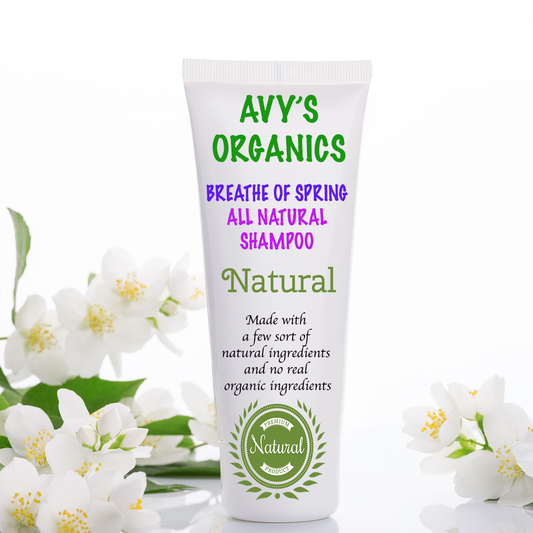
It means a personal care company that uses no organic ingredients at all can still put the word “organic” in a product name, a brand name, or marketing materials.
That’s why you see:
- brand names like “Avy Organic” that aren’t organic
- “organic face cream” claims based on a single organic ingredient, while the rest are anything but
- phrases like “grown organically,” which have no defined meaning
- pretty symbols that look like certification seals but aren’t
Because the USDA’s organic rules were never designed for skincare — and the FDA doesn’t regulate the word at all — these practices go unchallenged.
And with no agency overseeing non-certified products, the word “organic” can be used freely — without verification, without consistency, and without accountability.
It’s confusing for customers. And it undermines the meaning of true organic standards.
This is why certification matters. It restores meaning to a word that has been stretched too thin.
Why We Continue — Even When It’s Hard
Certification takes time, money, and a level of documentation that often feels endless.
There are moments—usually somewhere between the paperwork, the inspections, and the yearly renewal—when I pause and wonder if the effort is worth it. And honestly, the lack of enforcement in skincare makes that question even harder to answer.

When other companies can use the word “organic” freely, without meeting any standards, it’s natural to ask:
What benefit do we get from doing all this work? Why not simply use organic ingredients and skip the certification process altogether?
But then I remember why we chose this path. It reinforces our commitment to our customers, ensures consistency in how we operate, and provides a clear, regulated framework for what “organic” truly means.
We believe in doing things the right way, even when it’s the harder way. Certification keeps us accountable. It keeps us honest. It keeps us aligned with the values we started with.
And we know our customers feel the difference. When you see the USDA seal or our certifier’s logo, you know you’re supporting a company that values integrity over shortcuts — and truth over marketing.
Is Organic Certification Perfect?
No system is perfect.
But certification provides a defined standard — and a real foundation for accountability.
We view those standards not as a limitation, but as a starting point. Like any meaningful standard, it challenges us to do better.
How to Recognize Truly Organic Products
If a product uses the word organic on its label, there should be proof behind it.
The easiest way to know is to look for:
- The USDA Organic seal and the name of the USDA-accredited certifying agent OR
- The name of the USDA-accredited certifying agency and its symbol

For example, since we are certified by OEFFA, our organic product labels read: “Certified Organic by OEFFA.”
This means every step—from ingredients to finished product—meets strict, verified organic standards.
If you don’t see a seal or a certifying agent listed, you can:
- Ask the company to share its organic certificate, or
- Search for the company in the USDA Organic Integrity Database, where all certified operations are listed
Without certification, there is no verification — and no guarantee that “organic” means what it should.
Why Organic Certification Matters for You
At the end of the day, organic certification isn’t about paperwork or labels. It’s about you — and what touches your skin.
For you, it’s a promise that what touches your skin meets real, verified standards.
It means the ingredients were grown and handled with care, processed without shortcuts, and made in a facility that protects their integrity from start to finish.
You don’t have to wonder what “organic” means to us.
You don’t have to guess whether an ingredient is truly organic or simply labeled that way.
You don’t have to decode marketing language or symbols that look official but aren’t.
Certification removes the uncertainty.
It gives the word “organic” real meaning — the meaning it should have had all along.
Our Commitment
Becoming a USDA Certified Organic company wasn’t the easiest path — but it was the right one.

It reflects our values, our standards, and our belief that the word "organic" should mean something real.
We will continue to uphold these standards, year after year, because you deserve skincare made with honesty, integrity, and ingredients you can trust.
Organic is not just a label to us.
It is not just a trend.
It is a chain of responsibility — from soil to finished product.
It is our promise.
Certified Organic Education Series
Explore related articles to learn more.
- Certified Organic Skincare & Labels Decoded
- Why Most "Organic" Soap Bars Aren't Labeled Organic
- Why We Believe in Natural Skin Care
- Natural Skincare: Not a Trend, Not a Gimmick—And Definitely Not a Scam
🏛️ Other agencies also oversee how we operate. Details in Who We Work With: Government Agencies That Guide Our Business.
This article was first written in 2015. While it has been updated for flow and clarity, our reasons for becoming USDA Certified Organic—and our commitment to those standards—have not changed.