

Natural Soap: Honey Butter
$4.10 - $11.95
- Out Of Stock
Dry skin happens when the skin doesn’t produce enough sebum — the natural oil that helps keep moisture from escaping.
 Without that protective oil barrier, water evaporates more easily, leaving the skin feeling tight or dehydrated.
Anyone can experience dry skin, whether it’s your natural skin type or something that appears only during certain seasons or stages of life.
Dry skin itself is simply a sign that the skin’s natural oils and moisture need a little support.
It’s common, it’s manageable, and it often shifts depending on your environment and daily habits.
Dry skin isn’t something you have to “fix” — it’s something you can care for.
Dry skin has a distinct look and feel. It may appear dull or ashy, feel tight after bathing, or develop fine flakes, rough patches, or "alligator skin". Some people notice small lines or cracks when the skin is especially dehydrated.
On deeper skin tones, dryness often shows up as a gray or ashy cast; on lighter skin tones, it may look red or irritated.
Dryness can appear anywhere, but it’s especially common on the hands, arms, and legs — areas exposed to frequent washing, friction, and the environment.
Dry skin can happen for many reasons, and it often shifts with your environment, habits, and age. At its core, dryness appears when the skin’s natural barrier doesn’t have enough oil to hold moisture in. But what causes that barrier to weaken varies from person to person.
The weather is one of the biggest factors. Cold air, indoor heating, and low humidity pull moisture from the skin, which is why dryness often becomes more noticeable in the winter months.
👉 Learn More: 8 Tips to Help Eliminate Dry Winter Skin
Daily life plays a role, too. Frequent hand‑washing, sanitizers, long hot showers, and harsh cleansers can also strip away the oils that keep skin soft and comfortable.
As we age, our skin naturally produces less oil, which makes dryness more common over time. And for those with sensitive or eczema‑prone skin, the barrier may already be more fragile, making moisture loss easier.
No matter the cause, dry skin simply means the skin needs a little extra support — gentle cleansing, replenishing oils, and ingredients that help lock in hydration.


Facial skin behaves differently from the skin on the body. It’s thinner, contains more hair follicles, and produces more oil — yet it’s also constantly exposed to harsh weather, pollution, and over‑washing.
Because of this, facial skin can feel tight, sensitive, or dry even when the rest of the body does not.
This page focuses on dry body skin.
🌿 For guidance specific to dry facial skin, please see Help Me Choose Natural Facial Skin Care.
When it comes to caring for dry skin, moisturizing is the single most important step.
Dry skin isn’t just missing water — it’s missing the natural oils that keep water from escaping. Moisturizers work not by “adding moisture,” but by preventing water loss, which is the real root of dryness.
 Skin naturally loses water throughout the day through a process called transepidermal water loss — simply the evaporation of water from the skin’s surface.
When the skin doesn’t have enough oil to slow that evaporation, dryness becomes more noticeable: tightness, flaking, rough patches, and irritation.
That’s why rich, oil‑based creams and plant oils are often the most effective choice for dry skin. Unlike water‑based lotions, which evaporate quickly, these nourishing formulas stay on the skin longer and help slow water loss.
By sealing in hydration, they soften rough areas, ease tightness, and help calm the discomfort and itchiness that often accompany dryness.
The best time to moisturize is immediately after bathing or showering, while your skin is still warm and slightly damp. At that moment, your skin holds the most water, and applying a cream or oil helps seal it in before it can evaporate. Warm water softens the outer layer of skin, and cleansing removes surface debris — creating the ideal moment for moisturizers to spread easily and absorb more effectively.
Because moisturizers play such a central role in supporting dry skin, we’ve created a separate guide that walks you through our different moisturizers and how to choose the best one for your needs.
🌿 Explore: Help Me Choose Natural Body Moisturizers
When you’re dealing with dry skin, the type of cleansing product you use matters more than most people realize.
Many commercial soaps and body washes contain detergents, synthetic fragrances, artificial colors, and preservatives — ingredients that can strip away the skin’s natural oils and make dryness feel even worse.

They may create lots of bubbly lather and have lovely scents, but they often leave the skin feeling dry, tight, itchy, or more easily irritated, especially for those with already dry, sensitive, or eczema‑prone skin.
A mild, moisturizing natural soap is a much better match for dry skin.
True natural soap retains its naturally occurring glycerin — a humectant that helps draw moisture to the skin — and avoids the harsh synthetic cleansers found in many mass‑produced products.
Look for bars made with nourishing plant oils and butters, and free from artificial colors, fragrances, and preservatives.
Different people with dry skin gravitate toward different kinds of moisturizing bars.
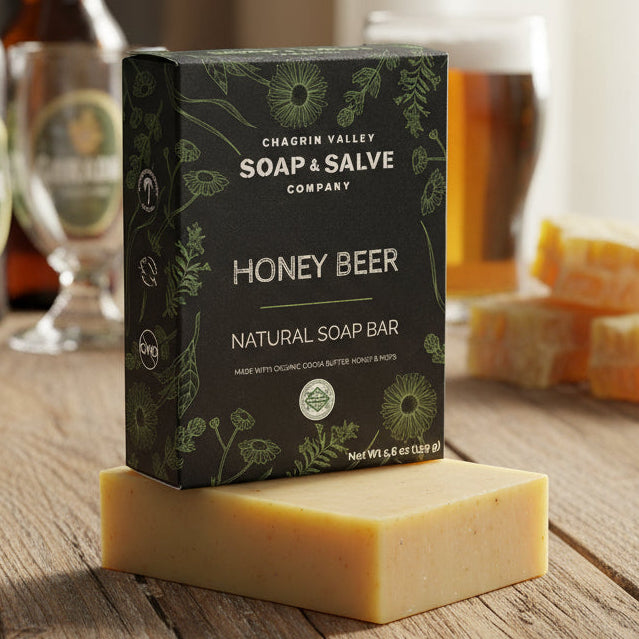
Our Winter Survival Soap has become a seasonal favorite. This moisturizing bar helps comfort dry, itchy skin, while its cooling, clearing scent brings a little brightness to cold winter mornings.
🌿 Explore: Help Me Choose Natural Soap for My Skin


When skin feels dry or looks patchy, our instinct is often to reach for heavier creams.
But sometimes the real issue isn’t a lack of moisture — it’s a buildup of dry, dead skin cells sitting on the surface. When those cells accumulate, moisturizers can’t reach the fresh skin underneath, and dryness seems to persist no matter how much cream you apply.
 Gentle exfoliation helps remove this layer of dead skin, revealing smoother, healthier skin that can better absorb moisture. It also supports normal cell turnover, which naturally slows as we age, and helps improve texture, tone, and overall radiance.
If you’re unsure whether your skin needs exfoliation, try this simple tape test:
For dry skin, the key is gentle exfoliation — nothing harsh or scratchy. Our organic Body Sugar Scrubs offer a soft, moisturizing polish that lifts away flakes without stripping the skin. If your skin is very sensitive, try using our Facial Sugar Scrubs on your body.
For dry, flaky facial skin, our Adzuki Bean Scrub is a favorite: finely milled beans create a delicate, non‑abrasive exfoliant that leaves the skin smooth and refreshed.
🌿 Explore: Help Me Choose Natural Skin Care For Exfoliation
👉 Learn More: The Nitty Gritty of Exfoliation
Dry skin isn’t something you have to “fix” — it’s something you can care for.
When you protect your skin’s natural oils and slow the evaporation of water from its surface, you give your skin the chance to stay comfortable and resilient. With gentle cleansing, consistent moisturizing, and products that support your skin’s barrier, you can help your skin hold onto the hydration it already has.
Over time, those small daily choices add up, keeping your skin feeling calm, nourished, and beautifully comfortable day after day.
People choose Chagrin Valley Soap for many reasons, but they all begin with one simple belief: a soap can only be as good as the ingredients, knowledge, and care that go into creating it.
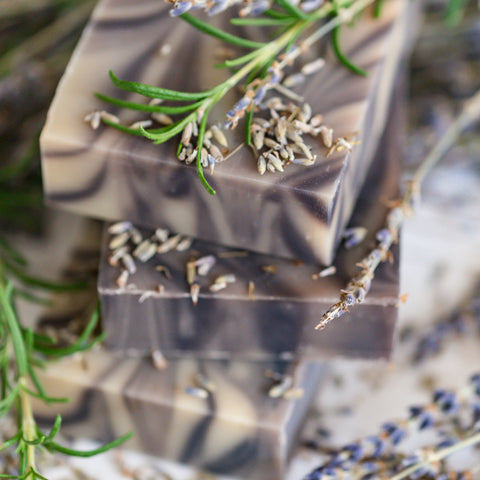
Here are twelve reasons our customers choose our handmade natural soap:
Every bar is made through the traditional process of saponification using organic plant oils and butters—not synthetic detergents.
We use certified organic plant oils, botanicals, clays, herbs, and pure essential oils chosen for their unique benefits.
No synthetic detergents, artificial fragrances, artificial colors, filler ingredients, or unnecessary additives.
High-quality oils, generous superfatting, and naturally retained glycerin help create a mild, conditioning bar.
Every scent begins with a real plant—not a synthetic fragrance oil.
At Chagrin Valley, we scent our soaps only with pure botanical essential oils. Many of our recipes also include aromatic herbs, spices, flowers, and other plant ingredients that contribute their own subtle, authentic aromas.
We believe the scent of a soap should reflect the integrity of the ingredients that go into every bar.
Gentle cleansing and thoughtfully selected ingredients help respect your skin's natural balance.
 Our Soaps Create Rich, Creamy Lather Naturally
Beautiful lather comes from carefully balanced plant oils—not synthetic foam boosters.
An extraordinary bar of soap isn't made by accident. It begins with exceptional ingredients, expert formulation, and the patience to let every bar fully cure—creating a bar that does far more than simply cleanse your skin.
Organic ingredients, minimal packaging, and concentrated bar soap help reduce environmental impact.
Each bar is formulated to achieve a specific balance of cleansing, lather, conditioning, and skin feel.
Organic certification, ethical sourcing, cruelty-free practices, and sustainable choices reflect our commitment to doing things the right way.
You are supporting a family-owned business committed to craftsmanship, transparency, and educating customers about natural skincare.
We do it all ourselves--from start to finish--from our hands to your hands--from our family to yours! Thank you!
🌿Want to learn more? Read our complete guide: Why Use Natural Soap? 12 Reasons to Choose Chagrin Valley Soap.

Our face has different zones in which the skin can vary in thickness, texture, pore size and the number of oil-producing glands.
Each zone may have very different needs and require individual attention.
So, what happens if you have multiple facial skin issues, like dryness, oily spots, and blemishes?
The answer is Multi-Masking . . .
Multi-masking is exactly what it sounds like. Instead of applying one face mask over your entire face, you apply different masks to different areas of the face in order to treat multiple skincare concerns at the same time.
For more information please read our blog Multi-Masking and Targeted Application For Combination Facial Skin
A cleansing oil works its magic in two simple ways:
1. The concept of the oil cleansing method is rooted in one of the most basic principles of chemistry, “like dissolves like.”

Since water does not dissolve oil, if you wash with water, you need some sort of soap or detergent.
Think of soap as the middleman that helps bring oil and water together so that the dirt and grease on your skin can be easily rinsed away.
Oils are what chemists call lipophilic, meaning that they are naturally attracted to other oils, including the excess skin oil (sebum) that causes breakouts and the oil by-products found in most makeup.
Even if you use water-based makeup, over the course of a day, it will mix with your natural facial oil.
A facial cleansing oil will dissolve away the dirty oil and makeup from your face and replenish it with clean, nourishing oil that protects and moisturizes throughout the day.
2. Using a good, natural, organic oil on your skin actually helps slow down its own oil production to maintain balance.
There is a huge misconception that using any oil on your face only creates more oil, more breakouts, and leaves an oily residue. For years, commercial skin care companies have told us we need to remove the oil from our skin, especially our faces.
The problem is that drying out your facial skin actually stimulates increased oil production--which is the opposite of what you are trying to achieve.
Our facial cleansing oil is formulated with a blend of organic oils and herbal-infused oils that will balance sebum production and bind with the existing oil to unclog pores and cleanse impurities.
Using pure, organic oils, whether to cleanse or simply moisturize, will help balance sebum (natural skin oil) production, protect skin, and keep it soft, smooth, and hydrated.
👉 For more information, explore our blog, "What Is A Facial Cleaning Oil? How Do I Use It?"

There are many wonderful things about winter, but the cold dry, windy air outside combined with the dry heated air inside and lower humidity drain moisture causing dry, flaky, irritated, red, or itchy skin. With a little extra TLC you can have soft smooth radiant skin all winter long.
Read Post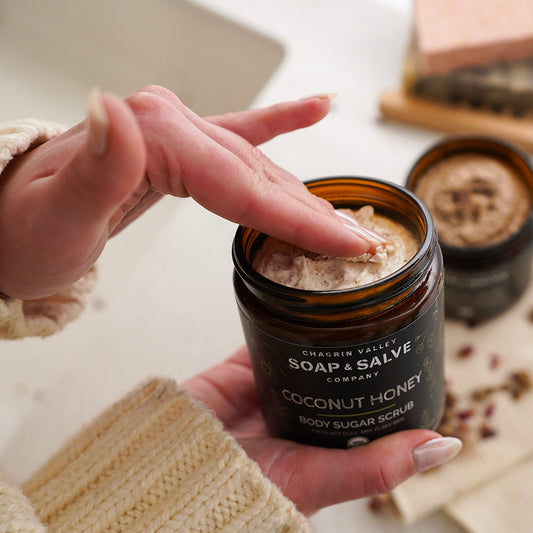
Get informed about exfoliation! Explore the basics, benefits, and best practices for exfoliating your skin so you can make informed decisions about your skincare. Exfoliation can help encourage cell turnover, unclog pores, allow moisturizers to penetrate more effectively, and refresh the skin.
Read Post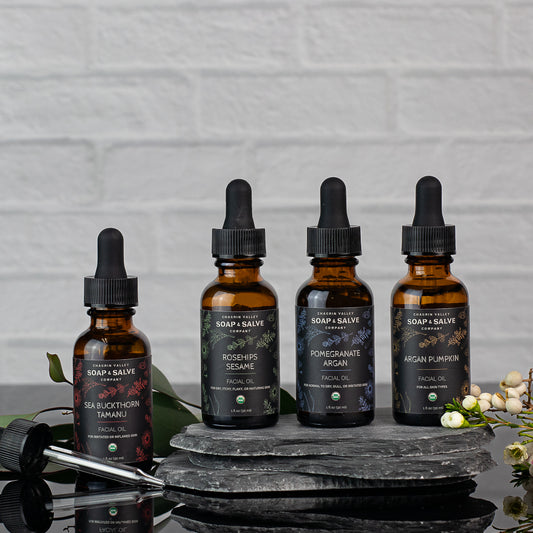
Whether you call them face oils or facial serums, a nourishing organic, unrefined oil can moisturize, soothe and help restore natural balance to facial skin. They are nourishment for beautiful skin.
Read Post
People with severe allergies—please note: If you have severe anaphylactic-type reactions to ANY of the ingredients in ANY of our products, please do not buy our products. We have dedicated soap rooms and product rooms that are kept meticulously clean, but we cannot guarantee against possible cross-contamination of individual ingredients.
Chagrin Valley Soap & Craft is not responsible for any individual reaction to any particular ingredient. Each product description on our website includes a complete list of ingredients. People with sensitivities to any listed ingredient should not use the product. In case you are in doubt always try an allergy patch test and if at any time irritation occurs, discontinue use of the product.
The content and information on this website, provided by The Chagrin Valley Soap & Salve Company, is for educational purposes only and is in no way intended and should not be construed as medical advice to diagnose, treat, cure, or prevent any disease or health condition. The information regarding folklore or health-related benefits of certain ingredients is for educational purposes only. The information provided is not intended to prescribe or be taken as medical advice.
The information provided is not meant to substitute the advice provided by your personal physician or other medical professionals. Do not use the information found on this website to self-diagnose any medical conditions or treat any health problems or diseases. If you have medical concerns regarding yourself or your family you should seek the advice of qualified, licensed health professionals. Never disregard professional medical advice or delay in seeking it because of something you have read on this website.
This information has not been evaluated by the Food and Drug Administration. This notice is required by the Federal Food, Drug and Cosmetic Act.
Read our Full Medical Disclaimer.