
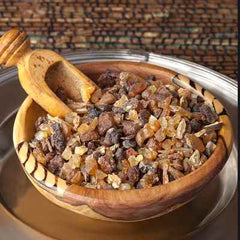
Myrrh
A Time-Honored Resin for Calm, Protected Skin
Myrrh, Commiphora myrrha, is a reddish-brown, aromatic gum-resin obtained from the bark of small, thorny trees native to Northeastern Africa and the Arabian Peninsula. To harvest myrrh, the bark of the tree is carefully cut, allowing the resin to slowly ooze out and harden into irregular, tear-shaped pieces. These hardened “tears” are then collected and used in topical preparations, incense, and traditional medicines.
Unlike many botanicals used fresh or dried, myrrh is a resin, rich in naturally occurring compounds that give it its distinctive cleansing, protective, and skin-supportive properties. Historically, myrrh has been used in traditional Chinese medicine and Ayurvedic medicine as a purifying and cleansing agent, particularly in topical applications.
This page focuses on myrrh as a topical ingredient, especially its use in salves and balms designed to protect, soothe, and support compromised or irritated skin.
Topical Skin Benefits of Myrrh
Myrrh is valued in skin care for its ability to cleanse, calm, and protect skin that is damaged, inflamed, or prone to irritation.
- Anti-Inflammatory: Helps calm redness, swelling, and irritation, making it useful for dry, inflamed, or eczema-prone skin
- Antimicrobial & Antifungal: Naturally helps inhibit bacterial and fungal growth, supporting skin affected by acne, diaper rash, athlete’s foot, and minor infections
- Supports Healing: Traditionally used on cuts, scrapes, scratches, and abrasions to help protect the skin and support the natural healing process
- Astringent: Helps tone the skin, refine pores, and balance oil production without excessive dryness
- Moisture Support: Often used in salves and balms to help protect dry, chapped, or cracked skin and support moisture retention
Because of these properties, myrrh is frequently included in herbal balms and healing salves, often alongside other soothing and protective botanicals.
Myrrh in Baby & Sensitive Skin Care
Myrrh’s antifungal and antibacterial properties make it a traditional ingredient in topical preparations for diaper rash and irritated skin. When used appropriately in an oil infusion rather than as a concentrated essential oil, myrrh can offer gentle skin protection suitable for delicate or sensitive skin.
For babies and highly sensitive skin, oil infusions are preferred over essential oils, as they deliver myrrh’s beneficial compounds in a much milder, skin-friendly form.
How Myrrh Is Used
Myrrh may be used in several forms, including whole resin pieces, powdered resin, oil infusions, or essential oil. In skin care—especially for sensitive or compromised skin—oil infusions are often the most appropriate form, allowing for controlled, gentle application.
We make our own myrrh oil infusion by finely grinding the resin and combining it with a nourishing carrier oil. The mixture is gently warmed over several days, then carefully strained. This slow oil-infusion process allows myrrh’s beneficial oil-soluble compounds to be extracted in a mild, skin-friendly form. The finished infusion is then used to create organic healing salves and other skincare products.
We use myrrh specifically in salves, where its cleansing, protective, and soothing qualities support skin that needs extra care.
Myrrh is a time-honored resin with a long history of topical use for protecting and supporting troubled skin. Its combination of antimicrobial, anti-inflammatory, and astringent properties makes it especially valuable in salves designed for dry, irritated, or damaged skin—where soothing protection matters most.

