
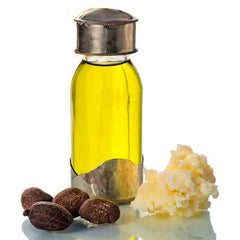
Shea Olein
Lightweight Hydration for Smooth, Radiant Skin
Our Shea Olein, Vitellaria paradoxa (formerly called Butyrospermum parkii), is the liquid, fractionated component of unrefined shea butter. It is produced through a gentle, solvent-free process that separates the naturally liquid oleic-rich fraction from the solid, stearic-rich portion—resulting in a lighter, fast-absorbing oil that retains the nourishing properties of traditional shea butter.
Rich in oleic acid (omega-9), Shea Olein is deeply moisturizing and highly emollient, making it especially beneficial for very dry, mature, or sensitive skin that needs intensive hydration and comfort. It also contains linoleic acid (omega-6), a polyunsaturated fatty acid known for its soothing, balancing properties. Linoleic acid helps calm irritation, support clearer skin, and reduce congestion for those who experience clogged pores or dryness-related breakouts.
Shea olein penetrates quickly and is great for dry skin and damaged hair. It is believed to have exceptional nourishing, protective, and reparative properties, which may help with aging or irritated skin.
Shea Olein helps preserve the skin’s moisture, improves softness and flexibility, and leaves skin comfortable without a heavy or greasy feel. Its lightweight texture makes it an excellent ingredient for face oils, body oils, and massage formulations.
Key Benefits of Shea Olein
- Deeply moisturizes dry, mature, or sensitive skin
- Absorbs quickly with a lightweight, non-greasy feel
- Softens and soothes irritated or depleted skin
- Enhances suppleness and supports elasticity
- Helps balance sebum and reduce pore congestion
- Nourishes dry, damaged, or frizzy hair
- Excellent for massages due to its smooth glide
How Shea Olein Is Made
Our Shea Olein is true liquid shea butter, not a solvent-extracted oil. The process relies solely on gentle, controlled heat—never chemicals. Raw, unrefined shea butter contains two main fatty acids:
- Stearic acid – solid at room temperature
- Oleic acid – liquid at room temperature
When mild heat is applied, the liquid oleic fraction melts first and can be separated naturally. This produces Shea Olein, a clear, light yellow oil rich in oleic and linoleic acids.
The remaining solid portion, called Shea Stearin, is richer in stearic and palmitic acids and is used in the food and cosmetics industries.
Buyer Beware
Not all “shea oil” or “shea olein” is the same. Some manufacturers use chemical solvents to extract the liquid portion, which produces a cheaper—but not cleaner—oil.
Solvent-free, physically extracted shea olein requires more care and yields far less material, making it a more precious and sought-after ingredient. When choosing shea olein, always look for oil produced through natural, solvent-free fractionation to ensure purity and quality.
ALLERGY ALERT
LATEX: Shea butter contains natural latex. Although it is not exactly the same as the sap-like latex extract from the Rubber Tree (Hevea brasiliensis), it is very similar in chemical composition. Although the quantities of latex in shea butter are small, this natural latex is responsible for the moisture sealing property of shea butter.
TREE NUT: Shea nuts are tree nuts and are considered by the FDA to be true nuts. Although Shea is a nut, and the butter is derived from the nut, at this time, there are no reports of either topical immediate allergic reactions or reactions from the ingestion of shea nut oil or butter. Of course, this can in no way guarantee that such a reaction could not occur.
Persons suffering from LATEX or NUT allergies should ALWAYS consult with their Health Care Provider and do an Allergy Patch Test before using any shea butter product.
