

Neem & Tea Tree Body & Hair Shampoo
$4.50 - $12.95
- Out Of Stock
Buy 2, Get 1 Free on All Full-Sized Bars. No Code Needed.
Oily hair doesn’t start with your hair at all — it starts with your scalp.
Your scalp, like the rest of your skin, is covered with thousands of tiny openings called pores. Each pore is connected to a hair follicle — the small structure that anchors each strand of hair.

Attached to most follicles are sebaceous glands, which produce sebum, a natural oil that helps protect and condition both scalp and hair. These glands are especially active on the scalp and face.
Your hair doesn’t make oil on its own.
When hair looks greasy, it’s because the sebaceous glands on your scalp are producing more oil than your hair can absorb or distribute.
For some people, this happens only occasionally. For others, it’s a daily struggle: you wash, dry, and style your hair… and within hours it’s flat, limp, shiny, or heavy.
If you have naturally oily skin, you’re more likely to have an oily scalp — oil production is part of your body’s natural balance.
Many factors influence how quickly your scalp becomes oily. Some are biological, some environmental, and some come down to hair type.
One of the biggest contributors is hair density. People with fine hair often notice greasiness sooner because fine strands take up less space — meaning more follicles (and more oil glands) per square inch.
Other common triggers include:
Oily hair is more than simply needing an occasional wash. Excess oil can change how your hair looks, feels, and behaves throughout the day.
When excess oil traps dirt, dust, and dead skin cells, it can sometimes irritate the scalp, contribute to flaking or discomfort, or cause blemishes around the hairline. In more persistent cases, clogged follicles and scalp irritation may contribute to increased shedding or thinning over time.
👉 If excess oil is also affecting your skin or scalp comfort, you may find our guides for Oily Blemish-Prone Skin or Flaky, Itchy, or Irritated Scalp helpful as well.
Once you understand what’s happening on the scalp, the next step is choosing products that support—not fight—your natural oil production. The goal isn’t to strip the scalp dry; it’s to bring everything back into balance so your hair feels clean and light for longer.
The first step in managing oily hair is choosing the right shampoo.
Many people reach for “oily hair” shampoos, hoping to dry out the scalp. Unfortunately, harsh detergents do the opposite of what you want. Hair may feel clean at first, but when the scalp becomes overly dry, oil glands often respond by producing even more oil, creating a cycle of over‑washing and over‑producing oil.

A gentler approach works better. Cleansing products made with natural ingredients help remove excess oil and buildup without over-drying the scalp, allowing oil production to gradually rebalance.
Our natural shampoo bars cleanse effectively while remaining gentle on both hair and scalp.
Ingredients like citrus essential oils help refresh and clarify oily hair, while soapnuts — rich in natural saponins — provide an extra cleansing boost without harsh detergents. Hair feels clean, light, and manageable without the scalp feeling stripped or irritated.
If your hair looks and feels best when freshly washed, you can shampoo daily—when using a gentle, natural shampoo bar. Daily washing only becomes a problem when the shampoo is too harsh.
🌿 Explore: Help Me Choose a Natural Shampoo Bar For My Hair


Even with regular washing, excess oil and styling products can gradually build up on hair and scalp, leaving hair feeling heavy and dull.

An apple cider vinegar (ACV) rinse can make a noticeable difference for oily hair.
When properly diluted, apple cider vinegar (ACV) helps dissolve buildup and excess oil without stripping natural moisture.
Hair feels lighter, the scalp feels refreshed, and residue that can attract dirt and oil is washed away.
Because apple cider vinegar also naturally helps maintain a healthy scalp environment, many people find it soothing for occasional itchiness or flaking related to oil and buildup.
Our ACV rinses contain no added water, which means you can customize them to your hair’s needs. A lighter dilution offers a gentle refresh, while a stronger mix helps cut through stubborn oil or buildup. You get to adjust the strength depending on the season, your scalp’s oiliness, or simply how your hair feels that day.
Infused with certified organic herbs and essential oils chosen to support both scalp and hair, they leave hair feeling clean, soft, and manageable.
👉 For a deeper look at how ACV supports a clean, comfortable scalp, visit our Apple Cider Vinegar Hair Rinse Guide


Dry shampoo is a helpful way to refresh hair between washes by absorbing excess oil at the scalp, adding body, and helping hair look and feel cleaner.

It’s especially useful for busy days or for areas like bangs, which tend to get oily quickly.
A small amount can quickly revive hair without needing a full wash.
While dry shampoo works well as a quick refresh, it shouldn’t replace regular washing.
Using too much or relying on it for several days in a row can lead to buildup on the scalp and hair, which may clog pores, irritate the scalp, and leave hair feeling heavy and looking dull or stiff.
For best results:
Used occasionally, dry shampoo is a simple way to keep oily hair looking fresh between washes without disrupting your scalp’s natural balance.
👉 Learn More: What is Powdered Dry Shampoo and How to Use It


Harsh detergent shampoos
These can strip the scalp and trigger a rebound effect, causing even more oil production.
Heavy styling products and excessive heat
Thick creams, heavy conditioners, and frequent heat styling can weigh hair down and contribute to greasiness. Frequent heat styling can dry and irritate the scalp, sometimes encouraging excess oil production.
Constantly Touching or Brushing Hair
Running your hands through your hair transfers oils and dirt from your fingers onto your strands, making hair look greasy faster. Touching the scalp can also stimulate oil production.
Brushing too often throughout the day can spread oil more quickly from the scalp down the hair. If hair needs refreshing, brush gently through the lengths and ends rather than the roots.
Most people with oily hair can find a comfortable balance — not by eliminating oil, but by helping the scalp settle into a healthier rhythm. Oil is natural and necessary; the goal is simply to keep it from overwhelming the hair.
Some scalps will always produce more oil than others, but with the right routine, gentle products, and a few small habits, almost everyone can reach a place where their hair feels cleaner, lighter, and fresher for longer.
The wholesome goodness of our handcrafted soap is available for your hair.
Shampoo bars are an all natural conditioning shampoo in a solid bar form. Yes, this is real shampoo in a solid bar. Shampoo bars are not a new idea.
They were commonly used before liquid detergent shampoos and conditions were invented in the 1940s.
Although the process for making a shampoo bar is the same as making soap, our shampoo bar "recipes" are specially formulated with natural plant oils, butters, botanicals and essential oils that nourish your hair and scalp.
Our shampoo bars contain no artificial fragrance, color, preservatives, detergents, alcohol, urea, formaldehyde, sodium lauryl sulfate, DEA, propylene glycol - or any of the other synthetic hair care additives.
Each of our shampoo bar selections contains a different blend of natural plant oils, essential oils, and herb infused oils. No two recipes are the same.
Click here for help choosing an all natural shampoo bar!
Please read "Everything About Shampoo Bars!"
Nature's herbs and botanicals have a life force of their own.
The vinegar extracts the healing and soothing phytochemicals from medicinal herbs and botanicals.
 Basil, Ocimum basilicum, stimulates hair follicles, increases scalp circulation and promotes hair growth. Basil helps protect hair from breakage, its anti-inflammatory properties help soothe the roots and it adds luster to dull hair.
Burdock, Arctium lappa, nourishes and strengthens hair follicles, to promote healthy hair growth and improve the condition of hair. It helps soothe irritated scalp conditions, decrease breakage and adds sheen, body & luster. The mucilage in burdock root adds “slip” to hair to make detangling easier.
Horsetail, Equisetum arvense, is nourishing and hydrating, stimulates the scalp and has been used for centuries as a hair growth herb. The silica in horsetail helps to keep hair strong and adds shine and luster to hair.
Lavender, Lavendula officinalis, has anti-inflammatory, anti-bacterial and antifungal properties that may help with irritated scalp conditions and hair loss. It helps balance oil production as is a great herb for all hair types.
Nettle, Urtica dioica, stimulates the scalp, improves circulation, helps decrease breakage and promotes body, bounce, and shine. Nettle hair rinses are an old remedy to help reduce hair loss and encourage hair growth. Nettles balance oil production and help with dandruff.
Rosemary, Rosemarinus officinalis, encourages the growth of strong healthy hair by improving blood flow to the scalp. The stimulating and revitalizing properties of rosemary help increase manageability, add shine, and condition the hair and scalp.
Men and women with short hair seldom have hair adjustment problems to natural shampoo bars. However, folks with long hair may have to change their shampoo technique when switching from commercial liquid shampoo or synthetic detergent shampoo bars to natural bars.
We have discovered that people with long hair often feel the need to use too much shampoo. Also, it is more difficult to rinse shampoo out of all the little nooks and crannies in long hair. As a result, there are pockets of soap residue left in the hair that make hair feel tacky.
I have found that many times the proper technique makes all the difference.
 I have long, fine hair. Below is my technique for using a shampoo bar.
Dry and style your hair as usual!

Dry shampoo may seem like a simple product, but the ingredients and formulation can make a real difference in how your hair and scalp feel. Take a closer look at how dry shampoo works, why people rely on it, a bit of its history, and what to look for when refreshing your hair—naturally—between washes.
Read Post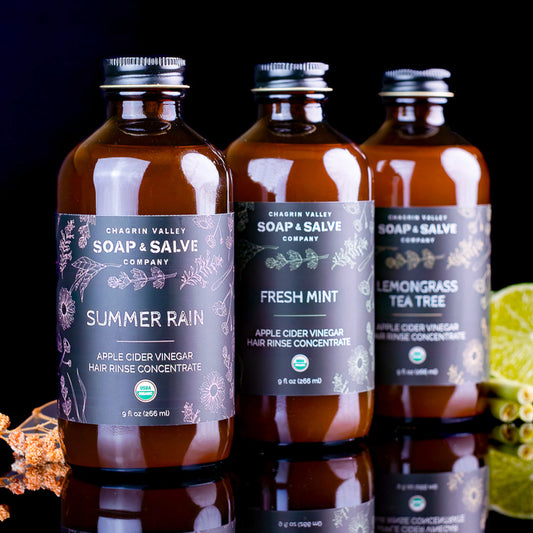
Apple Cider Vinegar is a great addition to any hair care regimen. Learn some tips, FAQs, and Recipes for using Chagrin Valley's Apple Cider Vinegar Rinses.
Read Post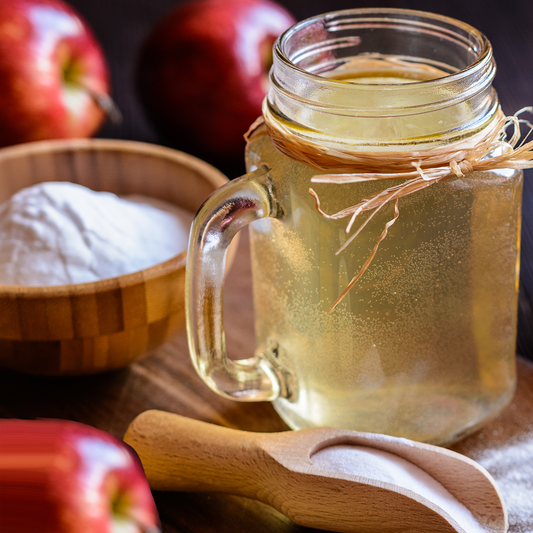
Try these Natural Remedies for hair and scalp build-up.
Read Post
People with severe allergies—please note: If you have severe anaphylactic-type reactions to ANY of the ingredients in ANY of our products, please do not buy our products. We have dedicated soap rooms and product rooms that are kept meticulously clean, but we cannot guarantee against possible cross-contamination of individual ingredients.
Chagrin Valley Soap & Craft is not responsible for any individual reaction to any particular ingredient. Each product description on our website includes a complete list of ingredients. People with sensitivities to any listed ingredient should not use the product. In case you are in doubt always try an allergy patch test and if at any time irritation occurs, discontinue use of the product.
The content and information on this website, provided by The Chagrin Valley Soap & Salve Company, is for educational purposes only and is in no way intended and should not be construed as medical advice to diagnose, treat, cure, or prevent any disease or health condition. The information regarding folklore or health-related benefits of certain ingredients is for educational purposes only. The information provided is not intended to prescribe or be taken as medical advice.
The information provided is not meant to substitute the advice provided by your personal physician or other medical professionals. Do not use the information found on this website to self-diagnose any medical conditions or treat any health problems or diseases. If you have medical concerns regarding yourself or your family you should seek the advice of qualified, licensed health professionals. Never disregard professional medical advice or delay in seeking it because of something you have read on this website.
This information has not been evaluated by the Food and Drug Administration. This notice is required by the Federal Food, Drug and Cosmetic Act.
Read our Full Medical Disclaimer.