
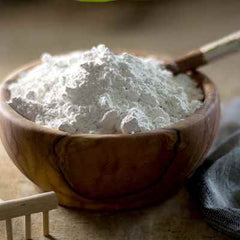
Kaolin Clay
A Gentle Cleansing Clay for All Skin Types
What Is Kaolin Clay?
Kaolin clay, also known as China clay, is a naturally occurring soft clay primarily composed of the mineral kaolinite. It was first identified near Kao-Ling Mountain in southeastern China and is valued for its purity, fine texture, and mild behavior on the skin.
Kaolin is one of the mildest cosmetic clays available, with a smooth, silky feel that makes it suitable for even very sensitive skin.
How Cosmetic Clays Work
Cosmetic clays clean the skin through two complementary mechanisms: adsorption and absorption.
Clays use adsorption to attract oil and surface impurities to their outer surface—much like a magnet to help rid skin of dirt and debris from everyday exposure to environmental pollutants, which can help clear blemishes.
At the same time, their naturally porous structure allows absorption, meaning oils and residues are drawn into the clay itself. Working together, these actions help lift excess oil from the skin and hold it so it can be rinsed away.
This dual action helps cleanse pores, control surface shine, and leave skin feeling refreshed and clean—without harsh surfactants or stripping ingredients.
Why Kaolin Clay Is Used in Skin & Hair Care
Kaolin clay, especially white kaolin, is widely considered one of the mildest cosmetic clays available. Its gentle behavior makes it a popular choice for sensitive, dry, or reactive skin that benefits from cleansing without aggressive oil removal.
Kaolin is valued for its soft texture, gentle cleansing ability, and balanced interaction with oil. Because it does not aggressively draw oil from the skin, it helps lift surface impurities while preserving the skin’s natural moisture balance.
These qualities make kaolin a common ingredient in facial masks, soaps, and fine face powders, where comfort, softness, and mild exfoliation are essential. In natural soap bars, kaolin also contributes to a smooth, creamy lather and a refined skin feel.
How Kaolin Clay Supports Skin & Hair
- Gentle Cleansing: Adsorption helps lift surface dirt, makeup residue, and everyday buildup without stripping the skin.
- Mild Oil Control: Helps manage excess oil while remaining comfortable for dry or sensitive skin types.
- Gentle Exfoliation: Fine particles provide light exfoliation, help remove dull surface skin cells, eliminate clogged pores, and improve circulation.
- Soothing & Comforting: Its mild nature makes it well tolerated by sensitive or easily irritated skin.
- Hair & Scalp Care: Gentle kaolin soothes the scalp, lifts residue, calms irritation, and leaves hair feeling light, soft, and bouncy.
Skin Types
Kaolin clay is commonly used in products formulated for:
- Sensitive skin
- Dry skin
- Normal skin
- Combination skin
- Mildly oily or acne-prone skin
Because it is gentle and does not aggressively absorb oil, kaolin is often chosen when stronger clays feel too drying.
Kaolin Clay Colors
Kaolin clays naturally vary in color depending on the mineral content of the rock from which they are mined. Trace minerals, most commonly iron oxides, are responsible for the typical colors seen in kaolin clays. No dyes or colorants are added.
While white, pink, red, yellow, and orange are the most common kaolin colors, kaolin can also naturally occur in shades of gray, bluish-green tints, and even dark brown or black, depending on specific mineral compositions and the presence of ancient plant material in the area where the clay is mined.
Although all kaolins share the same basic clay structure and gentle cleansing behavior, subtle differences in absorbency and feel can occur depending on color.
- White Kaolin: The purest and mildest form of kaolin. It provides very gentle cleansing and light exfoliation and is chosen for dry, sensitive, or easily irritated skin.
- Pink Kaolin: Pink kaolin may occur naturally as a pink-colored clay, or may be created by blending white kaolin and red kaolin clays. Also known as Rose Kaolin or French Pink Clay, it offers slightly more oil interaction than white kaolin while remaining gentle, making it a good balance for sensitive skin that experiences mild oiliness.
- Red Kaolin: Contains a higher concentration of iron oxides and has the strongest oil-absorbing properties among kaolins. It is often used for normal to oily or congested skin.
- Yellow & Orange Kaolin: Falls between white and red kaolin in absorbency and feel. These varieties offer gentle cleansing with slightly increased oil control and are often used in brightening or balancing formulations.
All kaolin clays remain non-swelling, adsorption-based clays, meaning they cleanse by attracting impurities to their surface rather than aggressively absorbing oil. Differences in color choice reflect formulation goals rather than fundamental differences in how kaolin behaves on the skin.
Buyer Beware: Clay Quality Matters
Clays are used in many industrial applications, and not all clays sold on the market are intended for cosmetic use. Lower-cost, industrial-grade clays may vary widely in purity and processing.
Knowing your clay, and how it is sourced, processed, and handled, is very important.
The clays we use are carefully sourced, ensuring they meet strict standards for cosmetic use. Since we are a USDA Certified Organic Company, the quality of our clays is also monitored by our USDA organic certification agency.
Learn More About Cosmetic Clays
Clays are complex, fascinating materials, and their behavior depends on mineral structure, particle size, and formulation.
👉 For a deeper look into the science of how cosmetic clays work and how different clays compare, read our blog: Cosmetic Clays in Skin Care


