Shower Butter Bar: Juniper Mint
- Out Of Stock
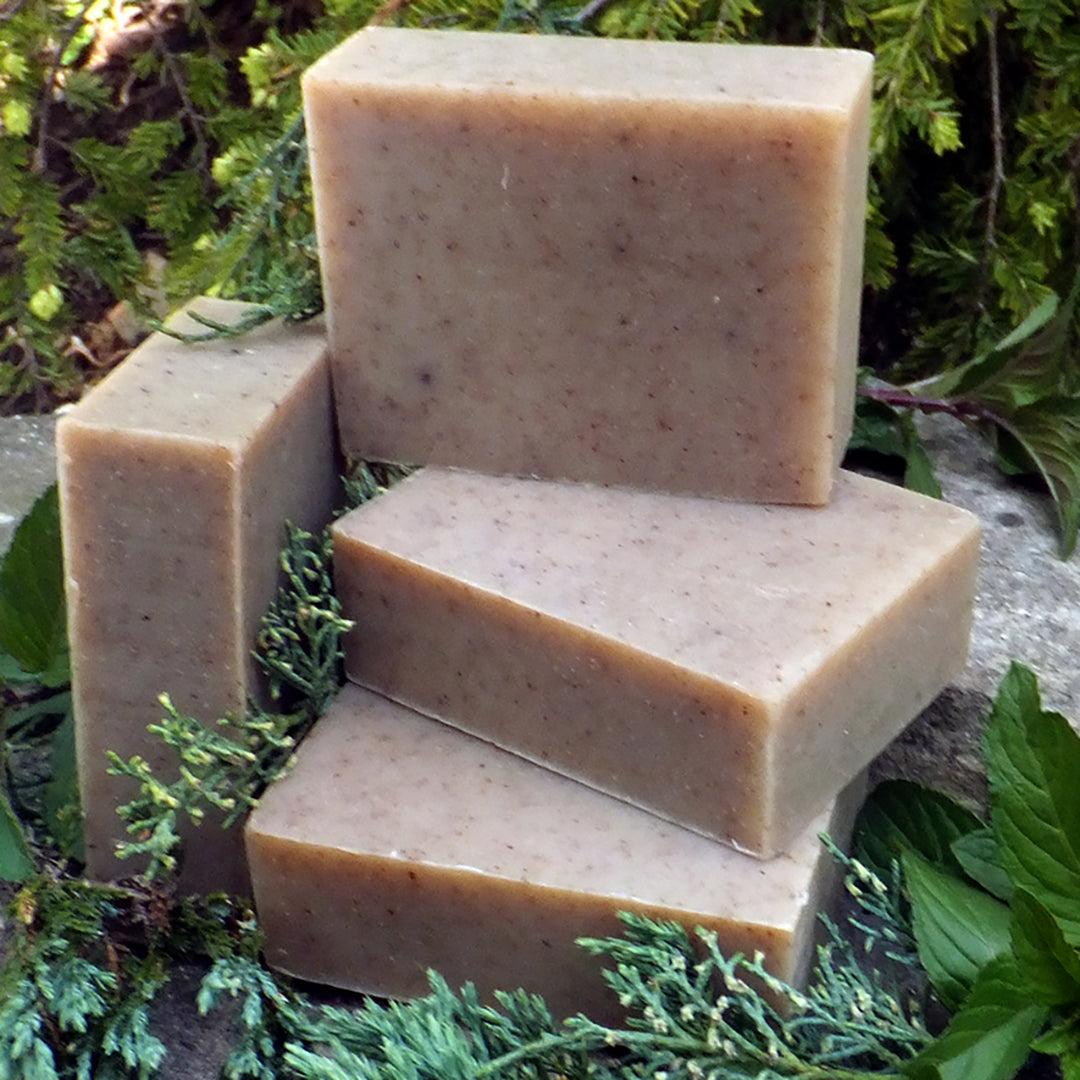
A creamy, beautifully lathering soap with a distinctive juniper-spearmint aroma that feels both fresh and grounding. Skin-loving plant oils and butters are blended with balancing clay, soothing aloe, and botanicals for a gentle exfoliation that leaves skin feeling clean, smooth, and refreshed — with a scent that lingers long enough to lift your mood.
Juniper Spearmint is one of those soaps that surprises people — not because it’s loud, but because it’s so good. The lather is generous and creamy, building easily in the hands and spreading smoothly across the skin. It’s the kind of soap that makes you slow down for a moment, just to enjoy how it feels.
The scent is amazing. It opens with the cool, clean freshness of spearmint, followed by the crisp, pine-like notes of juniper berry. A hint of lime adds brightness without sweetness, while eucalyptus keeps the blend feeling light and open. Beneath it all, a soft touch of ginger adds gentle warmth, rounding out the cool notes without taking over.
The overall aroma is fresh, balanced, and quietly energizing — like taking a deep breath of clean air at the edge of a forest.
As you wash, the bar offers a mild exfoliating touch from finely ground botanicals, juniper berries, and clay, just enough to add texture without scratching or irritation. Aloe contributes a silky glide to the lather, while rich plant butters keep the cleanse feeling smooth and comfortable rather than drying.
Juniper Spearmint is a soap for people who love a great lather and a scent that feels crisp, natural, and quietly energizing — the kind you reach for again and again once you’ve discovered it.
Every ingredient in this soap is chosen for a reason. Thoughtfully combined, they work together to create something richer than a simple cleanse — a carefully crafted bar that goes beyond ordinary soap.
Highlights of this recipe:
👉 Learn more about our Aroma, Texture & Lather notes
Creamy lather. Crisp woods and cool mint. Clean, fresh, and unforgettable.
The purpose of soap is to combine with oil and dirt on the body, which allows water to wash it away. The method you use to cleanse your skin is really a personal preference. We thought we would share just a few examples.
Bar Bathers rub the bar directly on their skin to create a creamy lather. Massaging the velvety lather into your skin before rinsing allows you to experience the best moisturizing properties of the soap. This is definitely the best way to use exfoliating soaps.
Hand Latherers create lather in their clean hands and use the lather to massage and wash the skin. This gentle, mild cleansing method may be good for those with sensitive skin.
Washcloth Washers use a washcloth to lather up. Washcloths are made out of lots of different textile textures, from soft cotton to agave fibers, and can provide very gentle to intense exfoliation. Be sure washcloths are laundered and dried often.
Puff Polishers use a mesh puff that works up a foamy, bubbly lather, even with hard water, to wash and gently exfoliate the skin. Poofs make natural soap last longer but can harbor bacteria, so rinse thoroughly after use and replace every few weeks or clean per manufacturer's instructions.
Loofah Latherers love their loofahs that exfoliate and help increase circulation. Whole loofahs can be breeding grounds for bacteria, so be sure they dry out properly after use and replace them every two months. If you would like something less abrasive, check out our Bath & Body Accessories.
Soap Sackers place their soap into a nylon soap bag. The fibers have a smooth texture for gentle cleansing. Soap sacks can be used for whole bars of soap or scraps that would normally be thrown away.
There is a large variety of bathing accessories available. If using any accessory, never share them with others and replace or clean them often.
The purpose of soap is to combine with oil and dirt on the body, which allows water to wash it away. The method you use to cleanse your skin is really a personal preference. We thought we would share just a few examples.
Bar Bathers rub the bar directly on their skin to create a creamy lather. Massaging the velvety lather into your skin before rinsing allows you to experience the best moisturizing properties of the soap. This is definitely the best way to use exfoliating soaps.
Hand Latherers create lather in their clean hands and use the lather to massage and wash the skin. This gentle, mild cleansing method may be good for those with sensitive skin.
Washcloth Washers use a washcloth to lather up. Washcloths are made out of lots of different textile textures, from soft cotton to agave fibers, and can provide very gentle to intense exfoliation. Be sure washcloths are laundered and dried often.
Puff Polishers use a mesh puff that works up a foamy, bubbly lather, even with hard water, to wash and gently exfoliate the skin. Poofs make natural soap last longer but can harbor bacteria, so rinse thoroughly after use and replace every few weeks or clean per manufacturer's instructions.
Loofah Latherers love their loofahs that exfoliate and help increase circulation. Whole loofahs can be breeding grounds for bacteria, so be sure they dry out properly after use and replace them every two months. If you would like something less abrasive, check out our Bath & Body Accessories.
Soap Sackers place their soap into a nylon soap bag. The fibers have a smooth texture for gentle cleansing. Soap sacks can be used for whole bars of soap or scraps that would normally be thrown away.
There is a large variety of bathing accessories available. If using any accessory, never share them with others and replace or clean them often.

The goal is simple: to Harness the Power & Simplicity of Nature® to cleanse, soothe, heal, and protect your skin and hair!
Our unique formulas rely on moisturizing oils and butters, healing botanicals, and pure essential oils. We choose every ingredient with one end-result in mind….the BEST possible natural skin care for YOU!
Organic Juniper Berry Essential Oil
Organic Aloe Vera
Organic Comfrey Leaf
|
*Ingredient is Fair Trade Certified ^Used in the saponification process to turn oil into soap and glycerin. None remains in the finished product.
Made with certified organic Flaxseed Oil, Cocoa Butter and Aloe
|
If you think about it, your skin type is not even the same for all of the areas of your body.
The skin on your face is different from the skin on your hands, which is different from the skin on your back which is different from the skin on your feet ...etc.
Although your skin type is determined by genetics, it will also be affected by other factors and can change with time.
Understanding your skin type is a good starting point before trying or switching to natural products.
There are typically five types of healthy skin: normal, dry, oily, combination, and sensitive.
NORMAL SKIN
This skin is balanced, neither too dry nor too oily. It has regular texture, no imperfections and a clean, soft appearance, and does not need special care.
OILY SKIN
Oily skin is the result of excessive secretions of sebum, an oily secretion of the sebaceous glands. Oily skin tends to attract more dirt and dust than dry skin and may be prone to blackheads, acne, and excessive shine. It is frequent in adolescents and often seen with acne or blemish-prone skin.
DRY SKIN
For some people dry skin is caused by external factors such as the weather, low air humidity, sun, or hot showers, and it is often temporary.
However, for others it may be a lifelong condition. Dry skin is a result of a decrease in natural oil production which often results in skin that is flaky and has a rough appearance. Dry, cracked skin is often prone to skin disorders, such as eczema.
SENSITIVE SKIN
Truly sensitive skin easily reacts to external stimuli. The skin is often fragile, thin or fine-textured, dry, and prone to allergic reactions.
Sensitive skin often feels uncomfortable, tight, red or itchy. It is a delicate skin that needs a lot of TLC.
COMBINATION SKIN
Combination skin is just what is sounds like, it has characteristics of both dry and oily skin. The area with more oil is usually the T- zone (forehead, nose, and chin), while the skin on the cheeks is normal or dry.
For more information on skin type and help with product recommendations for your individual needs, please read our blog, What's Your Skin Type?
Saying a soap is "handmade" says nothing about quality of the ingredients or the knowledge and skill of the soapmaker!
Chagrin Valley is not just another soap and skincare company. We are committed to healthy skin, healthy people and a healthy planet.
We are a USDA Certified Organic Company specializing in luxurious, organic, handmade natural soaps and shampoo bars rich in natural glycerin for healthier skin and hair.
It's all about the ingredients! Inspired by our love of nature, we use organic herbs, seeds, flowers, vegetables, fragrant spices, fruits, pure essential oils and purifying clays for their exceptional skincare benefits and to provide natural color, aromatherapy, texture, or gentle exfoliation. Nothing artificial, nothing synthetic, no GMO’s, just natural wholesome ingredients.
Our soap making process uses only natural and organic ingredients. Why add artificial ingredients to a handmade product?

"Are All Handmade Soaps The Same?"
"12 Reasons to Use Natural Soap"
NO! Adding antibacterial chemicals to soap does not keep your family safe from germs.
I understand why folks (especially those with children) are choosing products labeled “Antibacterial,” hoping to keep their family safe in the war against germs.
According to Janet Woodcock, M.D., director of the FDA’s Center for Drug Evaluation and Research (CDER).
"Consumers may think antibacterial washes are more effective at preventing the spread of germs, but we have no scientific evidence that they are any better than plain soap and water.
In fact, some data suggests that antibacterial ingredients may do more harm than good over the long-term.”
Simply washing your hands with old-fashioned natural soap and water rids your skin of most fungi, bacteria, and viruses. Soap does not kill germs, it surrounds them and carries them away.
Please read our blog: Antibacterials: More Harm Than Good!
Yes And No!
Although handmade natural soaps usually get better with age, we recommend using our soaps within 12 months of purchase. Our scented soaps should be used within 3 months after removing them from the box.
Although the soaps will not be "spoiled" after that time, you may notice some changes as natural soap ages.
The changes in color and scent happen even more quickly in our sample size bars.
These small natural soap bars have a much greater surface area to volume ratio which allows essential oils to evaporate from the surface more quickly. However, the scent may still be there when you lather up.
I have found some ancient bars hiding in my closet that years old. The scents were gone, but the lather was incredible!
For a more detailed discussion please read our blog, "The Shelf Life, Color & Scent of an All Natural Soap."
Have you ever enjoyed the scent of a fragrant flower or herb? The fragrance comes from potent, aromatic compounds called essential oils found in the flowers, stems, seeds, bark, roots, fruits, and other parts of plants. It often requires several pounds of a plant to produce a single bottle of essential oil.
Essential oils not only give plants their unique scents but also help lure plant pollinators and protect plants from insects and other predators.
The chemical composition of essential oils may provide valuable psychological and physical aromatherapeutic benefits for some people.
It is important to note that to be a true essential oil, the oil must be isolated from the plant material by physical means only. Essential oils are NEVER extracted using solvents.
Although synthetic fragrances or "nature identical" oils are available at a much lower cost, only natural plant essential oils will provide any aromatherapeutic benefits.

What Are Essential Oils (Much more detail)
How Essential Oils Are Extracted
Why We Use Only Real Plant Essential Oils?
If you are pregnant or under a doctor's care for any medical condition, please consult your healthcare provider before using essential oils.
Pregnancy & Children: We do not provide information on the safety of essential oils during Pregnancy or for use in Children because the available information is very ambiguous and often contradictory. If you’re interested in using essential oils during pregnancy or with young children please do your own research and consult your doctor, midwife, or health care professional before use.
We sometimes receive emails that go like this:
The good news is that when you purchase natural soap from an organic skincare company, it is scented with only pure essential oils.
The bad news is that when you purchase natural soap from an organic skincare company, it is scented with only pure essential oil.
The scent of an essential in any totally natural product can and will change over time and from batch to batch.
Essential oils come from nature. The quality and scent of essential oils are affected by yearly weather conditions and varies from crop to crop and region to region.
This makes it very difficult to produce finished products in which the scents are always exactly the same.
Most commercial soaps (and skincare products), even some of the "natural" ones that contain some essential oils, are made with at least some synthetic fragrances oils, nature identical oil, or natural fragrance oil. Using any synthetic fragrance ensures a more consistent scent.
Essential oils are temperamental to work under any circumstance. But while a natural essential oil scent blend may change a bit in a cream or oil, these blends are especially unpredictable when making cold processed natural soap.
After all my years of soap making in never ceases to amaze me just how much the actual soap making process changes the scent of an essential oil blend.

Natural Soap and Essential Oils
Why We Use Only Real Plant Essential Oils?
Natural Fragrance Oil? . . . Really?
Why Are Synthetic Fragrance Oils So Popular?
How long a natural soap bar will last depends on:
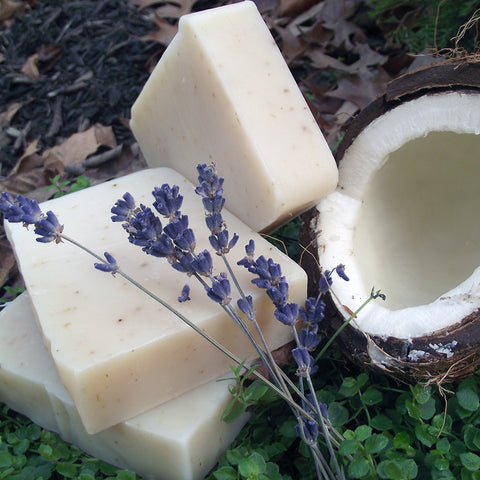
For one person showering every day, a well-drained bar should last for about one month.
Natural soaps are normally softer than commercial soaps because they retain their natural glycerin (which is removed in commercial soap production) and contain no artificial hardening chemicals, synthetic waxes or free alkali.
We also superfat our soaps (add extra oils or butters) and use "softer" oils so that Chagrin Valley natural soaps are more emollient and leave skin feeling moisturized.
Different oils impart different qualities to soap. Some add lathering qualities, some moisturizing, some hardness, and so on. Compared to other natural bars, we use a larger percentage of extra moisturizing and conditioning oils in our soaps and shampoo bars. These oils produce a bar that may not be as hard as bars with less conditioning oils.
How you use the bar will also affect its lifespan. For example, do you use a washcloth, an exfoliating accessory, or only the bar? Although exfoliating loofahs and sponges are great they will use up the soap much faster than a washcloth or the "only the bar" purists.
Our Natural Soap Will Last A Long Time With Proper Care
Cute Story: A customer called to say she loved our soaps but could not buy them anymore because they did not last as long as other soaps. A week later she called to place an order and apologize. Her husband, who would NEVER use her natural soaps before, fell in love with her new Juniper soap . . . and he showered twice a day!
To maximize the life of your soap, keep it in a well-drained soap dish so it can dry between uses.
We sell a handcrafted solid white oak soap dish. The deep ridges are perfect for keeping your all natural handcrafted soap dry between uses. White Oak is the wood used in shipbuilding.
A tip passed on by one of our customers whose kids always leave the soap in a water puddle: cut the large bars in halves. Then alternate the halves, allowing a longer drying time between uses.
If you are asking the question:Do you use lye (sodium hydroxide) to make Chagrin Valley natural soap?
The answer is -- yes, of course.
No lye -- No soap!
All REAL soap is made with lye (sodium hydroxide mixed with a liquid).
Any skin or hair cleansing product made without sodium hydroxide is not soap, it is a detergent.
Is there lye in a bar of Chagrin Valley Natural Soap or Shampoo?
The answer is "No."
When the chemical reaction of making soap, called saponification, is complete, the lye and oil molecules have combined and chemically changed into soap and glycerin.
If the soap is made properly, the lye is used up in the saponification process to turn oil into soap.
There is no lye present in the finished bars of soap or shampoo. While all real soap must be made with lye, no lye remains in our finished product after saponification (described below).
If it is real soap or contains read soap, it is made with lye!
Some commercial "soap" bars and all handmade soap bars are made with lye even though the words "sodium hydroxide" or "lye" do not appear on the labels. Does your bar of "soap" contain ingredients such as...
These words are not usually used to deceive consumers. But soap makers know that consumers are afraid of the word "lye."
At Chagrin Valley we believe that today's consumers are pretty savvy and the best practice is to educate.

"Is There Lye in Natural Soap? Won't it Harm My Skin? Information about lye and the chemistry of soap making
Yes, they are!
Chagrin Valley natural soap and shampoo bars are made with natural and organic ingredients and are biodegradable when used properly.
They’re thoughtfully crafted to break down naturally in the environment, which makes them a responsible choice for everyday use and for outdoor adventures when used with care.
By definition, biodegradable means capable of being broken down by living organisms, such as naturally occurring bacteria, into simpler substances that are not harmful to the environment.
Natural soap made with plant oils, butters, and clays can biodegrade efficiently — but where and how it’s used matters.
Bringing a biodegradable soap on a camping or backpacking trip is a wonderful way to stay comfortable and refreshed outdoors. However, even biodegradable soap should never be used directly in lakes, rivers, or streams.

You may see claims online suggesting that biodegradable soap or shampoo is safe to use directly in rivers and streams.
While these claims are often made with good intentions, they overlook an important part of how biodegradation actually works.
The bacteria responsible for breaking down natural soap live primarily in soil, not water.
That means soap — even biodegradable soap — breaks down most effectively when it comes into contact with organic soil, not freshwater sources.
Even biodegradable soap will pollute lakes and streams if it is not used properly.
So while our soaps are biodegradable, they are designed for mindful outdoor use, not for bathing, washing dishes, or cleansing directly in natural water sources.
A few simple practices help protect waterways and support natural breakdown:
These methods help surround the soap with organic matter, speed up decomposition, and reduce runoff.
Yes — when used responsibly.
Many commercial soaps, body washes, shampoos, and dish detergents contain synthetic surfactants, artificial fragrances and colors, and chemical preservatives.
Since these ingredients do not break down quickly, traces can persist in the environment for many, many years and can have a potential negative impact on plants and animals.
A biodegradable natural soap made with plant-based ingredients breaks down more readily when exposed to soil bacteria, making it a far better choice for outdoor use — as long as it’s used thoughtfully and away from waterways.
Biodegradable doesn’t mean anywhere.
It means used with intention and respect for nature.
That philosophy is at the heart of how we make our soaps — and how we encourage them to be used.
There’s no substitute for nature. Together, we can protect it from impacts like overuse, trash, and harming endangered wildlife by following the principles of "Leave No Trace."
Fragrance oils are synthetic compounds that offer no aromatherapeutic value. Why are they so popular? They are cheaper, offer greater variety, and retain their scent for a longer period of time.
Read Post
You probably never thought of natural soap as a lethal weapon -- but it can be for some viruses. The CDC says that for good hand hygiene all you need is plain natural soap and water.
Read Post
Help Me Choose a Natural Soap: Your skin type is unique to you! We have compiled natural soap recommendations based on information gathered from friends, family, and customers. We hope this will help you make your choices based on skin care needs and sensitivities.
Read Post