

Cinnamon Essential Oil
Warm, Stimulating & Comforting
Cinnamon, Cinnamomum verum, also known as “Ceylon cinnamon”, carries a warm, spicy-sweet aroma that has been valued for thousands of years.
Once more valuable than gold during the spice trade, true cinnamon remains a cherished oil used for wellness, perfumery, and emotional comfort. Steam distilled from the bark or leaves of the cinnamon tree, the oil is very potent and must always be properly diluted before skin application.
Its scent is rich, bold, warm, and deeply spiced with a natural sweetness that feels both familiar and distinctive.
In soap, cinnamon adds warmth and intensity. Its spicy-sweet character comes through clearly in the finished bar, giving it a bold, full-bodied scent with a rich, inviting, and unmistakably cozy feel.
Aromatherapy: The warm, spicy-sweet aroma feels cozy and inviting, bringing a sense of warmth and gentle energy that can brighten the mood and create a comforting atmosphere.
Cinnamon vs. Cassia — What’s the Difference?
While hundreds of cinnamon species exist worldwide, two dominate the market:
Cinnamomum verum (True Cinnamon / Ceylon Cinnamon)
- Its name means true cinnamon
- Originally from Sri Lanka (formerly Ceylon)
- Thin, soft bark with many delicate layers
- Light, gently sweet flavor
- More expensive and less common
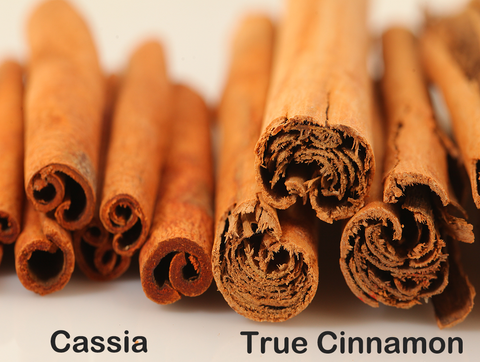 Cinnamomum aromaticum (Cassia / Chinese Cinnamon)
- Native to southern China
- Stronger, bolder, more pungent flavor
- Bark is thick, hard, and curls as one solid layer
- Cheaper and more widely available — most U.S. “cinnamon” is cassia
In the U.S., both may be labeled simply cinnamon, but many other countries require cassia to be labeled accurately. If your cinnamon stick is thick and rolls in a single hard coil, it’s cassia — not Ceylon cinnamon.
Cinnamon Bark vs. Cinnamon Leaf — What’s the Difference?
Both oils come from Cinnamomum verum, but their chemistry — and how they behave on the skin — is very different.
Cinnamon Bark Oil
- Steam distilled from the tree bark
- Higher in cinnamaldehyde (strong antimicrobial + antiviral activity)
- Warm, bold, spicy aroma — the classic "cinnamon" scent
- Potent and more likely to irritate skin → must be well diluted
Cinnamon Leaf Oil
- Steam distilled from the leaves
- Rich in eugenol (valued for its mild analgesic properties)
- Softer, less intense aroma than bark or cassia
- Gentler on skin and easier to use in topical blends
🌿 Essential oils are highly concentrated plant essences and should be used with care. For basic safety information, please see our Essential Oil Safety Guidelines.

