
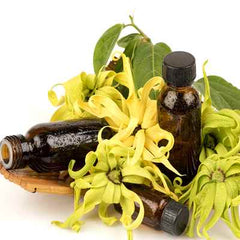
Ylang Ylang Essential Oil
Where Radiant Skin Meets Inner Serenity
Ylang Ylang essential oil, Cananga odorata, is steam distilled from the fragrant star-shaped flowers of the ylang-ylang tree (pronounced EE-lang EE-lang OR Lang-Lang), sometimes called the "poor man's Jasmine."
This exotic essential oil has been treasured across cultures for centuries. Its name means “flower of flowers”—a fitting tribute to its intensely sweet, floral, romantic aroma. Beloved in perfumery (including as a key note in Chanel No. 5), Ylang Ylang has long been associated with beauty, sensuality, and emotional harmony. It is even traditional in parts of Indonesia to scatter fresh flowers on the beds of newlyweds.
In addition to its luxurious scent, Ylang Ylang offers remarkable skincare and hair-care benefits—making it one of the most versatile essential oils we use.
Skin Benefits of Ylang Ylang Essential Oil
Ylang Ylang essential oil helps promote the appearance of healthy, radiant skin by supporting balance, comfort, and a calm, even‑looking complexion. It helps maintain moisture, supports balanced oil levels, and soothes areas that feel stressed or reactive. Its naturally softening qualities contribute to a smoother, more nourished glow. Key benefits include:
- Helps balance oil for oily, dry, or combination skin
- Supports clearer‑looking, calmer skin
- Helps soothe visible redness or irritation
- Softens the look of minor blemishes
- Enhances skin softness and radiance
Good for dry, normal, oily, sensitive, and combination skin types, its naturally soothing and conditioning qualities contribute to clearer‑looking, calmer skin and a soft, luminous glow.
Hair & Scalp Benefits
Ylang Ylang has been used for generations to help rejuvenate hair and support a healthy‑feeling scalp.
It helps support balanced oil levels—important for both oily and dry scalps—and offers naturally soothing qualities that can ease the feeling of dryness or itchiness. By encouraging a refreshed scalp environment, Ylang Ylang helps support stronger‑looking, more vibrant hair. Hair Benefits Include:
- Helps balance oil levels for greasy or dry scalps
- Conditions and softens dull hair
- Supports fuller‑looking hair by refreshing the scalp
- Helps reduce the look of flaking or dryness
- Adds shine, smoothness, and softness
- Helps strengthen the feel of strands and reduce the appearance of breakage
Aromatherapy Properties
Ylang Ylang’s beautifully sweet, fruity‑floral aroma is deeply soothing to the mind and spirit. It promotes feelings of peace, warmth, and emotional harmony—making it a favorite in relaxation blends, perfumes, massage oils, and evening wind‑down routines.
Its scent helps ease emotional tension, soften daily stress, uplift the mood, and support a more restful atmosphere. Ylang Ylang is also cherished for its sensual, romantic qualities, long used to inspire connection and affection.
Aromatherapy Benefits Include:
- Helps reduce feelings of stress and emotional tension
- Uplifts mood and helps ease irritability or emotional fatigue
- Encourages positive, comforting feelings
- Supports relaxation and a more restful sleep
- Helps balance intense emotions such as anger or frustration
- Its sweet, euphoric aroma is often associated with romance and sensuality
Ylang Ylang leaves a gentle, floral warmth that softens the skin, uplifts the senses, and brings a quiet touch of ease to your day.
Ylang Ylang Distillation Grades: A Simple Guide
Ylang Ylang essential oil is unique because it’s distilled in stages, or fractions. This means that the distillation process is stopped at various stages, the essential oil produced at that point is taken off, and then the distillation continues.
As the distillation runs, different aromatic molecules emerge at different times, creating several distinct versions of the same oil. None is “better” than the other — they simply have different scent profiles and uses.
The Five Types of Ylang Ylang
Extra – Collected in the first hour or two of distillation. The most volatile, intensely sweet, and floral. Highly prized in perfumery.
Grade I – Still bright, floral, and slightly sweet, but more mellow and balanced than Extra.
Grade II – A softer version of Grade I with a gentler aroma.
Grade III – Less sweet and more earthy or herbaceous, with deeper base notes.
Complete – A full, uninterrupted distillation (about 15 hours) that captures the whole aromatic range of the flower. Sometimes created by blending all four fractions. Balanced, rounded, and often used in aromatherapy.
Why So Many Versions?
When botanicals are steam distilled to produce essential oils, the aromatic molecules that are the smallest, the lightest, and the most delicate notes escape first. Then, throughout the distillation process, the larger and heavier aromatic molecules are released.
So, as distillation progresses, lighter, sweeter molecules appear first Ylang Ylang Extra), and heavier, earthier molecules appear later. Fractionating captures these different aromatic “moments.”
Which One Is Best?
It truly comes down to preference and purpose:
- Ylang Ylang Extra is intensely floral (some love it, some find it overpowering).
- Ylang Ylang I and II are beautifully balanced and often the most popular.
- Ylang Ylang III is deeper and more grounded.
- Ylang Ylang Complete offers a “full flower” aroma.
While Ylang Ylang Extra is the most expensive, in a little informal experiment at your shop, most of us preferred the scent of Ylang Ylang I over Extra!
🌿 Essential oils are highly concentrated plant essences and should be used with care. For basic safety information, please see our Essential Oil Safety Guidelines.


