
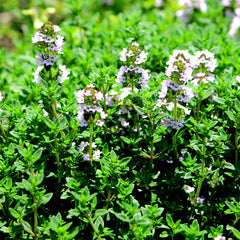
Thyme Leaf
A Clarifying Herb for Skin, Scalp, and the Senses
Thyme, Thymus vulgaris, is a fragrant, perennial herb in the mint family, recognized by its tiny, aromatic leaves and long history of culinary and medicinal use. Since antiquity, thyme has been valued for its cleansing, healing, and invigorating properties—particularly for skin and scalp care.
In medieval Europe, thyme symbolized courage and vitality. Roman soldiers bathed in thyme-infused water before battle, believing it restored strength and sharpened the mind. The name thyme comes from the Greek thymus, meaning courage or spiritedness.
Historically seen as a powerful disinfectant and antiseptic, thyme has long been applied to support skin health and respiratory wellness. Today, it remains respected for its potent antimicrobial, antifungal, anti-inflammatory, and antioxidant properties.
Skin Benefits of Thyme Leaf
Dried thyme leaves are especially valued in skincare for their ability to cleanse, tone, and calm the skin while helping manage common problem-skin concerns.
- Antiseptic & Antibacterial: Helps combat acne-causing bacteria, cleanse pores, and support clearer skin
- Astringent & Toning: Tightens pores and helps regulate excess oil (sebum), making it helpful for oily and acne-prone skin
- Soothing & Anti-Inflammatory: Helps calm redness, irritation, and discomfort associated with eczema and inflamed skin
- Oil Control: Supports balanced skin by reducing shine and buildup without overly drying
- Antioxidant Protection: Helps protect skin from environmental stress
Hair & Scalp Benefits of Thyme Leaf
Thyme has long been used in hair and scalp care for its stimulating and purifying qualities. Its naturally antifungal and antimicrobial compounds—especially thymol—make it useful for scalp conditions such as dandruff, itchiness, and excess oil.
- Stimulates Hair Growth: Encourages circulation to the scalp, delivering nutrients to hair follicles and supporting fuller-looking hair
- Fights Dandruff: Antifungal properties help combat yeast and bacteria associated with flakes and scalp irritation
- Strengthens Hair: Nutrient-rich leaves help fortify hair strands and reduce breakage
- Balances Oil Production: Helps regulate sebum without stripping the scalp
- Soothes Scalp Irritation: Anti-inflammatory compounds calm redness, itchiness, and discomfort
How We Use Thyme Leaf
We choose thyme leaf preparations based on the results we want to achieve—cleansing, toning, scalp stimulation, or gentle exfoliation.
Slow Warm Oil Infusions
We infuse thyme leaf in organic oils using our slow, gentle warm-infusion method. This process draws out the herb’s fat-soluble compounds, creating a richly infused oil that combines the nourishing qualities of plant oils with thyme’s skin and scalp supportive properties. These infusions are used in natural soaps, natural shampoo bars, and bath & body oils to help cool irritation, refresh tired skin, and support scalp health.
Loose Leaf for Gentle Exfoliation
Dried thyme leaves are added directly to natural soaps, scrubs, and foot soaks to add mild exfoliation and a refreshing sensation while contributing their naturally cleansing and antibacterial properties.
Loose Leaf in Bath Teas, Hair Teas, and Facial Steams
Thyme leaf is included in herbal bath teas, facial steams, and hair teas, where warm water releases its naturally aromatic, astringent, and clarifying qualities. In a warm bath or steam, thyme helps refresh the body, revive the senses, and support easier breathing, making it especially welcome during seasonal congestion or when the chest and head feel heavy.
These steam-activated preparations help soothe tired muscles, cleanse and tone the skin, refresh the scalp, and create an invigorating, clear-feeling bathing experience that awakens the senses while still calming the body.


