
Great
"This a great product. Perfect for the car and travel."




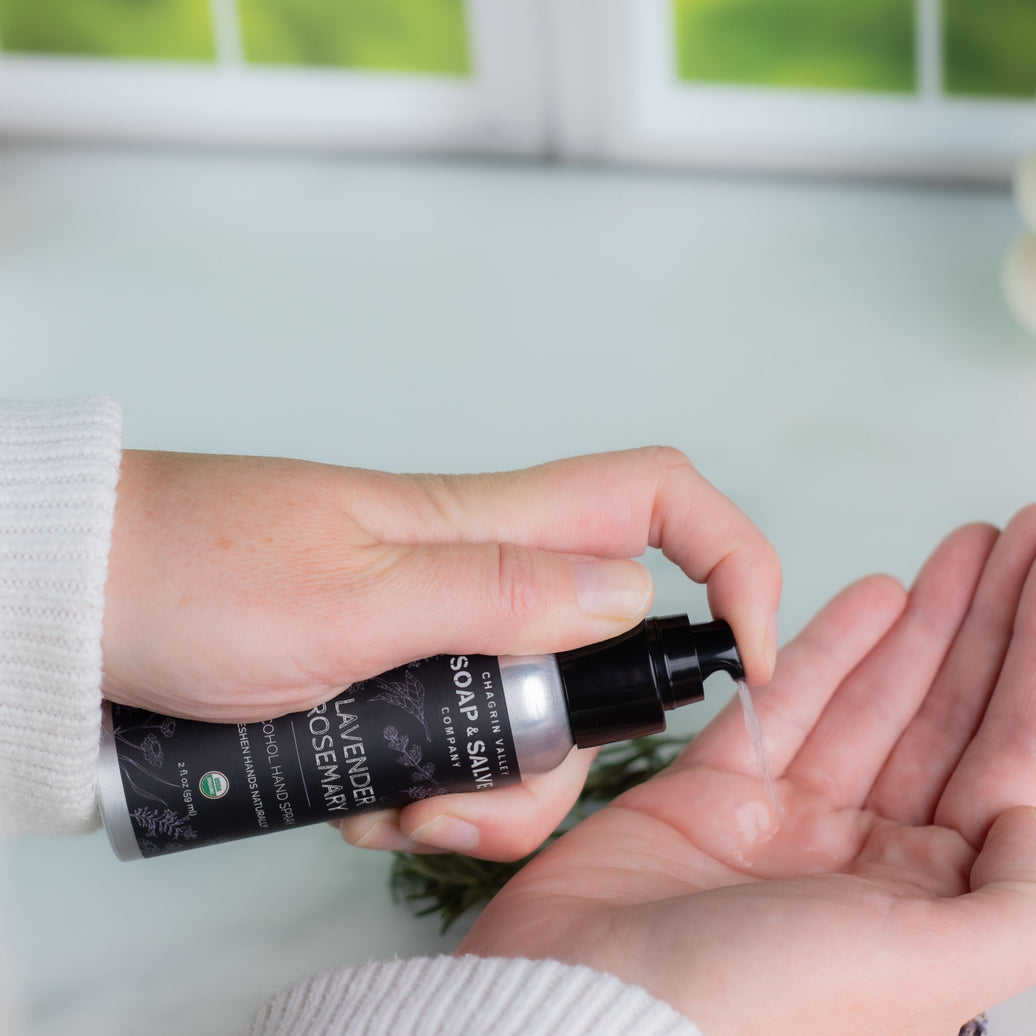
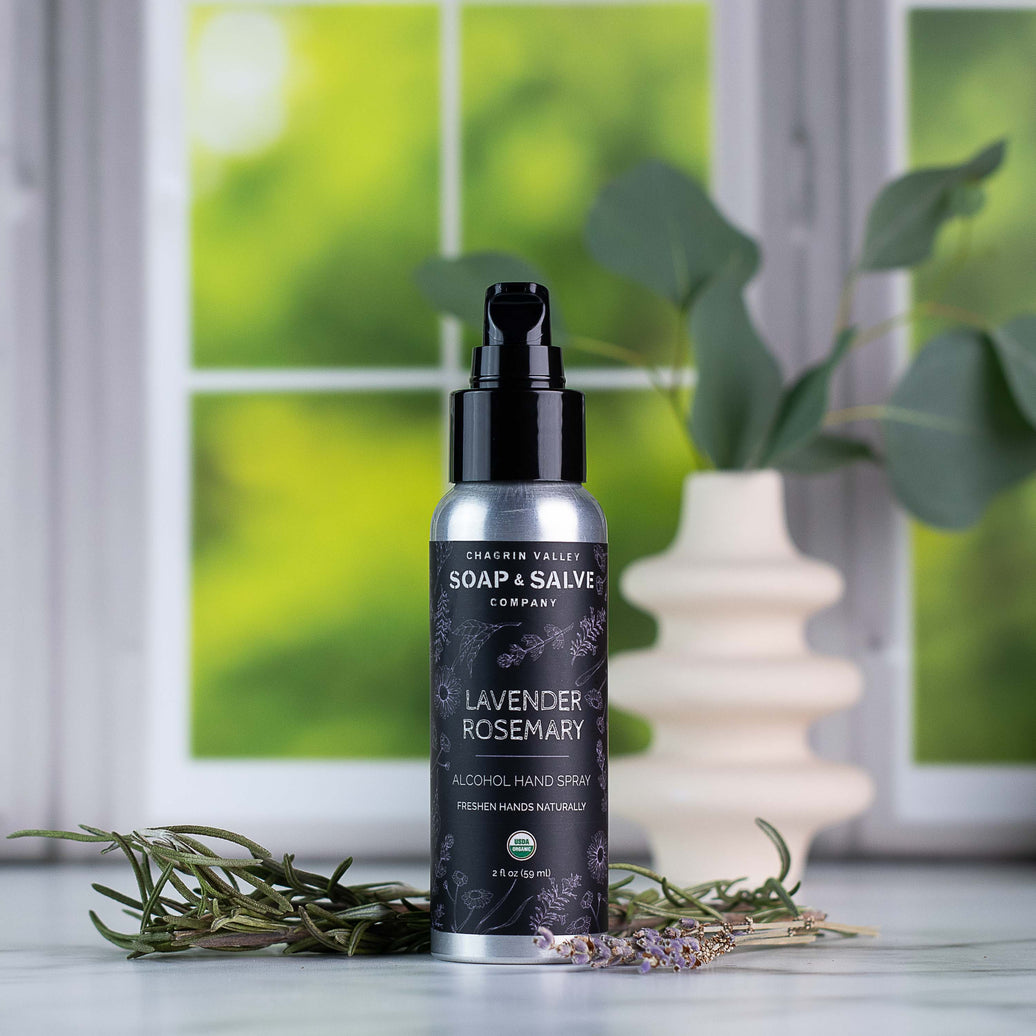
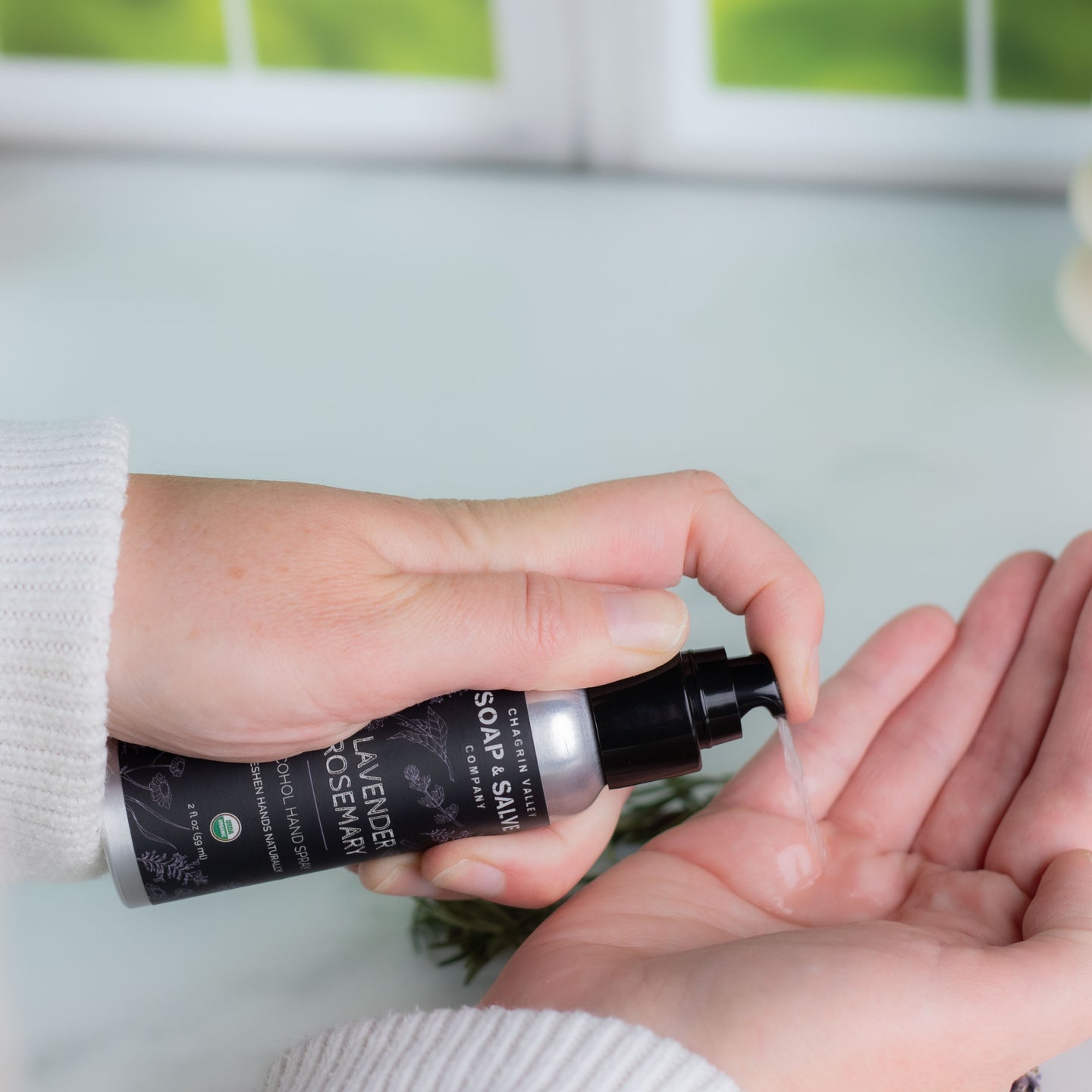
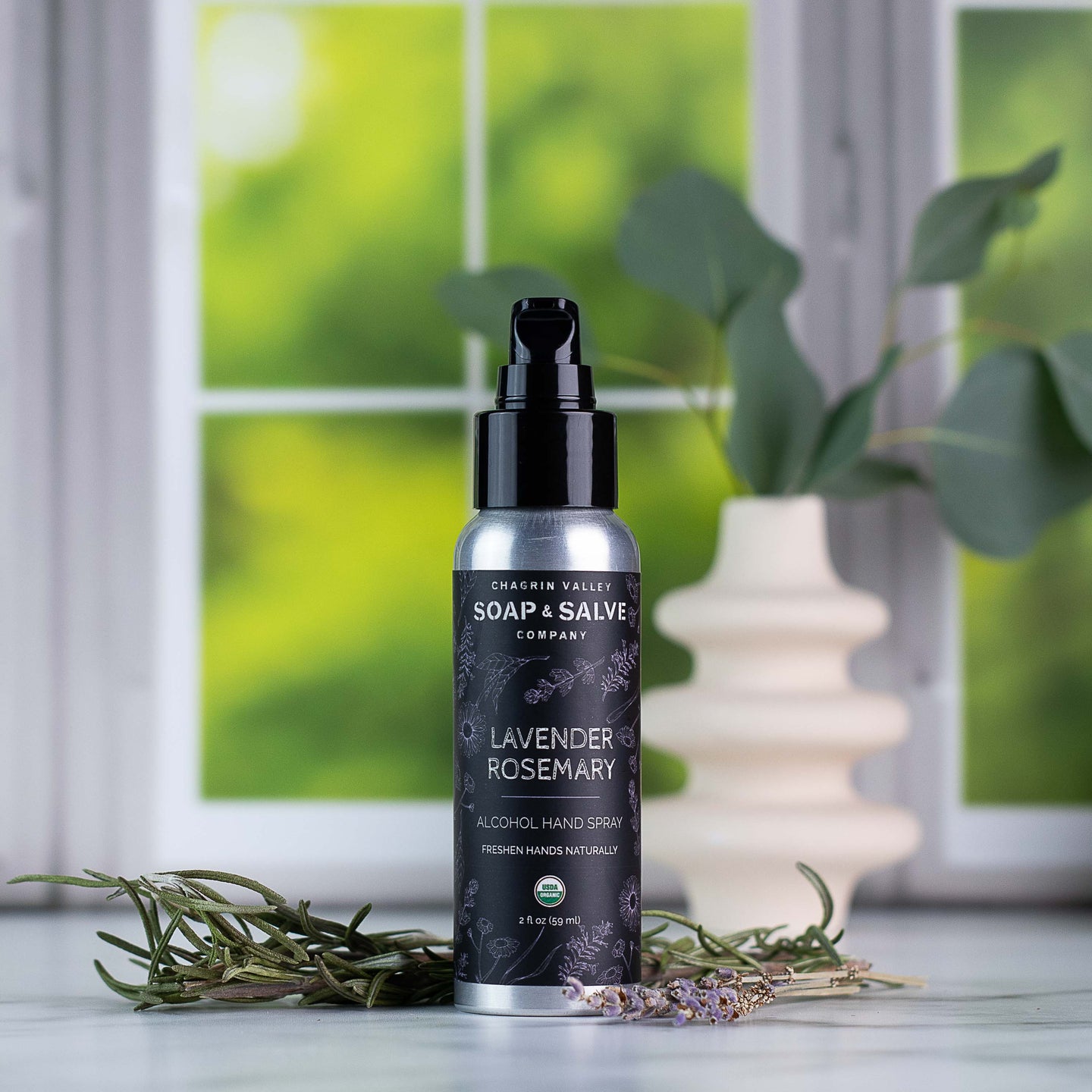
A soothing, herbaceous hand spray made with 75% organic cane alcohol to support good hand hygiene when you’re on the go. A quick spritz leaves hands feeling refreshed with a soft, calming botanical aroma.


Our Lavender & Rosemary Hand Spray is made with a simple blend of organic ingredients: 75% organic cane alcohol, witch hazel, vegetable glycerin, and essential oils. That’s it.
The lightweight mist absorbs quickly, making it easy to freshen your hands anytime—after errands, before eating, or whenever soap and water aren’t available, adding another option to support good hand hygiene habits between washings.
A gentle blend of lavender and rosemary creates a calm, herbal scent with a clean, green edge. Lavender brings a soft, floral roundness, while rosemary adds brightness and clarity. The alcohol note is present at first spray but fades as the botanicals come forward.
The mix of minty and herbal essential oils adds a clean, invigorating scent without synthetic fragrance.
Products marketed as hand sanitizers are regulated by the U.S. Food and Drug Administration (FDA) as over-the-counter drugs. Because this product has not been evaluated by the FDA, we describe it as a hand spray intended to support good hand hygiene.
The Centers for Disease Control and Prevention (CDC) notes that washing with plain soap and water is the most effective way to clean your hands. A hand spray is simply a helpful option for those in‑between moments.
As with all alcohol‑based hand products, keep out of reach of children and use only under adult supervision.
Packaged in a 2 oz aluminum bottle with a treatment pump for easy, travel‑friendly use.
👉 Learn More: Is Hand Sanitizer More Effective Than Soap and Water?
When soap and water are not available, an alcohol-based hand spray can be a convenient way to refresh hands.
*Alcohol-based hand sanitizers and cleansers are safe when used as directed. These products contain a much higher alcohol concentration than most hard liquors and can cause alcohol poisoning if swallowed especially in children.
According to the American Association of Poison Control Centers, "Even a small amount of alcohol can cause alcohol poisoning in children." Source
If you or your child ingests an alcohol hand spray, call the poison control center or a medical professional immediately.

The goal is simple: to Harness the Power & Simplicity of Nature® to cleanse, soothe, heal, and protect your skin and hair!
Our unique formulas rely on moisturizing oils and butters, healing botanicals, and pure essential oils. We choose every ingredient with one end-result in mind….the BEST possible natural skin care for YOU!
 Organic Cane Ethanol*
 Organic Vegetable Glycerin
 Organic Lavender Essential Oil
Organic Alcohol (Ethanol) content: 75%
Organic ethanol is denatured with essential oils
*Ingredient is Fair Trade Certified
Overall rating: 4.952381 / 5 from 21 reviews.
Review topics: ["size","quality","smells","sanitizer","spray","hands","lavender"].
"This a great product. Perfect for the car and travel."
— Carrie C. (5/5)
"Great product with nice smell"
— Susan (5/5)
"It absorbs quickly. Non drying. I can keep it in my car & it doesn’t break down like gel sanitizers"
— Terri B. (5/5)
"The scent is delightful and the spray does not leave my hands sticky or dry."
— Hannah M. (5/5)
"Organic hand sanitizer. This product served my purpose well. Being a novice (A recent graduate of a Master in the science of herbal medicine) I find the ingredients in the spray appropriate for the needs of the sanitizer. It also smells nice and leaves the hands soft."
— Rowena B. (5/5)
"Awesome. My favorite and we have all sampled plenty of kinds over the pandemic! This one absorbs quickly with no sticky residue, all natural and the fragrance is lovely!"
— Terri B. (5/5)
"This is a great hand sanitizer with a nice metal spray bottle. Non-drying with a fresh smell. The inky thing missing is a large refill option."
— Colleen H. (5/5)
"Very handy! And smells nice, too!"
— Mary S. (5/5)
"Very happy with my purchase of the lavender rosemary hand spray. Not only does it help sanitize your hands naturally, it smells wonderful and is not harsh on your hands. You recognize all of the ingredients. Also, your customer service is outstanding! Answered all of my question. :)"
— Mary E. (5/5)
"Great smelling"
— Steven G. (5/5)
 When you are on the go and soap and water are not available, alcohol-based hand rubs and sprays that contain greater than 60% alcohol can be effective if used properly.
While a hand sanitizer is useful in a pinch, it can fail under certain conditions.
Hand sanitizers kill germs but they do not clean dirty hands. Hand sanitizers work best when hands are generally clean and not heavily soiled or greasy.
If hands are wet or sweaty the water can dilute the sanitizer and reduce the effectiveness. Also, if hands are dirty or sticky, the sanitizer will not clean your hands of excess oil or grease to which viruses can also adhere.
"Alcohol is pretty effective at killing germs, but it doesn't wash away stuff," says Dr. William Schaffner.
According to the CDC, "There are important differences between washing hands with soap and water and using hand sanitizer. Soap and water work to remove all types of germs from hands, while sanitizer acts by killing certain germs on the skin.
Although alcohol-based hand sanitizers can quickly reduce the number of germs in many situations, they should be used in the right situations. Soap and water are more effective than hand sanitizers at removing certain kinds of germs like norovirus, Cryptosporidium, and Clostridioides difficile, as well as chemicals."
That said, the CDC recommends using hand sanitizer as a first choice in certain situations such as visiting someone in a hospital or nursing home or when interacting with people who have a weakened immune system. Also when going in and out of stores, doctor visits, etc., a spray of an alcohol-based hand sanitizer on your way in and out decreases the chance of introducing a disease-causing bug or leaving with one.
To kill most disease-causing germs, the CDC recommends a sanitizer that is at least 60 percent alcohol. Beware of "sanitizers," sprays or wipes on the market that contain less than 60% or even contain no alcohol at all.
Any product containing less than 60% alcohol may not work as well “for many types of germs,” and could “merely reduce the growth of germs rather than kill them outright,” the CDC says. There is also some concern that alcohol-based "hand sanitizers" or hand rubs with low alcohol content may actually lead to germ resistance.
Baby wipes will not work, antibacterial wipes will NOT kill viruses, and, NO, neither will your bottle of Jack Daniels Whiskey or Tito's Vodka since they are only about 40% ethanol!
You may also find many hand sanitizers that contain benzalkonium chloride as the active ingredient instead of alcohol. These products, however, are not recommended by the CDC, since “available evidence indicates benzalkonium chloride has less reliable activity against certain bacteria and viruses” compared to alcohol-based sanitizers.
Hand sanitizer works best when used correctly.
A hand sanitizer is ineffective if too little is applied or it is wiped off before it has dried completely
Just putting a little dollop in the palm of your hand and wiping quickly isn't good enough, says Dr. William Schaffner.
"You've got to use enough and get it all over the surfaces. Rub it all over your hands, between your fingers and on the back of your hands."

Keep away from small children! Hand sanitizers can be toxic when ingested, especially by children. “Drinking only a small amount” can cause alcohol poisoning in kids, according to the FDA. If you or your child ingests hand sanitizer, call the poison control center or a medical professional immediately.
Do not get hand sanitizers in your eyes.
Hand sanitizer is also flammable. Though the CDC says that the incidence of fires due to alcohol-based hand sanitizer is “very low,” store hand sanitizer in a safe manner away from flames.
If you are concerned about sensitivity do a patch test before using.
Disinfectant sprays and antibacterial cleaning wipes should not be used as stand-ins for an alcohol-based hand sanitizer. Antibacterial wipes do NOT kill viruses and these products are meant for “hard, nonporous surfaces,” not human skin, according to the Food and Drug Administration (FDA).

Simple Soap Can Help Decrease The Spread of Viruses
Antibacterial Soap: More Harm Than Good

Regular handwashing is one of the best ways to remove germs, avoid getting sick, and prevent the spread of germs to others.
The CDC (Centers for Disease Control and Prevention) says that for good hand hygiene all you need is plain soap and water.
Clean hands can stop germs from spreading from one person to another and throughout an entire community.
Five simple and effective steps can help reduce the spread of illness so you, your family, your friends and the general public can stay healthy.
CDC recommends cleaning hands in a specific way to avoid getting sick and spreading germs to others. The guidance for effective hand washing was developed based on data from a number of studies.
1. Wet your hands with clean, warm running water and apply soap.
2. Lather your hands by rubbing them together with the soap.
3. Scrub your hands for at least 20 seconds.
4. Rinse your hands well under clean, running water.
5. Dry your hands using a clean towel or air dry them.
To date, studies have shown that there is no added health benefit for consumers (this does not include professionals in the healthcare setting) using soaps containing antibacterial ingredients compared with using plain soap.
Information is taken from the CDC.gov website
Read our blog "Simple Soap Can Help Decrease the Spread Of Viruses"
NO! Adding antibacterial chemicals to soap does not keep your family safe from germs.
I understand why folks (especially those with children) are choosing products labeled “Antibacterial,” hoping to keep their family safe in the war against germs.
According to Janet Woodcock, M.D., director of the FDA’s Center for Drug Evaluation and Research (CDER).
"Consumers may think antibacterial washes are more effective at preventing the spread of germs, but we have no scientific evidence that they are any better than plain soap and water.
In fact, some data suggests that antibacterial ingredients may do more harm than good over the long-term.”
Simply washing your hands with old-fashioned natural soap and water rids your skin of most fungi, bacteria, and viruses. Soap does not kill germs, it surrounds them and carries them away.
Please read our blog: Antibacterials: More Harm Than Good!
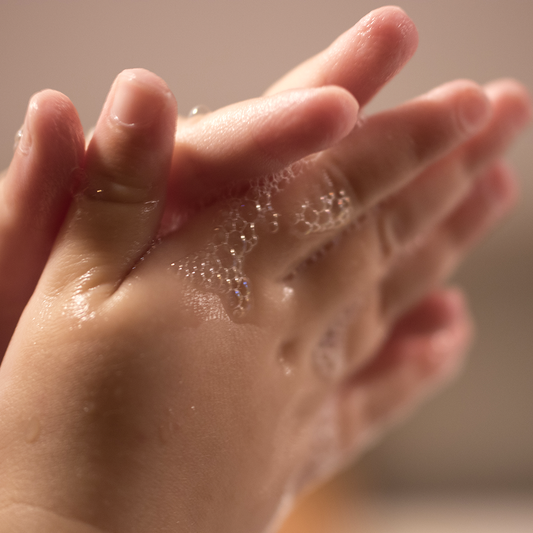
You probably never thought of natural soap as a lethal weapon -- but it can be for some viruses. The CDC says that for good hand hygiene all you need is plain natural soap and water.
Read Post
Performing a patch test can help people identify skincare products or ingredients that may cause a sensitivity reaction or an allergic skin reaction before using them.
Read Post
The synergistic composition of essential oils cannot be recreated in a laboratory. Fragrance oils do not offer the natural therapeutic advantages of true essential oils.
Read Post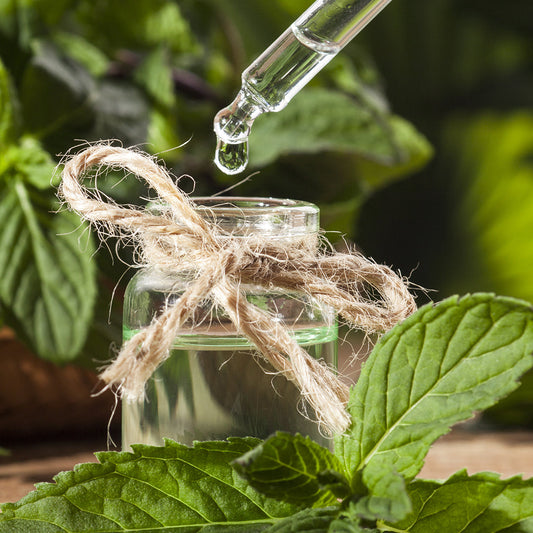
Powerfully fragrant and concentrated, essential oils are pure natural aromatic extracts from a aromatic plant leaves, flowers, needles, twigs, peels of fruit, seeds, bark, branches, and roots.
Read Post