
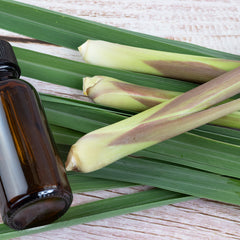
Citronella Essential Oil
A Crisp Citrus Boost for Bug-Filled Days
Citronella, Cymbopogon winterianus, oil is steam distilled from the leaves of a grass plant that resembles and is closely related to lemongrass.
There are two species of citronella plants from which the oil can be extracted, Cymbopogon winterianus, also called Java citronella, which is a bit sweeter and more lemony, and Cymbopogon nardus--both of which are native to Southeast Asia and give off a lemony scent as the natural citronella oil evaporates from their leaves.
Rich in natural antioxidants and plant compounds, citronella oil has long been used in Asian folk medicine to help ease inflammation, calm redness, soothe rashes, reduce pain, and support overall skin comfort. When diluted into a massage oil, its warming nature can help enhance circulation, making it a favorite for soothing stiff or arthritic joints.
Best known as a natural insect deterrent, citronella is one of the most trusted botanical ingredients for bug-repellent sprays, balms, and outdoor products. It was officially registered as a plant-based mosquito repellent in the U.S. back in 1948, and today the EPA classifies it as a gentle, low-toxicity “biopesticide.” For effective protection, reapplication is necessary — like most natural repellents, it evaporates faster than synthetic alternatives.
Aromatherapy: Bright, citrus-fresh, and slightly sweet, citronella has a crisp, clean aroma that feels lively and refreshing, bringing a calm, open feel to the space.
Interesting to Know
As with all essential oils, citronella is not a single compound — it’s a blend of naturally occurring molecules, primarily geraniol, citronellal, and citronellol, which also appear in rose, lemongrass, and geranium oils.
The common "mosquito" plant found in nurseries in the U.S. is not a true citronella plant. It is actually a strongly scented geranium plant, Pelargonium citrosum. You will notice that its leaves resemble those of a geranium, not lemongrass.
🌿 Essential oils are highly concentrated plant essences and should be used with care. For basic safety information, please see our Essential Oil Safety Guidelines.


