

Shampoo Bar: Butter Bar Conditioner
$4.10 - $11.95
- Out Of Stock
Dry hair develops when the hair doesn’t receive or retain the moisture it needs to feel soft and look shiny. As a result, it often appears dull or frizzy, feels brittle or straw‑like, and may break more easily than well‑moisturized hair.

Since the hair itself has no natural lubrication, it relies on the natural sebum (scalp oils) to fill the gaps between the protective cuticle cells to keep hair shiny and flexible.
Unfortunately, sebum also causes dirt and pollutants to stick to your hair. With each shampoo, you wash away some of that protective oil as well.
Sometimes the scalp simply doesn’t produce enough oil, especially as we age.
In other cases, the issue isn’t oil production but damage to the cuticle, the outer layer of overlapping cells that protect the hair, much like shingles protect a roof.
When the cuticle lies flat, it seals in moisture. When it’s lifted or damaged, moisture escapes easily, leaving the hair dry, rough, and more vulnerable to breakage.
Dry hair shows up in several ways, both in how it looks and how it feels.
Dry hair isn’t a flaw — it’s simply hair that needs a little more protection and nourishment.


Healthy hair begins with gentle cleansing, and not all shampoos treat dry hair the same way.
 Many commercial liquid shampoos (and even some “solid shampoos”) rely on synthetic detergents, surfactants, and stabilizers that can strip away the natural scalp oils.
Once those oils are gone, hair feels dry, rough, and brittle, and you’re left reaching for heavy conditioners to compensate.
A natural shampoo bar is different. It returns washing to something simpler and kinder to both hair and scalp
It’s a simple, nourishing blend of plant oils, butters, clays, herbs, and botanicals — each chosen for how it affects the lather, the feel of the wash, and the way your hair behaves afterward.
Because these bars cleanse without harsh detergents, they help maintain the scalp’s protective oils and support softer, more manageable hair.
Natural shampoo bars contain ingredients that support a hydrated scalp and well‑conditioned hair, without the heavy coatings left behind by many commercial conditioners.


Dry or damaged hair often needs help replacing the oils it’s missing.
Natural hair balms and plant‑based oils nourish the hair shaft, help replace lost oils, seal in moisture, smooth rough ends, tame frizz, and keep hair soft, shiny, flexible, and healthy.
 Moisturize Daily:
If your hair is very dry, a small amount of balm or oil used daily can help reduce split ends, tame frizz, and restore shine.
How to Apply:
To help tame a bit of frizz and flyaways, it is best to apply hair oils or creams to dry hair. Place a tiny amount of oil or balm in your palms, rub hands together, and lightly smooth over dry hair, focusing on the lengths and ends. A quick comb-through (even with fingers) helps distribute moisture evenly.
For more intensive needs, apply hair butters or oils to damp or moist hair to allow better absorption and maximize their hydrating effects. After shampooing, place a tiny amount of oil or balm in your palm, warm it between your hands, and smooth it over the length of your hair. Comb through to distribute evenly, or focus just on the ends if that’s where dryness shows up most.
👉 Learn More: How To Use A Conditioning Hair Butter Balm
👉 Learn More: How to Use a Hair Oil for Shiny, Healthy Hair
Dry hair often results from habits or environmental stress that gradually strip away moisture. Small adjustments to your routine can make a noticeable difference for dry hair.

Shampoo less often: Even using a gentle shampoo can be drying if done too often. If your scalp starts looking a bit oily, a natural dry shampoo can help by absorbing excess oils on the scalp between shampoos.
Use fewer styling products: Styling products often contain drying alcohols, silicones, or parabens, which can strip moisture, cause buildup, and increase brittleness.
Let your hair air dry: Keep blow dryers and other heated styling tools to a minimum. It may take a few weeks for your natural shine and texture to show through. If you must use heated tools, use the warm or cool settings.
Be gentle: Dry hair is fragile hair. When shampooing, do not scrub or wring hair and use a lukewarm water rinse. Hot water can be damaging to dry hair.
Use a comb instead of a brush: Brushing hair rips through snarls and can leave your hair looking frizzy and rough. Use a wide-toothed comb while the hair is wet for gentle detangling.
Stop chemical hair treatments. Chemical treatments, like dyes, perms, and relaxers, even if done once, can cause long-term damage. Use natural hair balms or oils with hydrating properties.
Environmental factors, such as sun, wind, chlorine, and very dry indoor air can lead to dry hair.
A gentle scalp massage can improve circulation and encourage natural oil production — especially helpful for dry hair. You can massage your scalp in the shower after applying shampoo or conditioner, or in the evening as a calming ritual.
Use your fingertips (not nails) and make slow, circular movements across the scalp. If your scalp is very dry, add a few drops of natural hair oil before massaging.
A flaky scalp isn’t always dandruff — it may simply be dryness. Your natural scalp oil may hold the key to beautiful hair. Gentle brushing can help lift away dead skin cells and distribute natural oils along the hair shaft.
Dry hair isn’t a flaw — it’s simply hair that needs a little more protection and nourishment.
When you cleanse gently, replenish lost oils, and treat your hair with care, the cuticle can stay smoother and better able to hold moisture.
With consistent moisturizing, mindful habits, and products that support your scalp and hair’s natural balance, your strands can regain softness, shine, and strength.
Small daily choices truly make a difference, helping your hair feel healthier, more resilient, and beautifully alive.
The wholesome goodness of our handcrafted soap is available for your hair.
Shampoo bars are an all natural conditioning shampoo in a solid bar form. Yes, this is real shampoo in a solid bar. Shampoo bars are not a new idea.
They were commonly used before liquid detergent shampoos and conditions were invented in the 1940s.
Although the process for making a shampoo bar is the same as making soap, our shampoo bar "recipes" are specially formulated with natural plant oils, butters, botanicals and essential oils that nourish your hair and scalp.
Our shampoo bars contain no artificial fragrance, color, preservatives, detergents, alcohol, urea, formaldehyde, sodium lauryl sulfate, DEA, propylene glycol - or any of the other synthetic hair care additives.
Each of our shampoo bar selections contains a different blend of natural plant oils, essential oils, and herb infused oils. No two recipes are the same.
Click here for help choosing an all natural shampoo bar!
Please read "Everything About Shampoo Bars!"
Some folks do, and some don't!
If you are using a conditioner because your hair is dull, lacks luster, and is dry--you may not need a conditioner--that's another plastic bottle saved! Since commercial shampoos contain petroleum products that are actually drying to your hair and scalp, conditioners are usually needed.
Our natural shampoo bars will not strip the natural oils from your hair, so you will not need the typical moisturizing conditioners that people use to replace the natural oils stripped by detergent shampoos.
Apple Cider Vinegar (ACV) rinses are an excellent addition to any natural hair care routine and can help bring back body and shine to dull, lackluster hair.

Hair tangles result when individual hairs go in different directions and intertwine.
The outer layer of the hair, the cuticle, is made of overlapping layers of long scales that lie along the surface of the hair like shingles on a roof.
The condition of the cuticle scales in part determines whether you are going to have tangly hair. When you shampoo or even wet your hair, the cuticle opens making it prone to tangling.
The way you shampoo and your hair type can affect hair tangles. I have long, fine, thin hair that is very prone to tangling. Just imagine all of those little strands of hair as very thin strings—now put little burrs on the strings (the open cuticle) and you can see my problem.
When I used a commercial shampoo I would go through a 16-ounce bottle of conditioner every week—just to get a comb through my hair. Using my shampoo bars has made a big difference.
I wish I could use an apple cider vinegar (ACV) rinse every day. Besides creating tangle-free locks, I also love the way it makes my hair look and feel. As I have gotten older, my hair has become dryer and I can only use a traditional ACV rinse 2 or 3 times per week. But I keep a spray bottle of very dilute ACV rinse that I use more often.
Helpful hint: If I comb through my hair length while it is still lathered and continue to comb as I rinse, the tangles comb out more easily.
Some customers have reported that they needed to continue using their traditional conditioner for a while and then were able to slowly wean off of it. I say, whatever works for you!

Dry shampoo may seem like a simple product, but the ingredients and formulation can make a real difference in how your hair and scalp feel. Take a closer look at how dry shampoo works, why people rely on it, a bit of its history, and what to look for when refreshing your hair—naturally—between washes.
Read Post
Explore the world of natural shampoo bars, get answers to your FAQs and learn about the benefits, ingredients, hair type suitability, and usage tips. Start enjoying healthier, happier hair.
Read Post
A natural shampoo bar is made through traditional saponification of plant oils rather than synthetic detergents. Unlike many detergent-based “syndet” bars, true natural shampoo bars contain no sulfates, artificial fragrances, or synthetic preservatives. They offer a different cleansing philosophy built on ingredient integrity, organic sourcing, and environmental responsibility.
Read Post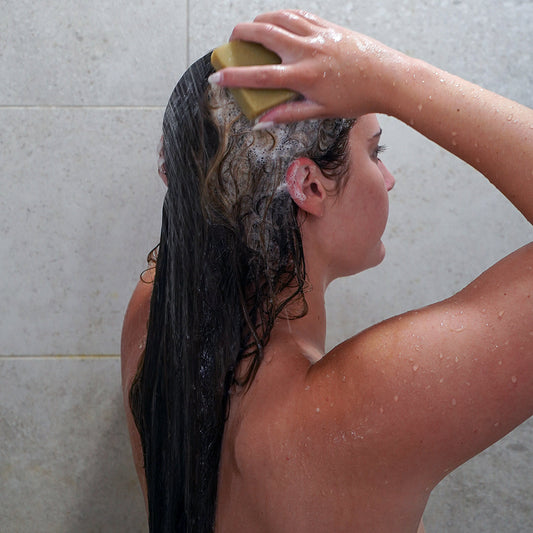
While finding the right shampoo bar is important, using the proper technique to wash your hair is the best way to ensure a successful transition from synthetic shampoo to natural shampoo bars.
Read Post
People with severe allergies—please note: If you have severe anaphylactic-type reactions to ANY of the ingredients in ANY of our products, please do not buy our products. We have dedicated soap rooms and product rooms that are kept meticulously clean, but we cannot guarantee against possible cross-contamination of individual ingredients.
Chagrin Valley Soap & Craft is not responsible for any individual reaction to any particular ingredient. Each product description on our website includes a complete list of ingredients. People with sensitivities to any listed ingredient should not use the product. In case you are in doubt always try an allergy patch test and if at any time irritation occurs, discontinue use of the product.
The content and information on this website, provided by The Chagrin Valley Soap & Salve Company, is for educational purposes only and is in no way intended and should not be construed as medical advice to diagnose, treat, cure, or prevent any disease or health condition. The information regarding folklore or health-related benefits of certain ingredients is for educational purposes only. The information provided is not intended to prescribe or be taken as medical advice.
The information provided is not meant to substitute the advice provided by your personal physician or other medical professionals. Do not use the information found on this website to self-diagnose any medical conditions or treat any health problems or diseases. If you have medical concerns regarding yourself or your family you should seek the advice of qualified, licensed health professionals. Never disregard professional medical advice or delay in seeking it because of something you have read on this website.
This information has not been evaluated by the Food and Drug Administration. This notice is required by the Federal Food, Drug and Cosmetic Act.
Read our Full Medical Disclaimer.