
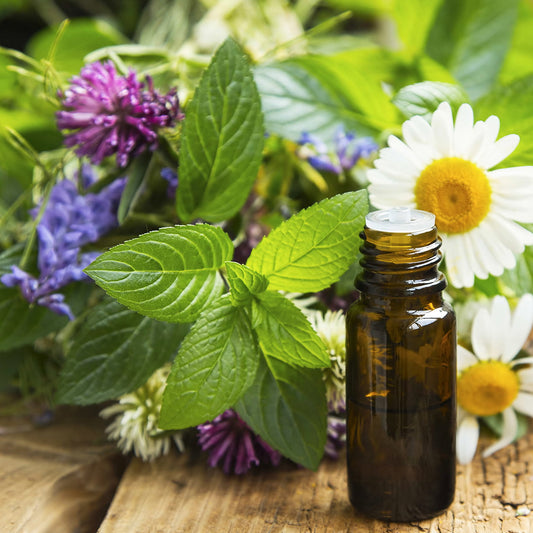
Why We Use Only Real Plant Essential Oils?
Posted onThe synergistic composition of essential oils cannot be recreated in a laboratory. Fragrance oils do not offer the natural therapeutic advantages of true essential oils.
Read Post


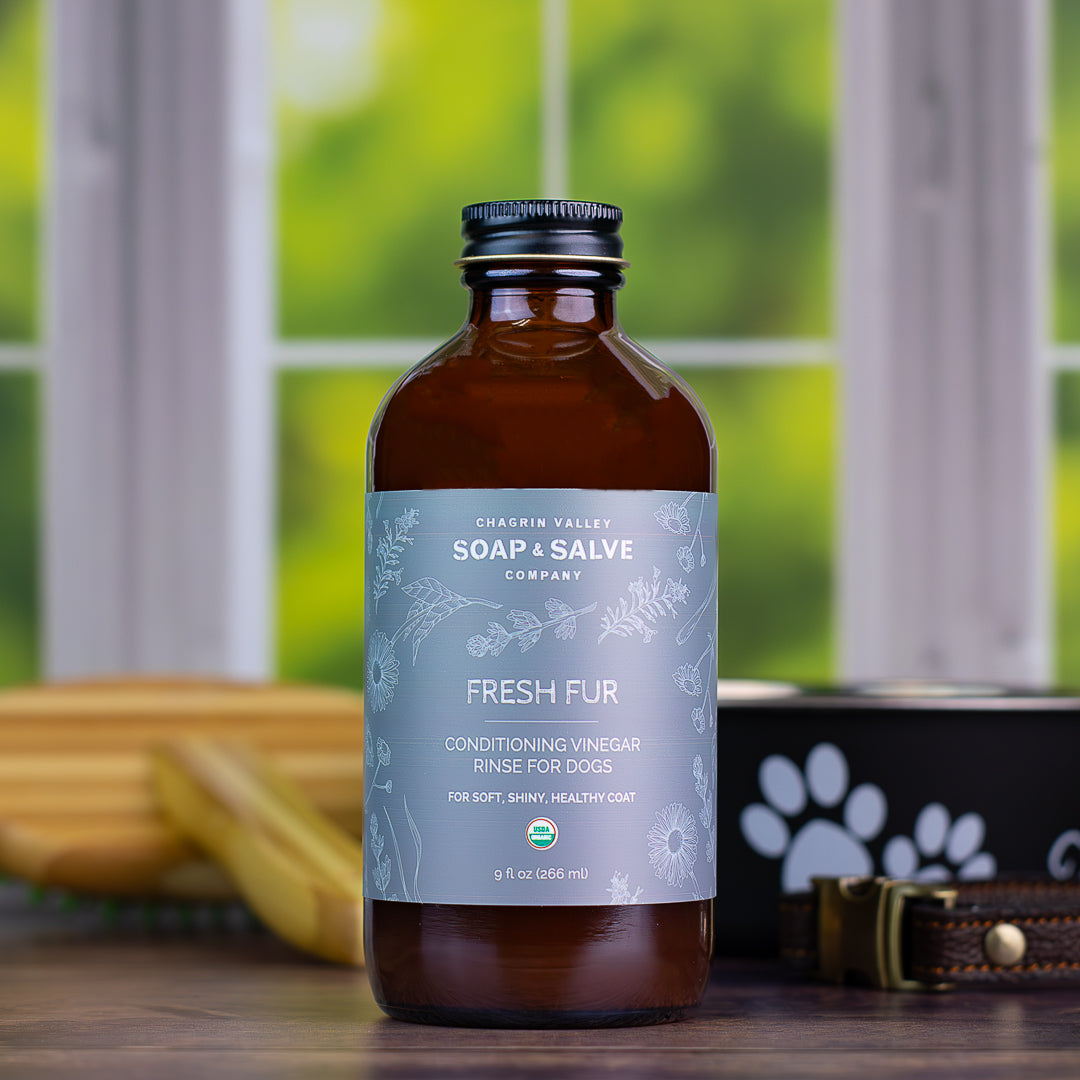
A concentrated, raw, unfiltered apple cider vinegar rinse for dogs, infused with organic herbs and essential oils that help freshen the coat, soothe dry or itchy skin, reduce odors, ease tangles, and leave fur soft, shiny, and naturally clean.


Raw, unfiltered apple cider vinegar has long been used as a simple, effective topical rinse for dogs.
When properly diluted, it helps freshen the coat, calm dry or itchy skin, reduce flakiness, deter pests, and naturally eliminate odors — all while adding shine and softness to your dog’s fur.
Our Fresh Fur ACV Rinse Concentrate is crafted with a rich infusion of organic herbs and essential oils chosen specifically for canine skin and coat care. These botanicals have been used for generations to soften hair, improve manageability, and restore natural luster — and dogs benefit from the same plant‑powered support.
This concentrated formula lets you customize the dilution to your dog’s needs, making it an easy, versatile addition to any grooming routine. Unlike heavy conditioners that can leave residue behind, an herbal vinegar rinse leaves the coat light, fresh, and easy to manage.
The blend is finished with lavender and rosemary essential oils that support a healthy‑feeling coat, and contribute to a fresh, herbal aroma that helps keep pests at bay.
Do not worry—your dog will not smell like vinegar. The scent fades quickly as the coat dries, leaving fur soft, clean, and fresh.
An apple cider vinegar rinse is a simple, natural way to support healthy skin and coat as part of your dog’s regular grooming routine.
Soft skin. Fresh fur. Happy dog. Sweet snuggles.
Using a simple after-bath apple cider vinegar rinse is an easy addition to bath time and can help keep your dog’s skin and coat clean, fresh, and comfortable.
Below you’ll also find basic instructions along with additional tips for addressing common issues that can bother dogs, such as odor, itchy skin, and pests.
Our herbal apple cider vinegar rinse is a concentrate with no added water, so it must always be diluted before use.
Because every dog’s skin is different, start with a mild dilution and adjust as needed.
If needed, you can gradually increase the amount of vinegar in the mixture until you find the dilution that works best for your dog.
Do you need to rinse with water after using an ACV dog rinse? No, you generally do not need to rinse off the ACV when used on a dog's coat. Allowing it to air dry or simply towel-drying helps maximize benefits like reducing odors, fighting yeast, and repelling pests
The vinegar scent will fade as the coat dries.
For large dogs, the mixture can be doubled.
For dogs with itchy or flaky skin, a stronger rinse may be helpful. Also great for small trouble spots.
Fleas and ticks tend to dislike the lingering taste and smell of vinegar on the dog's skin. While not a replacement for veterinarian-recommended flea preventatives, apple cider vinegar may help naturally discourage pests temporarily.
Before outdoor activities, lightly mist your dog’s coat with a mixture of:
Apple cider vinegar helps neutralize odor rather than simply masking it.
For a deodorizing spray:
If your dog licks or chews their paws constantly, they may be itchy or irritated.
Apple cider vinegar can help control odor and discourage yeast on the outer ear flaps. During bath time, the outer ear flaps can be gently cleaned with a diluted vinegar solution.
If your dog’s ears are red, painful, or smell foul, see your vet — it could be an infection that needs medication.
When introducing a new product to your dog's skin, do a spot test on a small area of the skin with a tiny amount of the diluted apple cider vinegar. Wait 24 hours and check for any irritation or allergic reaction. This ensures your dog's comfort and safety.
The best areas for patch testing:
Tip: A squeeze bottle can make it easier to apply the diluted rinse evenly through the coat and down to the skin, especially for smaller dogs or trouble spots.
The goal is simple: to Harness the Power & Simplicity of Nature® to cleanse, soothe, heal, and protect your skin and hair!
Our unique formulas rely on moisturizing oils and butters, healing botanicals, and pure essential oils. We choose every ingredient with one end-result in mind….the BEST possible natural skin care for YOU!
 Organic Apple Cider Vinegar
 Organic Burdock Root
 Organic Rosemary Essential Oil
Organic Unrefined Vinegar infused with Organic Botanicals Horsetail, Rosemary, Nettle, Burdock Root, Basil & Lavender
Although plain white vinegar may work, Apple Cider Vinegar seems to be the favorite hair care vinegar. Some say that wine vinegars may be less drying for those with dry scalp conditions.
The process for making apple cider vinegar begins with the juice of fresh apples. Bacteria and yeast added to the juice begin the fermentation process which breaks down fructose, the naturally occurring fruit sugar, into alcohol.
The alcohol is converted to vinegar (which means “sour wine” in French) by acetic acid-forming bacteria.
The natural raw non-pasteurized vinegar is packed with nutrients. It appears cloudy with stringy stuff and sediment on the bottom due to the "mother" which contains the natural bacteria and enzymes that make this product so wonderful.
We only use organic raw apple cider vinegar with "mother." The difference between raw apple cider vinegar and a commercial clear vinegar brand is that the commercial vinegar is heated, distilled, and clarified. This processing removes much of the naturally occurring bacteria, nutrients, and living enzymes, thus stripping away the natural benefits.

Make Your Own Natural Vinegar Hair Rinse
Using Chagrin Valley Vinegar Hair Rinses
Nature's herbs and botanicals have a life force of their own.
The vinegar extracts the healing and soothing phytochemicals from medicinal herbs and botanicals.
 Basil, Ocimum basilicum, stimulates hair follicles, increases scalp circulation and promotes hair growth. Basil helps protect hair from breakage, its anti-inflammatory properties help soothe the roots and it adds luster to dull hair.
Burdock, Arctium lappa, nourishes and strengthens hair follicles, to promote healthy hair growth and improve the condition of hair. It helps soothe irritated scalp conditions, decrease breakage and adds sheen, body & luster. The mucilage in burdock root adds “slip” to hair to make detangling easier.
Horsetail, Equisetum arvense, is nourishing and hydrating, stimulates the scalp and has been used for centuries as a hair growth herb. The silica in horsetail helps to keep hair strong and adds shine and luster to hair.
Lavender, Lavendula officinalis, has anti-inflammatory, anti-bacterial and antifungal properties that may help with irritated scalp conditions and hair loss. It helps balance oil production as is a great herb for all hair types.
Nettle, Urtica dioica, stimulates the scalp, improves circulation, helps decrease breakage and promotes body, bounce, and shine. Nettle hair rinses are an old remedy to help reduce hair loss and encourage hair growth. Nettles balance oil production and help with dandruff.
Rosemary, Rosemarinus officinalis, encourages the growth of strong healthy hair by improving blood flow to the scalp. The stimulating and revitalizing properties of rosemary help increase manageability, add shine, and condition the hair and scalp.
The most important consideration in any business is its customers. Today's world of misleading claims, false advertising, and simple deception, often leaves consumers trying to discover the truth about personal products and their ingredients.
Some of my favorite products are made with ingredients that just do not exist as certified organic. Why? At this time there are no standards created for ingredients specifically used in the personal care product industry. Organic certification of personal care products is based on the organic food standards set by the National Organic Program of the USDA.
But since we are a certified organic company, we are required to submit documentation that even our "non-organic ingredients" were produced without the use of toxic pesticides, genetically modified organisms (GMOs), sewage sludge, or irradiation.
Why Did We Become a Certified Organic Company?
What Do All of the Organic Labels Mean?
Chagrin Valley Soap & Salve has been Leaping Bunny Certified since 2013.
 The Leaping Bunny Program was developed in 1996, by The Coalition for Consumer Information on Cosmetics (CCIC), to identify and support companies that are doing their part to help eliminate the unnecessary use and mistreatment of animals to test cosmetic products and ingredients. The CCIC is made up of eight animal protection groups including the Humane Society of the U.S., as well as groups from Canada and Europe.
At Chagrin Valley we do not test our finished products on animals (other than human volunteers). But what about the raw materials, the ingredients we use?
Many products display labels claiming that their finished product is ‘not tested on animals’ but this does not guarantee that the product ingredients are actually free from animal testing.
The CCIC Standard is a pledge that a company makes to remove animal testing from all stages of product development. Our pledge to buy ingredients that are cruelty-free is integrated into the purchase agreement for all of our suppliers.
Personal care products displaying the “real” Leaping Bunny logo are certified ‘cruelty-free' using the internationally recognized Humane Cosmetics Standards. These rigorous standards require that no animal testing is performed or authorized for finished products or any of the ingredients in any stage of product development by the company, its laboratories or its suppliers after a fixed cut-off date. All Leaping Bunny companies are subject to independent audits and pledge commitments that are renewed on an annual basis.
This annual renewal is a key requirement that sets the Leaping Bunny Program apart from other cruelty-free certification programs. Companies that manufacture products, as well as their ingredient suppliers, must annually recommit to upholding their promise to not conduct animal testing on any finished products, ingredients, or formulations.
Why is this annual commitment renewal important? "Because product formulations change, suppliers come and go, and manufacturers develop innovative lines to meet consumer needs. But we know that compassionate consumers need to be confident that no animal testing is involved in the products they use."
At Chagrin Valley Soap & Salve . . .
The Leaping Bunny Program provides
the best assurance to consumers
that they are making compassionate shopping choices
by purchasing Cruelty-Free skin care!
Have you ever enjoyed the scent of a fragrant flower or herb? The fragrance comes from potent, aromatic compounds called essential oils found in the flowers, stems, seeds, bark, roots, fruits, and other parts of plants. It often requires several pounds of a plant to produce a single bottle of essential oil.
Essential oils not only give plants their unique scents but also help lure plant pollinators and protect plants from insects and other predators.
The chemical composition of essential oils may provide valuable psychological and physical aromatherapeutic benefits for some people.
It is important to note that to be a true essential oil, the oil must be isolated from the plant material by physical means only. Essential oils are NEVER extracted using solvents.
Although synthetic fragrances or "nature identical" oils are available at a much lower cost, only natural plant essential oils will provide any aromatherapeutic benefits.
What Are Essential Oils (Much more detail)
How Essential Oils Are Extracted
Why We Use Only Real Plant Essential Oils?
If you are pregnant or under a doctor's care for any medical condition, please consult your healthcare provider before using essential oils.
Pregnancy & Children: We do not provide information on the safety of essential oils during Pregnancy or for use in Children because the available information is very ambiguous and often contradictory. If you’re interested in using essential oils during pregnancy or with young children please do your own research and consult your doctor, midwife, or health care professional before use.
The synergistic composition of essential oils cannot be recreated in a laboratory. Fragrance oils do not offer the natural therapeutic advantages of true essential oils.
Read Post
People have harnessed the power and simplicity of nature's plants for centuries to enhance the skin’s appearance, help treat skin problems, and improve skin quality.
Read Post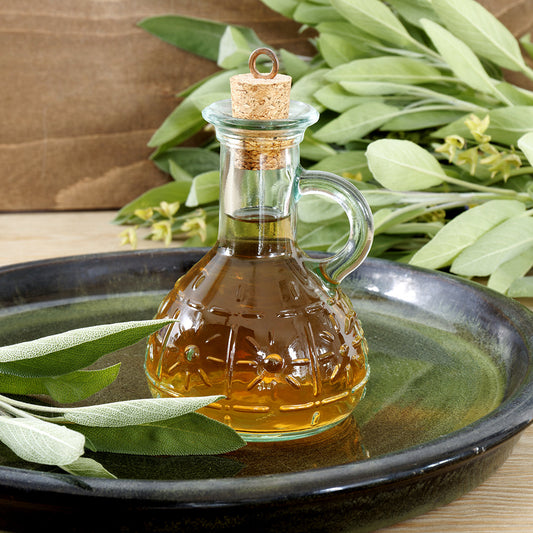
Raw apple cider vinegar (ACV) can help with tangles, bring back body and shine, clarify residue, stimulate the scalp, decrease dandruff, and unclog hair follicles to help with excess shedding.
Read Post