

Natural Soap: Goat Milk Oatmeal
$4.10 - $11.95
- Out Of Stock
We often hear from customers looking for soap recommendations for their skin type. And while we love helping, these questions can be tricky — because your skin is uniquely yours.

Skin type is influenced by genetics, but it also changes with everyday life — including diet, age, hormone cycles, stress, weather, seasons, and exposure to irritants.
That’s why we always suggest starting with small, travel-size bars.
Take notice of which soaps your skin enjoys, and look for patterns in the ingredients. You may discover that your skin prefers soaps rich in olive oil, shea butter, or coconut milk.
One thing that sets us apart from other natural soap companies is that each soap has its own unique formulation. We don’t use one base recipe and simply change the scent. Even if the oils and butters look similar on the ingredient list, the proportions of each — and thus the fatty acids they contribute — vary from bar to bar. Those subtle changes affect everything from the lather to conditioning properties.
Each bar is crafted with its own thoughtful blend of plant oils, butters, and botanicals, and no two are the same.
Wherever your skin lands on the spectrum, we’re here to help you navigate our collection and find the bar that feels just right for your one-of-a-kind skin.
We’ve gathered some general suggestions based on feedback from long-time customers, friends, and family. You’ll notice some overlap — many of our bars are gentle, balanced, and well-loved across a range of skin needs.
Dry skin occurs when the skin's sebaceous glands produce less natural oil (sebum), disrupting the skin's essential moisture barrier.

As a result, water evaporates more quickly. Skin often feels tight and irritated with increased sensitivity and has a dry, flaky texture that looks dull and lackluster.
Alcohol-based products and body cleansers made with synthetic detergents, fragrances, and colors can exacerbate dry skin conditions.
For this skin type, the goal is to choose soaps that help lock in moisture rather than remove it.
Our customers with dry skin often gravitate toward bars made with:
These bars tend to produce a dense, lotion‑like lather that leaves the skin feeling soft and cushioned rather than tight. If your skin feels dry year‑round or especially in winter, these are the soaps that usually feel the most comforting.
🌿 Explore: Help Me Choose Natural Products for Dry Skin


Oily skin results from an increased production of sebum, the skin’s natural oil. While these oils are important for healthy skin, excess oil can leave skin feeling greasy, looking shiny, and may contribute to clogged pores or blemishes.
Ironically, most soaps and body washes marketed "for oily skin" can exacerbate the issue.
 These products often rely on detergents, alcohol, or other harsh ingredients to “dry out” the skin.
While this may feel helpful at first, stripping away too much natural oil can signal the skin to produce even more oil, creating an ongoing cycle of oiliness.
For oily skin, the goal isn’t to remove all oil, but to cleanse gently while helping skin feel balanced and refreshed.
Customers with oily skin often prefer soaps that feel:
Our Bamboo Charcoal Soap is a long-time favorite because it offers a deep, refreshing cleanse while still leaving the skin soft. The charcoal and clay help draw out impurities, while cocoa butter keeps the bar from feeling harsh or drying.
If your skin tends to feel oily by midday or you enjoy a “clean slate” feeling after washing, these bars are a great place to start.
🌿 Explore: Help Me Choose Natural Products for Oily Skin and Acne-Prone Skin


Many customers living with eczema-prone skin tell us their skin becomes dry, itchy, or easily irritated, often in response to everyday triggers.
When skin is already feeling stressed, gentle cleansing becomes especially important.
 Eczema‑prone skin is easily unsettled by detergents, synthetic fragrances, dyes, and preservatives — common in commercial soaps and body washes. These ingredients can feel harsh or irritating on reactive skin, especially when used every day.
Traditional cold-process soaps made with natural and organic ingredients often feel much gentler on the skin. Many customers say they notice a difference simply by moving away from synthetic cleansers.
We always recommend starting with bars that contain:
Some customers also tell us they enjoy soaps made with ingredients like sea buckthorn oil or neem oil when their skin feels especially dry or uncomfortable, though preferences vary widely.
While every person’s skin responds differently, the bars in the banner below tend to feel the most calming and predictable.
🌿 Explore: Help Me Choose Natural Products for Eczema-Prone Skin

People with rosacea-prone skin often tell us their skin flushes easily, looks red and blotchy, or feels sensitive, warm, or reactive, especially on the face. When skin feels this delicate, gentle cleansing becomes especially important.
 While soap cannot address rosacea itself, many customers find that switching to mild, natural soaps helps reduce additional irritation caused by detergents, synthetic fragrances, dyes, and preservatives — common in commercial soaps and body washes.
Easily flushed or reactive skin enjoys soaps made with simple, gentle ingredients. Favorites often include bars like Sea Buckthorn Soap or Chamomile Calendula Soap, though preferences vary from person to person.
When cleansing facial skin, use a gentle touch — massage lightly with fingertips, rinse with lukewarm water, and pat dry with a soft towel. Avoid aggressive scrubbing or very hot water, which may leave skin feeling more sensitive.
🌿 Explore: Help Me Choose Natural Products For Rosacea-Prone Skin
Sensitive skin will quickly let you know if it doesn’t like something.
A new ingredient in a skincare product, a certain fabric, a long hot shower, or even a sudden shift in the weather can set it off.
 It may look red or blotchy, or feel dry, itchy, or easily irritated — sometimes for reasons that are hard to pinpoint.
People with sensitive skin often discover that simpler is better.
They tend to prefer natural soaps made without detergents, synthetic fragrances, dyes, preservatives, or unnecessary additives, all of which can leave the skin feeling uncomfortable.
Gentle, straightforward formulas with nourishing oils, butters, and soothing botanicals usually offer the most predictable, comfortable experience.
Our sensitive skin customers often prefer:
🌿 Explore: Help Me Choose Natural Products for Sensitive Skin
As skin renews itself, dead skin cells can build up on the surface, sometimes leaving skin looking dull and lifeless, or feeling rough.
While soap cleans away dirt and excess oil, exfoliating soaps help gently polish away this surface buildup for skin that feels smoother and refreshed.
 We call the soaps in the banner below our exfoliating bars, but many of our soaps provide gentle exfoliation thanks to natural ingredients.
We offer a range of exfoliating experiences:
🌿 Explore: Help Me Choose Natural Exfoliating Products


Facial skin is often thinner, more expressive, and more reactive to changes in weather, stress, or ingredients. It benefits from a cleanser that feels gentle and cushioned.
Our natural soaps are mild, gentle, and naturally moisturizing. So what makes a complexion soap?
 Complexion soaps are crafted with the face in mind. They have a higher superfat level than body soaps.
Superfat refers to the extra plant oils added to a recipe that remain in the finished bar
This excess moisturizing oil becomes trapped between the soap molecules and is released onto the skin during washing.
These bars are often unscented or lightly scented with essential oils commonly enjoyed in facial care. Many also include facial clays, extra nourishing butters, or other ingredients chosen to gently cleanse without leaving skin feeling tight or dry.
They’re formulated to feel soothing, balanced, and steady — the kind of bar you can use every day without worrying about over-cleansing. Many customers love them as their daily facial cleanser, but they’re also wonderful for anyone who simply prefers a softer, more conditioning bar.
And while these soaps are designed with the face in mind, many customers — myself included — happily use a wide variety of our soaps on facial skin. My own favorites often contain coconut milk, like Sage Mist or Lavender Rosemary, even though they are not labeled as complexion soaps.
Sampling is the best way to discover which bar your skin responds to best. Facial skin is personal, expressive, and ever changing — and the right complexion soap should feel like it meets your skin exactly where it is.
🌿 Explore: Help Me Choose Natural Facial Skin Care


To make a soap or any skincare item completely "unscented," commercial companies must add scent-neutralizing chemicals.  A natural soap bar with "no added scent" does not mean it is scent-free. It means that we have NOT added essential oils to that recipe.
Our natural soaps with "no added scent" may still have natural aromas due to unrefined oils and butters, honey, grains, flowers, spices, herbs, or herbal-infused oils.
For example, our Chocolate & Honey, Castile & Cocoa, and Honey Butter soaps have the scent of rich cocoa butter, and our Castile & Shea Soap has the light aroma of virgin shea butter. These scents tend to be very mild.
Are you very sensitive to any added fragrance?
If you go to any of our product collection pages — for example, Natural Soap — you’ll see a filter on the left called “Ingredient Preference.” Tick the box labeled “No Added Scent” to quickly find unscented options in any of our product lines.
Choosing a natural soap isn’t about finding a single “perfect” bar — it’s about listening to your skin and discovering what it enjoys.
Skin can change with seasons, stress, environment, and even from one part of your body to another, so it’s perfectly normal to love more than one soap for different reasons.
Use this guide as a starting point, explore ingredients that appeal to you, and don’t be afraid to experiment with small bars. Pay attention to how your skin feels after washing — comfortable, soft, and happy is always the goal.
With simple formulations, thoughtfully chosen ingredients, and many options to explore, we hope this page helps you find the natural soap (or soaps) that feel just right for your one-of-a-kind skin.
Your skin will always tell you what it loves — sometimes all we have to do is listen.
Some people tell me that they would love to switch to a natural soap to get rid of the chemicals and the plastic bottles.
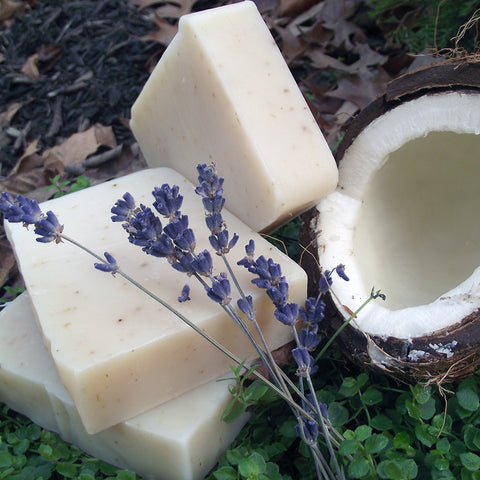 So what is stopping them? They often believe that bars of soap are less hygienic than liquid soap.
My answer, of course, is that liquid soap is NOT more hygienic than solid soap bars!
It may seem like an odd question to ask whether something specifically created to help make you clean is hygienic, but actually, it is an excellent question that has actually been studied.
Numerous studies have shown that although bacteria levels on a used bar of soap are slightly higher than on unused soaps, there are no detectable levels of bacteria left on the skin's surface after using a bar of soap.
Bacteria do not like to live in the actual soap bar, they are attracted to water that sits on top of the soap after use. When using a bar of natural soap properly, creating a lather with a 30-second scrub and very warm water, the top layer, dirt, and germs are washed down the drain.
So if you are still concerned, doing a couple of simple things will help your bar soap harbor fewer germs.
So it seems that when considering "soap" the choice is between a bar and a liquid in a bottle.
So my question is . . . how hygienic is liquid soap? And how often do you clean the top of your liquid soap dispenser?
For a more detailed discussion (especially about liquid soap) please read our blog, "Are Bar Soaps Hygienic?"
 How long a natural soap bar will last depends on:
For one person showering every day, a well-drained bar should last for about one month.
Natural soaps are normally softer than commercial soaps because they retain their natural glycerin (which is removed in commercial soap production) and contain no artificial hardening chemicals, synthetic waxes or free alkali.
We also superfat our soaps (add extra oils or butters) and use "softer" oils so that Chagrin Valley natural soaps are more emollient and leave skin feeling moisturized.
Different oils impart different qualities to soap. Some add lathering qualities, some moisturizing, some hardness, and so on. Compared to other natural bars, we use a larger percentage of extra moisturizing and conditioning oils in our soaps and shampoo bars. These oils produce a bar that may not be as hard as bars with less conditioning oils.
How you use the bar will also affect its lifespan. For example, do you use a washcloth, an exfoliating accessory, or only the bar? Although exfoliating loofahs and sponges are great they will use up the soap much faster than a washcloth or the "only the bar" purists.
Our Natural Soap Will Last A Long Time With Proper Care
Cute Story: A customer called to say she loved our soaps but could not buy them anymore because they did not last as long as other soaps. A week later she called to place an order and apologize. Her husband, who would NEVER use her natural soaps before, fell in love with her new Juniper soap . . . and he showered twice a day!
To maximize the life of your soap, keep it in a well-drained soap dish so it can dry between uses.
We sell a handcrafted solid white oak soap dish. The deep ridges are perfect for keeping your all natural handcrafted soap dry between uses. White Oak is the wood used in shipbuilding.
A tip passed on by one of our customers whose kids always leave the soap in a water puddle: cut the large bars in halves. Then alternate the halves, allowing a longer drying time between uses.
Yes, they are!
Chagrin Valley natural soap and shampoo bars are made with natural and organic ingredients and are biodegradable when used properly.
They’re thoughtfully crafted to break down naturally in the environment, which makes them a responsible choice for everyday use and for outdoor adventures when used with care.
By definition, biodegradable means capable of being broken down by living organisms, such as naturally occurring bacteria, into simpler substances that are not harmful to the environment.
Natural soap made with plant oils, butters, and clays can biodegrade efficiently — but where and how it’s used matters.
Bringing a biodegradable soap on a camping or backpacking trip is a wonderful way to stay comfortable and refreshed outdoors. However, even biodegradable soap should never be used directly in lakes, rivers, or streams.

You may see claims online suggesting that biodegradable soap or shampoo is safe to use directly in rivers and streams.
While these claims are often made with good intentions, they overlook an important part of how biodegradation actually works.
The bacteria responsible for breaking down natural soap live primarily in soil, not water.
That means soap — even biodegradable soap — breaks down most effectively when it comes into contact with organic soil, not freshwater sources.
Even biodegradable soap will pollute lakes and streams if it is not used properly.
So while our soaps are biodegradable, they are designed for mindful outdoor use, not for bathing, washing dishes, or cleansing directly in natural water sources.
A few simple practices help protect waterways and support natural breakdown:
These methods help surround the soap with organic matter, speed up decomposition, and reduce runoff.
Yes — when used responsibly.
Many commercial soaps, body washes, shampoos, and dish detergents contain synthetic surfactants, artificial fragrances and colors, and chemical preservatives.
Since these ingredients do not break down quickly, traces can persist in the environment for many, many years and can have a potential negative impact on plants and animals.
A biodegradable natural soap made with plant-based ingredients breaks down more readily when exposed to soil bacteria, making it a far better choice for outdoor use — as long as it’s used thoughtfully and away from waterways.
Biodegradable doesn’t mean anywhere.
It means used with intention and respect for nature.
That philosophy is at the heart of how we make our soaps — and how we encourage them to be used.
There’s no substitute for nature. Together, we can protect it from impacts like overuse, trash, and harming endangered wildlife by following the principles of "Leave No Trace."
Chagrin Valley Soap & Salve has been Leaping Bunny Certified since 2013.
 The Leaping Bunny Program was developed in 1996, by The Coalition for Consumer Information on Cosmetics (CCIC), to identify and support companies that are doing their part to help eliminate the unnecessary use and mistreatment of animals to test cosmetic products and ingredients. The CCIC is made up of eight animal protection groups including the Humane Society of the U.S., as well as groups from Canada and Europe.
At Chagrin Valley we do not test our finished products on animals (other than human volunteers). But what about the raw materials, the ingredients we use?
Many products display labels claiming that their finished product is ‘not tested on animals’ but this does not guarantee that the product ingredients are actually free from animal testing.
The CCIC Standard is a pledge that a company makes to remove animal testing from all stages of product development. Our pledge to buy ingredients that are cruelty-free is integrated into the purchase agreement for all of our suppliers.
Personal care products displaying the “real” Leaping Bunny logo are certified ‘cruelty-free' using the internationally recognized Humane Cosmetics Standards. These rigorous standards require that no animal testing is performed or authorized for finished products or any of the ingredients in any stage of product development by the company, its laboratories or its suppliers after a fixed cut-off date. All Leaping Bunny companies are subject to independent audits and pledge commitments that are renewed on an annual basis.
This annual renewal is a key requirement that sets the Leaping Bunny Program apart from other cruelty-free certification programs. Companies that manufacture products, as well as their ingredient suppliers, must annually recommit to upholding their promise to not conduct animal testing on any finished products, ingredients, or formulations.
Why is this annual commitment renewal important? "Because product formulations change, suppliers come and go, and manufacturers develop innovative lines to meet consumer needs. But we know that compassionate consumers need to be confident that no animal testing is involved in the products they use."
At Chagrin Valley Soap & Salve . . .
The Leaping Bunny Program provides
the best assurance to consumers
that they are making compassionate shopping choices
by purchasing Cruelty-Free skin care!
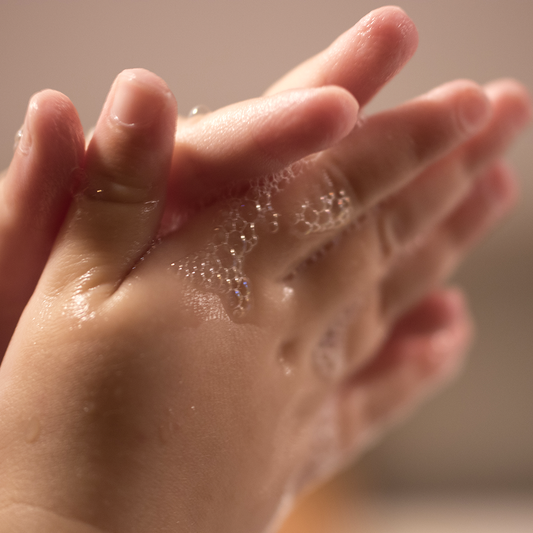
You probably never thought of natural soap as a lethal weapon -- but it can be for some viruses. The CDC says that for good hand hygiene all you need is plain natural soap and water.
Read Post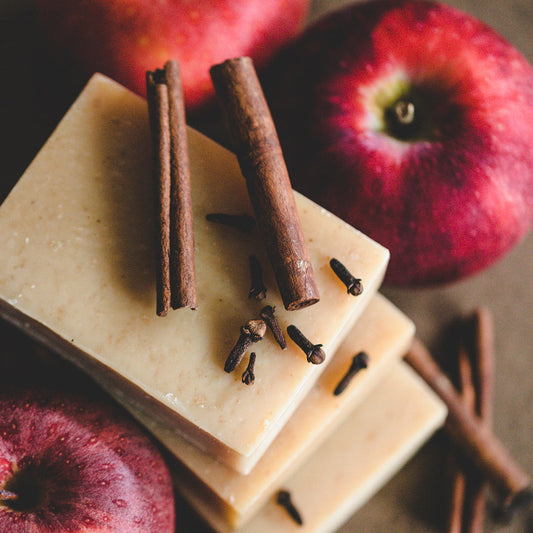
From its composition to its benefits for the skin, to its impact on the environment, the level of care that goes into producing a batch of natural soap is unparalleled in commercial soaps.
Read Post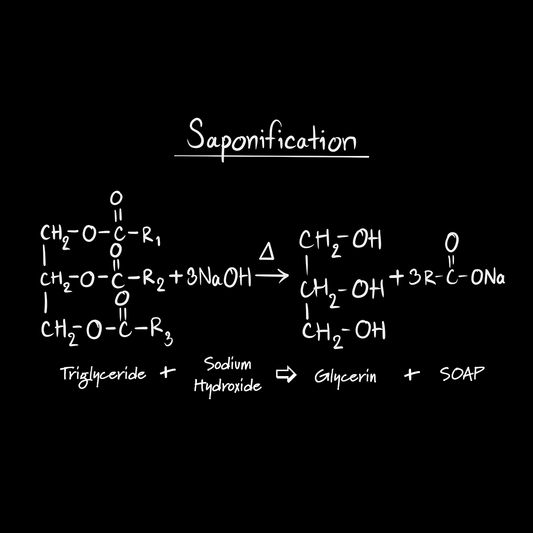
Discover the science behind handmade soap making. Learn how understanding saponification, fatty acid profiles, and ingredient selection can help create high-quality, nourishing soap bars.
Read Post
People with severe allergies—please note: If you have severe anaphylactic-type reactions to ANY of the ingredients in ANY of our products, please do not buy our products. We have dedicated soap rooms and product rooms that are kept meticulously clean, but we cannot guarantee against possible cross-contamination of individual ingredients.
Chagrin Valley Soap & Craft is not responsible for any individual reaction to any particular ingredient. Each product description on our website includes a complete list of ingredients. People with sensitivities to any listed ingredient should not use the product. In case you are in doubt always try an allergy patch test and if at any time irritation occurs, discontinue use of the product.
The content and information on this website, provided by The Chagrin Valley Soap & Salve Company, is for educational purposes only and is in no way intended and should not be construed as medical advice to diagnose, treat, cure, or prevent any disease or health condition. The information regarding folklore or health-related benefits of certain ingredients is for educational purposes only. The information provided is not intended to prescribe or be taken as medical advice.
The information provided is not meant to substitute the advice provided by your personal physician or other medical professionals. Do not use the information found on this website to self-diagnose any medical conditions or treat any health problems or diseases. If you have medical concerns regarding yourself or your family you should seek the advice of qualified, licensed health professionals. Never disregard professional medical advice or delay in seeking it because of something you have read on this website.
This information has not been evaluated by the Food and Drug Administration. This notice is required by the Federal Food, Drug and Cosmetic Act.
Read our Full Medical Disclaimer.