

Natural Soap: Goat Milk Oatmeal
$4.10 - $11.95
- Out Of Stock
Many people describe their skin as eczema‑prone — skin that becomes dry, itchy, or easily irritated, often in response to everyday triggers. It’s not one single condition but a pattern of sensitivity, and it can show up differently from person to person.
Some people experience dryness that deepens into rough, flaky patches. Others notice sudden itching, redness, or irritation after contact with certain fabrics, products, or environmental changes. For some, the skin simply feels more reactive than it used to — quick to protest dryness, weather shifts, or ingredients it doesn’t love.
Eczema‑prone skin can be influenced by many factors, including:
Some people experience this pattern from childhood, while others develop it later in life. It can appear on the hands, face, neck, arms, legs — or in small, unpredictable patches.
Our goal is not to treat or cure eczema — instead, we offer gentle, nourishing products that many customers find comforting when their skin feels irritated, dry, or easily bothered.
Because every person’s skin responds differently, finding the right routine often involves some trial and observation to see what works best for you.


Eczema‑prone skin often has a rhythm of its own — sometimes calm, sometimes reactive, and often deeply influenced by weather, products, fabrics, or even the smallest shift in your day. Many people describe experiences like these:
Skin concerns like sensitivity, eczema-prone skin, rosacea-prone skin, and allergic contact dermatitis are often triggered by what’s inside skincare products.
Ingredients such as synthetic fragrances, preservatives, dyes, detergents, surfactants, and strong “active” ingredients like retinols or AHAs are common culprits.

Skin that is easily irritated thrives on simplicity.
When skincare is made with a small number of thoughtfully chosen ingredients, there are fewer opportunities for irritation, fewer hidden triggers, and a gentler experience overall.
Simply put, the less your skin has to cope with, the calmer and more comfortable it can remain.
At the same time, when skin is easily reactive, almost anything can become a trigger. So while simpler natural products are often gentler, ingredients such as botanicals and essential oils can still cause irritation for some.
Understanding your personal sensitivities is key. If a product irritates your skin, reviewing the ingredient list can help you recognize patterns and avoid future flare-ups.
And whenever you try something new, a quick patch test is a smart way to check compatibility before applying it more broadly.
Eczema‑prone skin is easily unsettled by detergents, synthetic fragrances, dyes, and preservatives — common in commercial soaps and body washes. These ingredients can feel harsh or irritating on reactive skin, especially when used every day.

People with eczema-prone skin often discover that simpler is better.
They tend to prefer natural soaps made without detergents, synthetic fragrances, dyes, preservatives, or unnecessary additives, all of which can leave the skin feeling uncomfortable.
Gentle, straightforward formulas with nourishing oils, butters, and soothing botanicals usually offer the most predictable, comfortable experience.
Our customers with easily irritated or eczema-prone skin often prefer:
Many customers say they notice a difference simply by moving away from synthetic cleansers.
Try a few travel-size bars — because your skin will always tell you more than any chart or category can.


Dry skin is one of the most common triggers for eczema-prone flare-ups, so keeping skin well moisturized is essential for comfort.
 While moisturizers will not heal eczema, they help ease dryness, itching, and patchy skin areas, promoting an environment that allows skin to do what it does best: find its way back to comfort.
Natural creams, body oils, and herbal salves help seal in moisture while creating a light protective layer that shields skin from everyday dryness and irritation.
Many people find applying moisturizer several times a day, especially during cold or dry weather, keeps skin feeling more comfortable.
Moisturizing immediately after bathing — while the skin is still slightly damp — helps lock in hydration and keep the skin feeling more comfortable throughout the day.
Opt for simple formulations, rich in natural oils and butters and free from synthetic fragrances and dyes, which can worsen skin problems.
A warm (not hot) bath or shower can help soften dry skin and make it feel more comfortable, especially when skin feels tight, itchy, or irritated.
 Soaking for about 10–15 minutes allows moisture to reach dry areas, and adding gentle, natural ingredients can help make the experience even more soothing. Some helpful options include:
After bathing, always pat the skin dry afterward and moisturize immediately to seal in hydration.
Eczema‑prone skin can be very sensitive, so exfoliation should be approached with care. Some people find gentle exfoliation helpful for removing dry, flaky skin — others find it too stimulating.
 If skin feels calm and not actively irritated, very gentle exfoliation may help soften rough areas and improve how moisturizers absorb. However, scrubbing too hard or using harsh products can easily make sensitive skin worse.
If you decide to exfoliate, consider these guidelines:
Learn More Blog, "The Nitty Gritty of Exfoliation"
Eczema‑prone skin can be sensitive to even small changes in products or the environment. While everyone’s skin is different, many people find they feel more comfortable when they steer clear of the following:
Synthetic Fragrances, Dyes, and Preservatives
These ingredients can be highly irritating for people with reactive or easily unsettled skin. Even tiny amounts of synthetic fragrance or color can trigger itching, redness, or discomfort. Natural, fragrance‑free, dye‑free products are often the gentlest choice.
Soaps and Shampoos Made With Synthetic Detergents
Commercial soaps, body washes, and shampoos often contain detergents, synthetic emulsifiers, and preservatives that can feel too harsh or too stimulating for eczema‑prone skin.
Even products labeled “natural” sometimes include synthetic surfactants. Becoming an ingredient detective is worth it — the gentler the formula, the happier the skin.
Petroleum‑Based Products
Petroleum ingredients create a heavy, occlusive layer that can trap heat and moisture against the skin. For some people with eczema‑prone skin, this can lead to increased irritation or discomfort, especially in areas that are already reactive.
Many people prefer natural, breathable alternatives made with unrefined plant oils and butters.
Harsh Detergents in Household Products
Dish soaps, laundry detergents, and household cleaners can leave residue on skin or clothing that leads to dryness or irritation. Even “free and clear” versions can be too strong for some people.
Gentler, fragrance‑free options are often better tolerated.
Over‑Exfoliating or Scrubbing
Eczema‑prone skin is easily irritated by friction. Even a soft washcloth can feel too stimulating on days when the skin is already reactive.
If exfoliation is used at all, it should be very gentle, infrequent, and never on broken or irritated skin.
Hot Water
Heat can intensify dryness and itching. Lukewarm water is usually the most comfortable choice for bathing and handwashing.
Layering Too Many Products
Eczema‑prone skin often prefers a “less is more” approach. Too many products — even natural ones — can overwhelm sensitive skin.
Your skin will let you know what it likes. A simple routine with natural soaps and steady moisture gives eczema‑prone skin the calm, consistent support it needs to stay comfortable.
We often receive emails and phone calls from customers with chronic irritated or inflamed skin problems.
While we cannot promise that our products will help heal your inflamed or irritated skin conditions, we have received a lot of feedback from customers telling us that our products have helped ease or soothe symptoms associated with irritated skin problems.
We have learned that for some people simply switching to a natural product may help.
We believe that natural ingredients are usually milder and gentler on the skin. I often say that what is NOT in our products, that is often the most helpful.
We have used this feedback to create "Help Me Choose" pages for a variety of skin issues.
Pure essential oils, herbs, and other natural ingredients have been used for centuries. Their folklore and uses have been passed down through generations.
Please note that our products are NOT drugs or medicines meant to treat or cure illness, which would require FDA testing and approval. Our products are intended to help ease symptoms associated with irritated skin. Always consult your health care provider if you are concern about a skin issue.
If you have sensitive skin issues, always try an allergy patch test before using a new product.
 Well, first of all, it's an all-natural product. Commercial lotions are NOT. Our Body Balms and Whipped Shea Butters only contain the ingredients that they need to moisturize your skin.
Creams and lotions formulated with synthetic ingredients often aggravate sensitive skin, exacerbate irritated skin conditions, and trigger allergic dermatitis.
The organic oils and butters we use do NOT contain petroleum based chemicals (Mineral Oil, Petrolatum, Paraffin), chemical emulsifiers (DEA, MEA, TEA), chemical preservatives (Parabens, Urea), Propylene Glycol, artificial colors, or synthetic fragrances.
Have you ever noticed that when you use your body lotion your skin never stays moist and you find yourself going back to the lotion bottle over and over?
Look at the ingredients. The main ingredient in lotion is water! Once water is added to make a lotion, preservatives are needed to prevent mold and bacteria growth.
Commercial lotions often contain isopropyl alcohol and/or mineral oil. Both of these actually are very drying to your skin. The alcohol gives a temporary sense of coolness due to evaporation.
Mineral oil is a clear, liquid oil with no scent and will not spoil. It is very inexpensive because it is the liquid by-product of the distillation of petroleum to produce gasoline and other petroleum-based products from crude oil. It is found in lotions, soaps, baby oil, cosmetics, and motor oil. Mineral oil
It is great for oiling your wooden cutting boards--but not your skin. Mineral oil does not penetrate to soften. It is difficult to absorb, coats your skin and clogs the pores. If you would like to have healthy skin, stay away from mineral oils, animal fat, petroleum, and synthetic oil based skincare.
We know that natural body butters make great moisturizing body creams. But here are some other ways we have used these balms and butters:
HINT: If you enjoy the application "feeling" of a lotion better than a cream, try massaging our rich Whipped Butters into warm, wet skin after a bath or shower. Wait a few moments and gently pat dry. (Do not rub the skin dry!)
Since a lotion is just a lot of water mixed with oils, a rich natural butter on warm wet skin will have a similar feel.
Trying to choose the right natural soaps or skincare products can be a bit overwhelming especially when you have allergies and/or skin sensitivities.
Since we proudly list every ingredient in all of our products, reading the ingredient list will help to eliminate ingredients that may cause you problems.
We always recommend doing a patch test before using any new products especially if you have sensitive skin or allergies.
We receive so many emails asking for help with allergies, we created categories in our “Help Me Choose” section to provide information for those with allergies or sensitivities to nuts, coconut, shea butter and gluten.
Check out our help me choose pages!!
If you are allergic or sensitive to any of the ingredients in our products, they may cause skin irritation. Even natural ingredients may cause sensitivities.
People with severe allergies--please note: If you have severe anaphylactic-type reactions to ANY of the ingredients in ANY of our products, please do not buy our products. We have dedicated soap rooms and product rooms that are kept meticulously clean, but we cannot guarantee against possible cross-contamination of individual ingredients.
The healing properties trapped in the herbs and released by the water can help boost your mood, calm the mind, soothe sore muscles and joints, opens pores, soften skin, and promote more restful sleep.
As the beneficial properties of the herbs are released into the water, a pleasant aroma fills the air which provides soul therapy, skin therapy, and aromatherapy all in one.
So, draw a warm bath infused with fragrant or therapeutic herbs, light a few natural candles, play soothing music, and relax. It may just be the perfect medicine for whatever ails you.
Herbal bath teas are perfect all on their own but anytime you prepare an herbal bath you can combine bathing herbs with other great skincare additives most of which can be found in your kitchen cupboards.
For more Bath Tea Recipes read our blog "Bath Tub Tea Recipes: Simple Additions"
Despite the many advantages, a warm bath may not be recommended for everyone.

We often use the word “soap” for every product that cleanses our skin, but real handmade natural soap is something quite different. From ingredients, formulation, and skin feel to craftsmanship, environmental impact, and the values behind every bar, discover why choosing natural soap deserves a closer look.
Read Post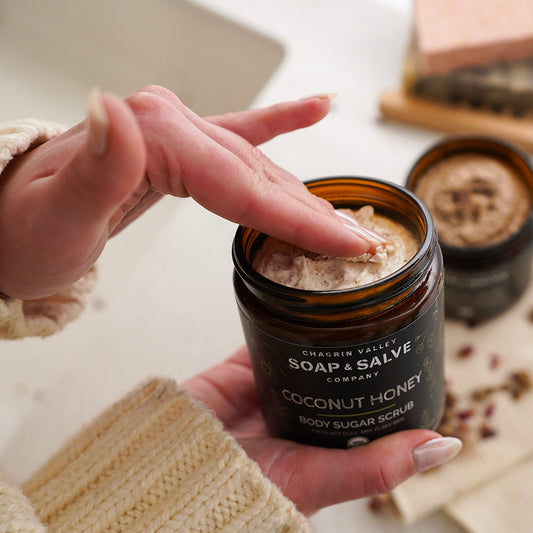
Get informed about exfoliation! Explore the basics, benefits, and best practices for exfoliating your skin so you can make informed decisions about your skincare. Exfoliation can help encourage cell turnover, unclog pores, allow moisturizers to penetrate more effectively, and refresh the skin.
Read Post
Natural skincare isn’t about miracles or promises. It’s about understanding what’s in your products and how real ingredients behave on your skin. Look past the marketing, focus on what truly supports your skin, and the choice becomes clear — that’s why we believe in natural skincare.
Read Post
People with severe allergies—please note: If you have severe anaphylactic-type reactions to ANY of the ingredients in ANY of our products, please do not buy our products. We have dedicated soap rooms and product rooms that are kept meticulously clean, but we cannot guarantee against possible cross-contamination of individual ingredients.
Chagrin Valley Soap & Craft is not responsible for any individual reaction to any particular ingredient. Each product description on our website includes a complete list of ingredients. People with sensitivities to any listed ingredient should not use the product. In case you are in doubt always try an allergy patch test and if at any time irritation occurs, discontinue use of the product.
The content and information on this website, provided by The Chagrin Valley Soap & Salve Company, is for educational purposes only and is in no way intended and should not be construed as medical advice to diagnose, treat, cure, or prevent any disease or health condition. The information regarding folklore or health-related benefits of certain ingredients is for educational purposes only. The information provided is not intended to prescribe or be taken as medical advice.
The information provided is not meant to substitute the advice provided by your personal physician or other medical professionals. Do not use the information found on this website to self-diagnose any medical conditions or treat any health problems or diseases. If you have medical concerns regarding yourself or your family you should seek the advice of qualified, licensed health professionals. Never disregard professional medical advice or delay in seeking it because of something you have read on this website.
This information has not been evaluated by the Food and Drug Administration. This notice is required by the Federal Food, Drug and Cosmetic Act.
Read our Full Medical Disclaimer.