

Natural Soap: Lemon Lavender
$4.10 - $11.95
- Out Of Stock




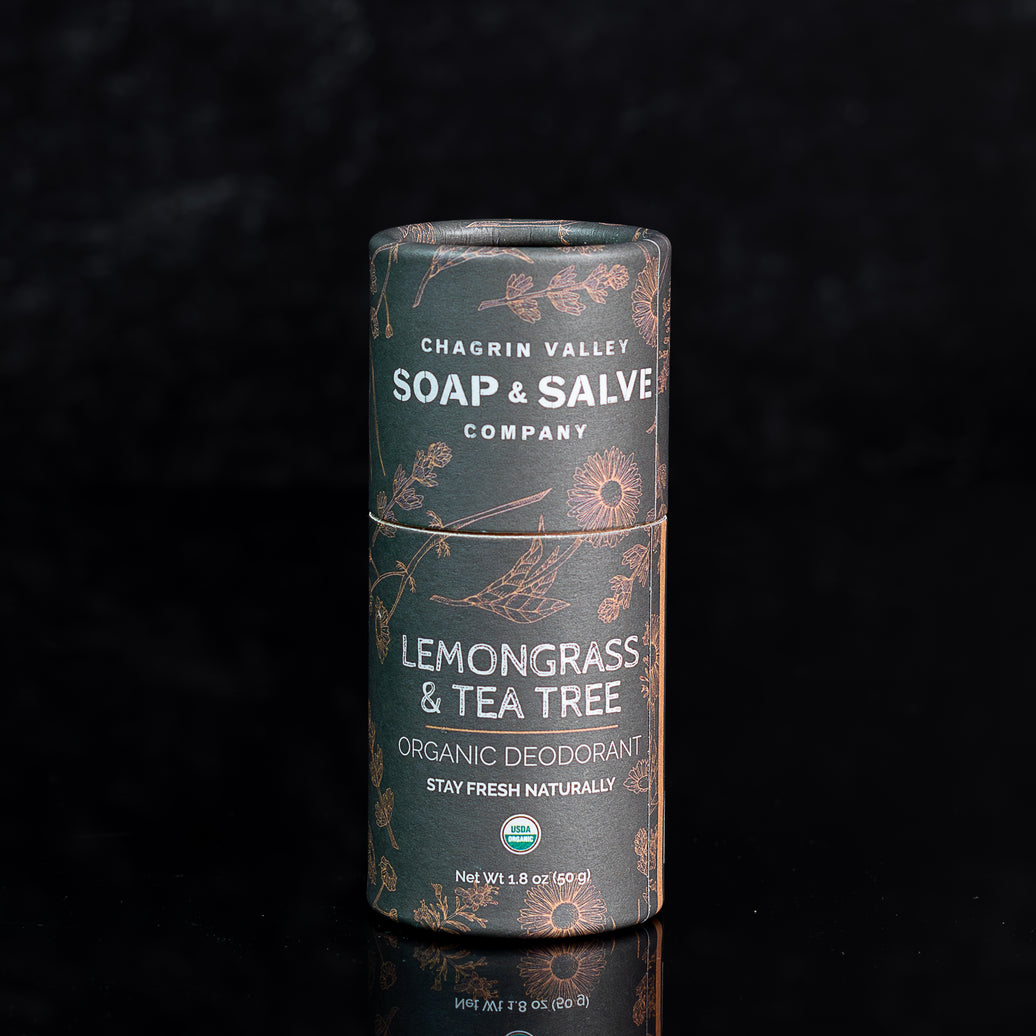
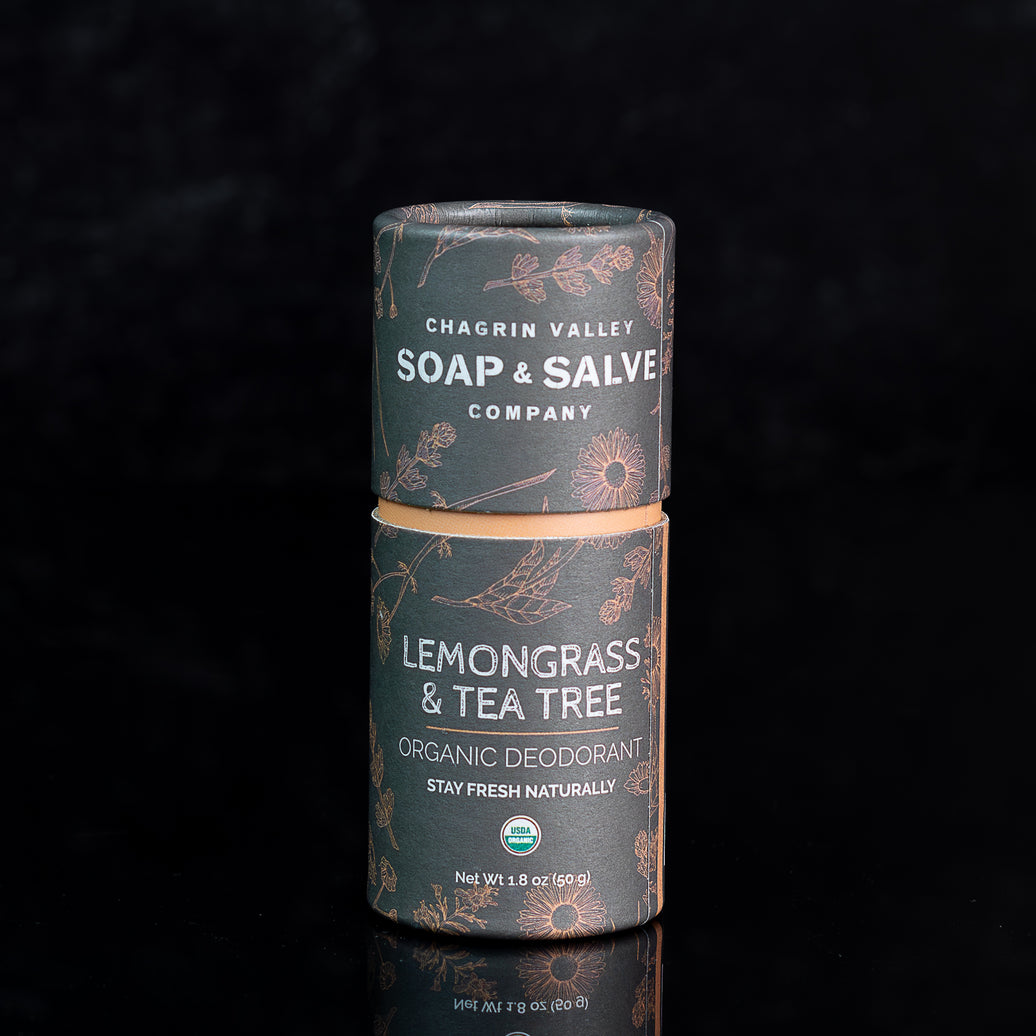
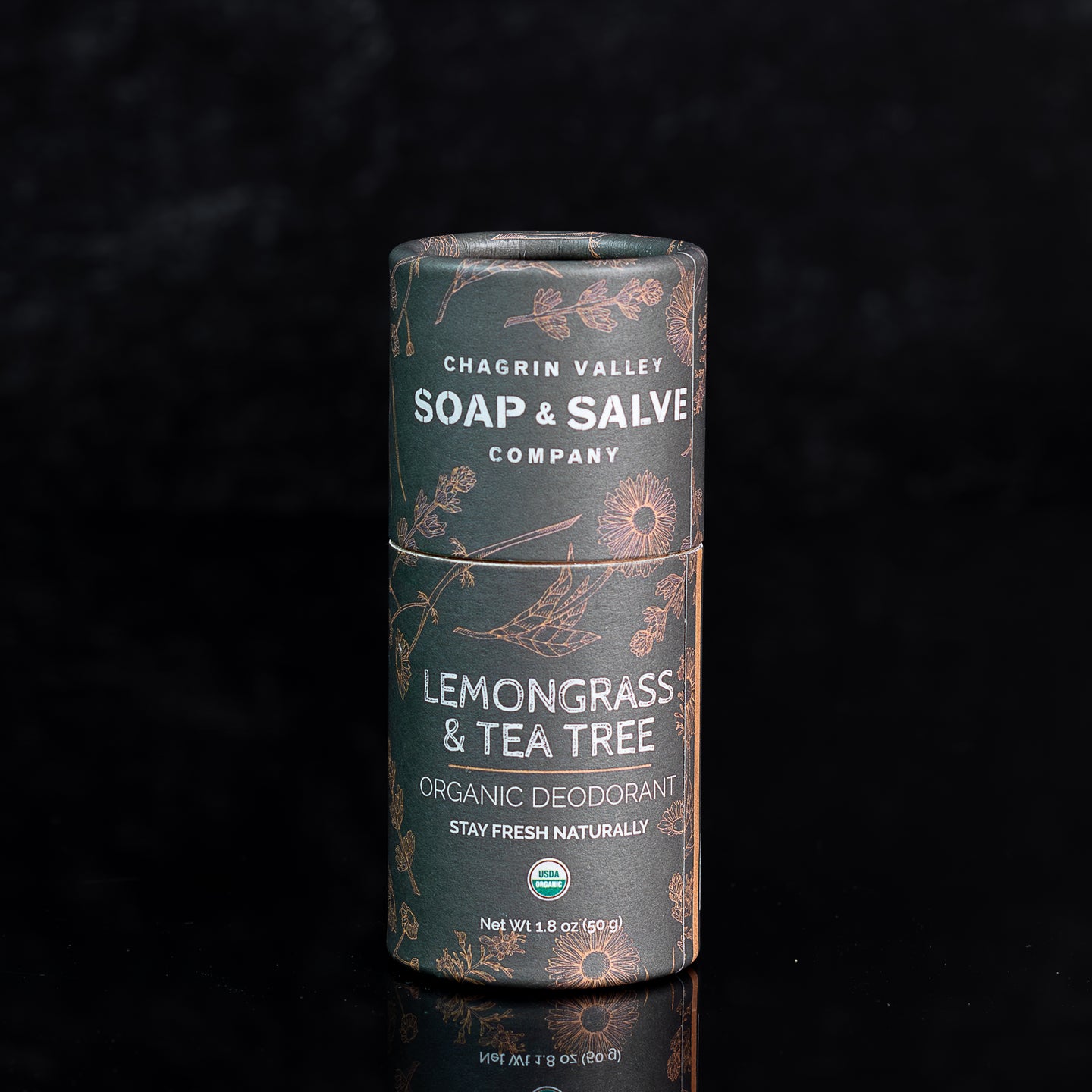
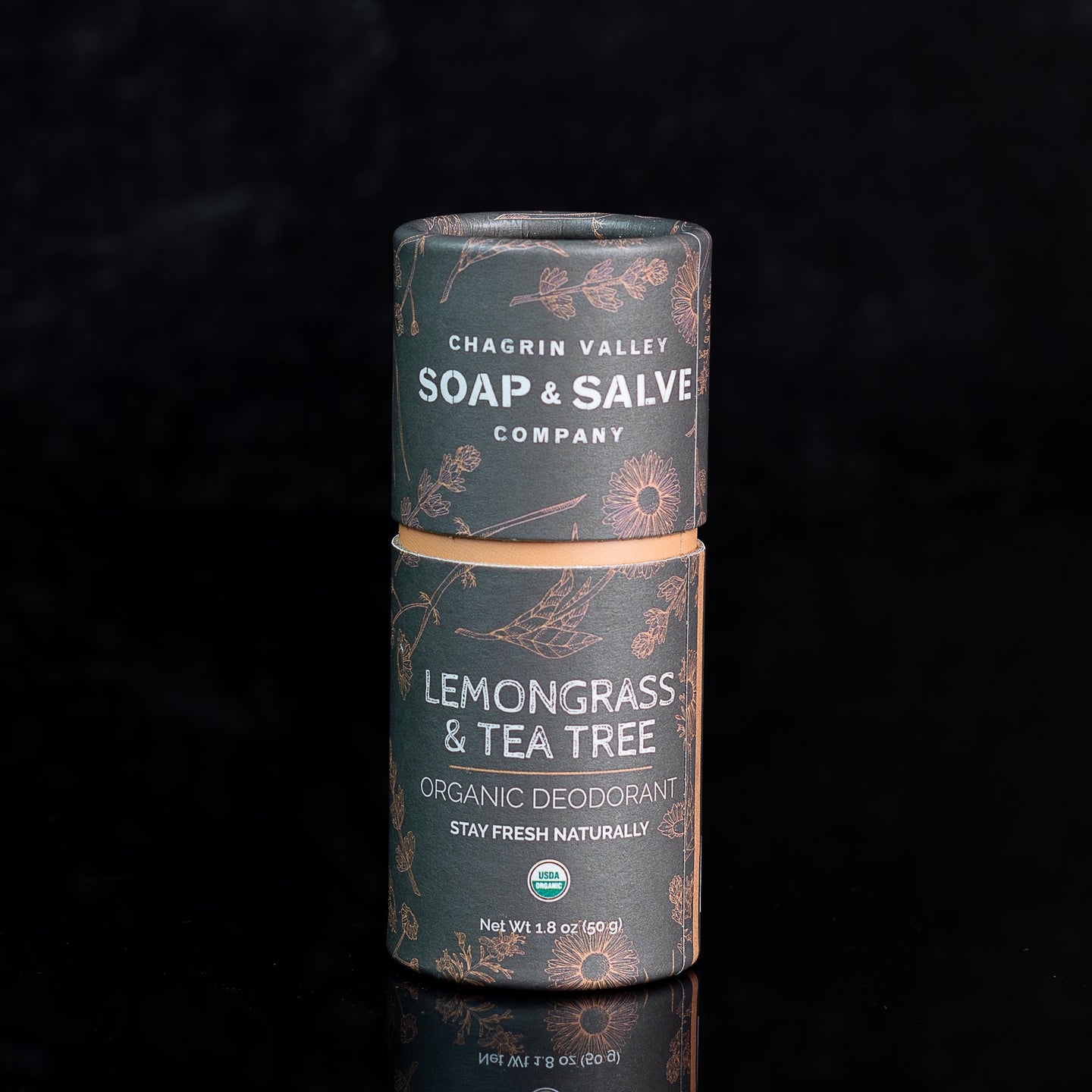
A smooth-gliding organic deodorant with a fresh, citrus-forward aroma and clean herbal notes. Designed to soften with the warmth of your skin, it glides on smoothly and evenly as organic plant oils nourish delicate underarms and pure essential oils help keep odor naturally in check.


Our Lemongrass Tea Tree Organic Stick Deodorant is a regular‑strength formula, made with less baking soda for those who want natural odor control with a gentler touch.
The deodorant stays firm in the tube, but give it a moment against your skin and it softens for a smooth, even glide.
A base of organic virgin coconut oil, organic shea butter, and organic jojoba oil nourishes delicate underarm skin and leaves a soft finish.
Organic cornstarch adds a soft finish that helps manage moisture throughout the day. A small amount of naturally mined baking soda keeps the underarm environment less welcoming to odor‑causing bacteria while remaining comfortable, providing dependable everyday odor control.
The essential oil blend — lemongrass and tea tree — creates a fresh, lemony‑herbal scent that’s both uplifting and clean. Lemongrass brings the bright citrus; tea tree brings the cool, camphor‑herbal edge. Together, they create a scent that feels crisp, outdoorsy, and naturally deodorizing.
Organic plant oils, beeswax, moisture-absorbing botanicals, a touch of baking soda, and pure essential oils — that's it — effective, breathable, and intentionally simple.
Packaged in a recyclable, push‑up paperboard tube with FSC certification—zero-waste, no plastic, just a clean, sustainable choice for everyday comfort.
Apply daily to clean, completely dry underarms.
Because our deodorants are made with organic beeswax, plant oils, and butters, they respond to warmth. Hold the stick against your dry underarm for a few seconds to allow it to soften slightly. This step ensures a smooth, even application and helps prevent irritation from friction.
Once softened, gently swipe 1–2 times per underarm. A very thin layer is all you need — more is not better.
To dispense, remove the cap and gently push up from the base of the tube to expose a small amount. After applying, tap the bottom of the tube on a firm surface to allow the product to slide back down before replacing the cap. Do not press it down from the top.
If you’re switching from a conventional antiperspirant, your underarms may need a week or two to adjust. Give them time to rebalance — most people find the transition well worth it.
If you have very sensitive skin or are simply trying a new product for the first time, we always recommend doing a patch test.
For external use only

The goal is simple: to Harness the Power & Simplicity of Nature® to cleanse, soothe, heal, and protect your skin and hair!
Our unique formulas rely on moisturizing oils and butters, healing botanicals, and pure essential oils. We choose every ingredient with one end-result in mind….the BEST possible natural skin care for YOU!
 Organic Lemongrass Essential Oil
 Organic Tea Tree Essential Oil
 Organic Virgin Coconut Oil*
*Ingredient is Fair Trade Certified
Did you ever notice that so many people are ticklish under their arm? Your underarms are one of the most sensitive parts of your body.
You may notice that you can feel a simple touch more than you can on other areas of the body. When you add up all of these factors you can see why underarm skin is not only more sensitive, but also more prone to irritation.
Many people transition seamlessly to a natural deodorant. Others report a transition period.
I do not believe in "armpit detox" the way in which it is described by many companies that sell natural deodorant. Armpit "detox" is simply a normal adjustment period.
We have all heard about detox diets and cleanses for your body. Well now some people are advocating a detox for armpits. The ritual usually involves mixing up armpit masks made with charcoal, clays, or apple cider vinegar and applying them to your armpits to supposedly help “detox” the harmful chemicals that may have built up due ingredients in conventional deodorant or antiperspirants.
The idea behind the armpit detox is that it helps make the transition from an aluminum-based antiperspirant to a natural deodorant easier. However, there is no evidence that an underarm detox will reduce odor or make your new natural deodorant more effective.
 Commercial deodorants and antiperspirants change the types and amounts of bacteria in the armpit which explains why you may sweat more and have a change in body odor initially.
Please do not allow a company to tell you that the increase in odor and/or sweat is the result of your body expelling or flushing out toxins. Your body has a great natural detox system that includes your liver and your kidneys, but your skin--not so much.
What people call and Armpit "detox" is simply a normal adjustment period. You do NOT need to buy armpit "detox" kits.
A simple wash with a gentle soap and water will remove antiperspirant or deodorant on your skin and help control odor.
Our bodies are quite resistant to change. Our bodies enjoy the status quo. They see change as a disruption and often resist change even if it is a positive one.
The bottom line--our body needs time to adjust to change and since each of us is a unique individual and our armpit microbiome is different the timeline varies from person to person.
Ultimately, it depends on your unique body chemistry.
Since there was so much information I wanted to share, I have written two blogs:
Part 1: Transitioning To Natural Deodorant, discusses the why you may experience an adjustment period as well as the possible causes of irritation and or rashes that some may experience when switching from a conventional antiperspirant or deodorant to an all natural deodorant.
Part 2: Transitioning To Natural Deodorant, provides some suggestions to help with the adjustment period and or to help alleviate the causes of irritation. Part 2 also answers some common questions about using a natural deodorant.
The most important consideration in any business is its customers. Today's world of misleading claims, false advertising, and simple deception, often leaves consumers trying to discover the truth about personal products and their ingredients.
Some of my favorite products are made with ingredients that just do not exist as certified organic. Why? At this time there are no standards created for ingredients specifically used in the personal care product industry. Organic certification of personal care products is based on the organic food standards set by the National Organic Program of the USDA.
But since we are a certified organic company, we are required to submit documentation that even our "non-organic ingredients" were produced without the use of toxic pesticides, genetically modified organisms (GMOs), sewage sludge, or irradiation.

Why Did We Become a Certified Organic Company?
What Do All of the Organic Labels Mean?
Have you ever enjoyed the scent of a fragrant flower or herb? The fragrance comes from potent, aromatic compounds called essential oils found in the flowers, stems, seeds, bark, roots, fruits, and other parts of plants. It often requires several pounds of a plant to produce a single bottle of essential oil.
Essential oils not only give plants their unique scents but also help lure plant pollinators and protect plants from insects and other predators.
The chemical composition of essential oils may provide valuable psychological and physical aromatherapeutic benefits for some people.
It is important to note that to be a true essential oil, the oil must be isolated from the plant material by physical means only. Essential oils are NEVER extracted using solvents.
Although synthetic fragrances or "nature identical" oils are available at a much lower cost, only natural plant essential oils will provide any aromatherapeutic benefits.
What Are Essential Oils (Much more detail)
How Essential Oils Are Extracted
Why We Use Only Real Plant Essential Oils?
If you are pregnant or under a doctor's care for any medical condition, please consult your healthcare provider before using essential oils.
Pregnancy & Children: We do not provide information on the safety of essential oils during Pregnancy or for use in Children because the available information is very ambiguous and often contradictory. If you’re interested in using essential oils during pregnancy or with young children please do your own research and consult your doctor, midwife, or health care professional before use.
Chagrin Valley Soap & Salve has been Leaping Bunny Certified since 2013.
 The Leaping Bunny Program was developed in 1996, by The Coalition for Consumer Information on Cosmetics (CCIC), to identify and support companies that are doing their part to help eliminate the unnecessary use and mistreatment of animals to test cosmetic products and ingredients. The CCIC is made up of eight animal protection groups including the Humane Society of the U.S., as well as groups from Canada and Europe.
At Chagrin Valley we do not test our finished products on animals (other than human volunteers). But what about the raw materials, the ingredients we use?
Many products display labels claiming that their finished product is ‘not tested on animals’ but this does not guarantee that the product ingredients are actually free from animal testing.
The CCIC Standard is a pledge that a company makes to remove animal testing from all stages of product development. Our pledge to buy ingredients that are cruelty-free is integrated into the purchase agreement for all of our suppliers.
Personal care products displaying the “real” Leaping Bunny logo are certified ‘cruelty-free' using the internationally recognized Humane Cosmetics Standards. These rigorous standards require that no animal testing is performed or authorized for finished products or any of the ingredients in any stage of product development by the company, its laboratories or its suppliers after a fixed cut-off date. All Leaping Bunny companies are subject to independent audits and pledge commitments that are renewed on an annual basis.
This annual renewal is a key requirement that sets the Leaping Bunny Program apart from other cruelty-free certification programs. Companies that manufacture products, as well as their ingredient suppliers, must annually recommit to upholding their promise to not conduct animal testing on any finished products, ingredients, or formulations.
Why is this annual commitment renewal important? "Because product formulations change, suppliers come and go, and manufacturers develop innovative lines to meet consumer needs. But we know that compassionate consumers need to be confident that no animal testing is involved in the products they use."
At Chagrin Valley Soap & Salve . . .
The Leaping Bunny Program provides
the best assurance to consumers
that they are making compassionate shopping choices
by purchasing Cruelty-Free skin care!
The "certified organic" labeling has been developed by the USDA and refers to organic claims and labeling on food and personal care products in the United States.
The USDA has very strict guidelines for the percentage of organic ingredients necessary to receive organic certification. Other countries have their own certification procedures, requirements, and standards. Labeling criteria and allowable ingredients differ from those in the US.
The USDA uses a structured labeling system based on the percentage of organic ingredients in a product (excluding water and salt-NaCl).
 The USDA Organic Logo Label can be used on products that meet the standards of the first two tiers of the organic labeling system, in which 95 - 100% of all ingredients are certified organic.
Most of our non-soap products fall into this category and display the USDA logo!
Products made with 70–94.9% Organic Ingredients are labeled “Made with Organic ___”
Products like our soaps and shampoo bars are 85–92% organic and fall into the “Made With Organic Ingredients” category.
 Why Soap & Shampoo Bars? Because the soapmaking process requires lye — a non‑agricultural ingredient that makes up more than 5% of the formula — they cannot meet the 95% threshold, even though the rest of the ingredients are organic.
These products are not allowed to use the USDA organic seal. Instead, they may display the seal of our certifying agent and the words “Certified Organic by OEFFA.”
Chagrin Valley Soap is certified by OEFFA (Ohio Ecological Food and Farm Association) — a nonprofit, USDA‑approved agency that verifies our organic ingredients and manufacturing processes.
👉 Explore Related Blogs:
Certified Organic Skincare & Labels Decoded
Why Most "Organic" Soap Bars Aren't Labeled Organic
 We hand make all of our own products in small batches to ensure freshness, consistency, and perfection.
Our products are not made to sit on store shelves for years and years.
Although there are natural preservatives within the chemical structure of many natural ingredients, they not as potent as the synthetic preservatives used in commercial products to prolong shelf-life.
Other than soap, our products are remade every few weeks and none are very old when they are sold. Our non-soap products should be opened within 6 months of purchase.
Since we use no preservatives or chemical stabilizers, the more important question is, "how long will the product last once it has been opened?
Once opened, skin care products become exposed to dirt and microorganisms (bacteria, yeasts, and molds) that are found in the air and on the skin.
As soon as you open and begin to use any product, simply the way in which you use it will affect its lifespan.
So, we use the PAO (period-after-opening) symbol. These symbols are already available on the product pages of our website and we are in the process of adding them to all of our labels.
The POA symbol is a standard symbol that identifies the useful lifetime of a skin care product after it has been opened for the first time.
 As you can see from the picture, the symbol is an open jar with a written number and the letter "M" for the word "months."
A product with a "9M" would mean that it is good for 9 months after opening.
Tip: write the date you open a product for the first time on its label so you can keep track of the period after opening.
Our POA number represents our best suggestion. There are many factors that can affect the lifespan of a product. If a product is discolored, has an unpleasant smell or looks odd, the product should not be used and should be discarded.
If you’re like me, and you find an old dusty product hiding in a drawer, makeup bag, or even a suitcase from your last trip, you can call us with the lot number and we can verify its age. Obviously, if it seems off in any way, toss it!
Please note: This PAO symbol is widely used in Europe to recommend the length of time a product remains usable after opening, for products that have a shelf-life of at least 30 months. Our products do NOT have a shelf-life of 30 months before opening.


Natural deodorant works differently from antiperspirant — it manages odor without blocking sweat. This guide explains how natural deodorants work, how they compare to conventional products, and why formulation, ingredient sourcing, and company standards matter when choosing a deodorant you use every day.
Read Post
Help Me Choose a Deodorant: No two people are alike as far as their body chemistry goes. Gender, age, race, hormone fluctuations, diet, health, and even medications can affect body chemistry. Body chemistry comes into play with deodorant more than any other hygiene product.
Read Post
Switching to natural deodorant doesn’t have to feel mysterious. Discover how sweat glands and the underarm microbiome work together to influence odor, why some people notice temporary changes, and what science really says about the popular “armpit detox” myth — it’s simply your underarms adjusting to a new routine.
Read Post