Why Some People Experience an Adjustment Period
Switching from a conventional deodorant or antiperspirant to a natural deodorant feels different for everyone.
Many people make the change without noticing much at all, while others observe temporary shifts in perspiration or odor during the transition to a natural deodorant.
When these changes happen, they’re simply signs of normal underarm skin biology settling into a new routine — not evidence of an “armpit detox” or anything dramatic happening beneath the skin.
Understanding how sweat, bacteria, and the underarm microbiome work makes the natural deodorant transition feel far less mysterious.
Before we talk about “transition,” let’s start with how underarms actually work.
Why Sweat and Bacteria Cause Underarm Odor
Your body has two primary types of sweat glands.

Eccrine glands are found all over your body. The sweat from these glands — composed mainly of water, salt, and trace electrolytes — does not contribute to body odor. Its primary role is to help regulate body temperature.
Apocrine glands, concentrated in areas with hair follicles — including the underarms and groin — produce a thicker secretion that contains fatty acids and proteins.
On its own, this apocrine sweat does not smell. Body odor develops only when bacteria living on the skin break down these fatty and protein-rich secretions. As bacteria metabolize them, they produce odor molecules as byproducts.
In simple terms:
Sweat itself doesn’t smell.
Bacteria interacting with sweat create odor.
That bacterial community brings us to the next important concept.
The Underarm Microbiome
Your skin is home to trillions of microorganisms — mostly bacteria — that live naturally on its surface. This living ecosystem, called your microbiome, is unique to you, like a fingerprint.
Each area of the body has its own microbiome, shaped by moisture, temperature, and exposure to air.
The underarm, being warm and moist, supports a particularly active bacterial community.
A 2016 study found that long-term use of antiperspirants and deodorants can significantly influence both the type and number of bacteria found in the underarm, altering its microbial balance.
 Julie Horvath, one of the researchers, noted, “We have no idea what effect, if any, that has on our skin and on our health.”
What does this mean for someone switching to a natural deodorant?
Because each person’s underarm microbiome is unique, it is difficult to predict exactly how a product change will affect any one person.
We do know that when you change what you apply daily, the bacterial balance adjusts — and that adjustment simply takes time.
Do You Need an "Armpit Detox" When Switching to Natural Deodorant?
As conversations about natural deodorant have grown, so has the idea of an “armpit detox.” This is a myth based on the theory that you must first purge aluminum salts and other synthetic ingredients left behind from years of antiperspirant use.
In reality, aluminum salts form temporary plugs within the sweat ducts to reduce perspiration. These plugs sit near the surface of the skin and are gradually removed through normal washing and natural skin turnover as dead skin cells are shed.
You do not sweat out toxins. Your body already has a highly effective detoxification system. The liver and kidneys are responsible for filtering and processing metabolic waste. Sweat glands primarily regulate body temperature and minor electrolyte balance — they are not a primary route for toxin elimination.
If you notice increased perspiration or a change in odor after switching to a natural deodorant, it is not your body “purging toxins.” It is simply the result of sweat glands resuming normal function and the underarm microbiome rebalancing.
A gentle daily wash with mild soap and water is sufficient. Time — not detox masks — allows the underarm to adjust.
Changes You Might Notice During the Transition
Not everyone experiences a natural deodorant transition period. Many people switch and notice little to no difference.
As sweat glands return to normal function and the underarm microbiome rebalances, temporary changes can occur. This is not a failure of the deodorant — it is simply your body adjusting.
Here’s what you might notice:
You May Sweat More After Switching to Natural Deodorant
Antiperspirants block sweat. Natural deodorants do not. When you stop using an antiperspirant, your sweat glands simply return to doing what they were designed to do — produce sweat.
Odor May Change After Switching to a Natural Deodorant
As the bacterial balance in the underarm shifts, the character of odor may temporarily change — a normal part of the adjustment with two biological causes.
First, when you change what you apply daily, the bacterial balance in the underarm begins to adjust. Different bacteria produce different odor molecules. As that balance shifts, the character of odor can temporarily change.
Second, natural deodorants reduce odor-causing bacteria but do not stop sweat. If sweating increases for a short time, there is simply more for bacteria to break down. More moisture can mean a stronger scent until things rebalance.
This does not mean the natural deodorant is failing — it reflects the microbiome adjusting. As the bacterial community finds its natural balance again and sweat production settles into its normal pattern, odor becomes more predictable and easier to manage.
Why Sensitive Individuals May Experience Irritation
The underarm is thin, friction-prone skin that is often shaved. Increased moisture, friction from over-application, or applying deodorant immediately after shaving can sometimes lead to irritation.
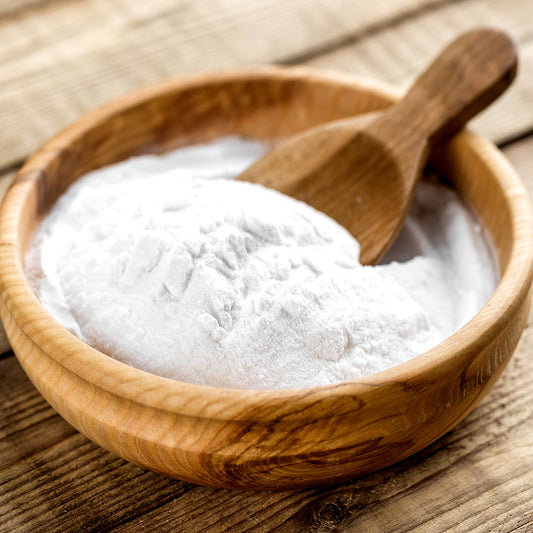
For some individuals, baking soda — which is naturally alkaline — may also cause sensitivity, especially if their perspiration tends to be more acidic. Many people tolerate baking soda well, while others prefer a baking soda–free formula. Because body chemistry varies, the best formulation is often the one that feels most comfortable on your own skin.
When Irritation Isn’t Just About Transition
Not all irritation during a switch is about bacterial changes. Often it’s something more straightforward — moisture, rubbing, or freshly shaved skin.
If perspiration increases temporarily after stopping an antiperspirant, that added moisture can increase friction — especially in the crease of the underarm where skin rubs against skin or clothing.
That friction can lead to chafing: redness, tenderness, or a stinging sensation.
This is not detox, and it is not necessarily an ingredient reaction. It is often simply the result of moisture and movement.
Other common contributors to irritation include:
- Applying deodorant immediately after shaving
- Using too much product
- Rubbing too vigorously during application
- Applying to damp skin
- Sensitivity to certain ingredients, such as baking soda or essential oils
 Often, small adjustments in timing, amount, or formulation resolve the issue quickly.
Persistent burning, raw skin, or worsening irritation should prompt discontinuation.
A Natural Return to Balance
For many people, switching to a natural deodorant is uneventful.
For others, there may be a short period of adjustment as sweat production and the underarm microbiome recalibrate.
This is not detoxification. It is not your body “purging toxins.” It is simply normal physiology responding to change.
Most transitions, when they occur, settle within a few weeks.
Your body is remarkably capable of finding its balance when given time.
- How to Apply Natural Deodorants: A Practical Guide
- Natural Deodorant: Why It Works and Why It’s Different
- Switching to Natural Deodorant: A Practical Guide (coming soon)
- Help Me Choose a Natural Deodorant Guide
Originally published in 2019. Updated for clarity, organization, and expanded educational detail.