
Nice and creamy
"I just recently received this product and only used it once. I gave it. 5 stars because I believe it’s a great product. I will have to come back later to update my review."



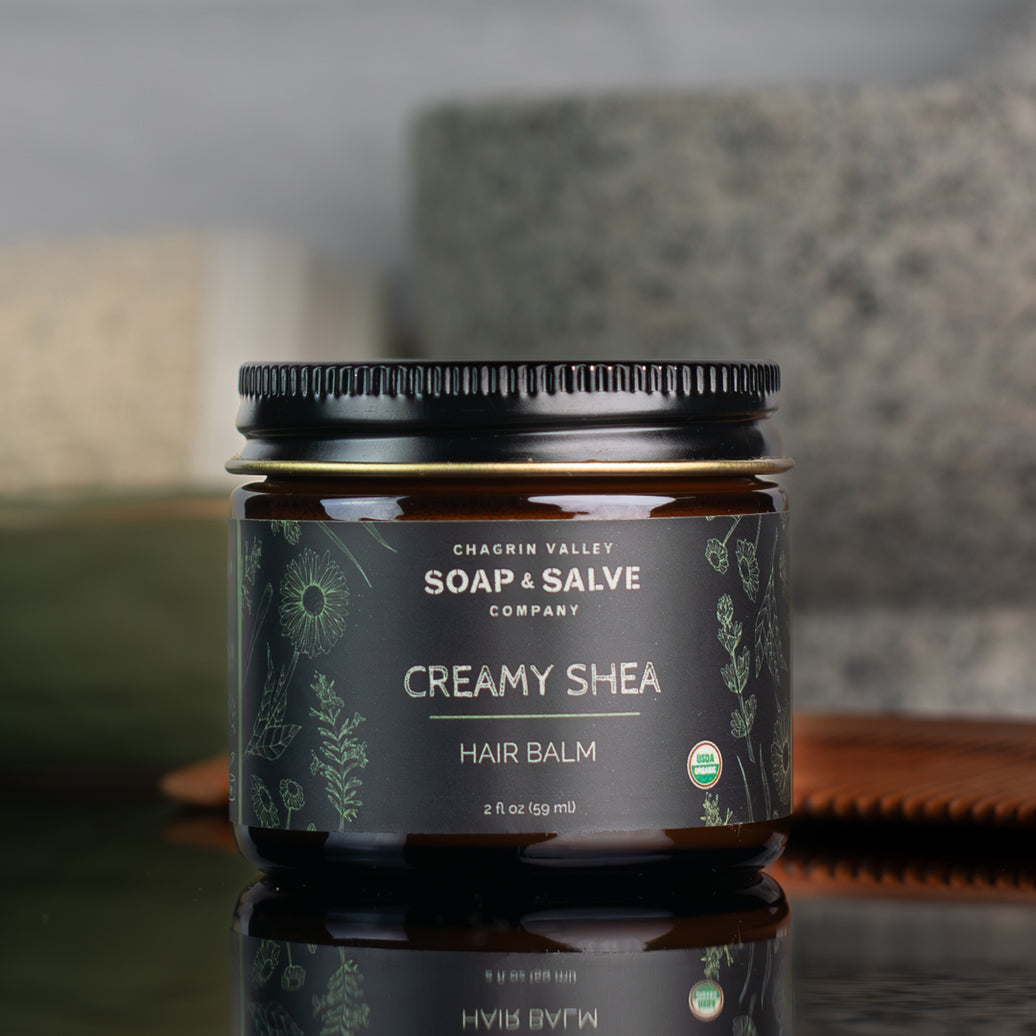
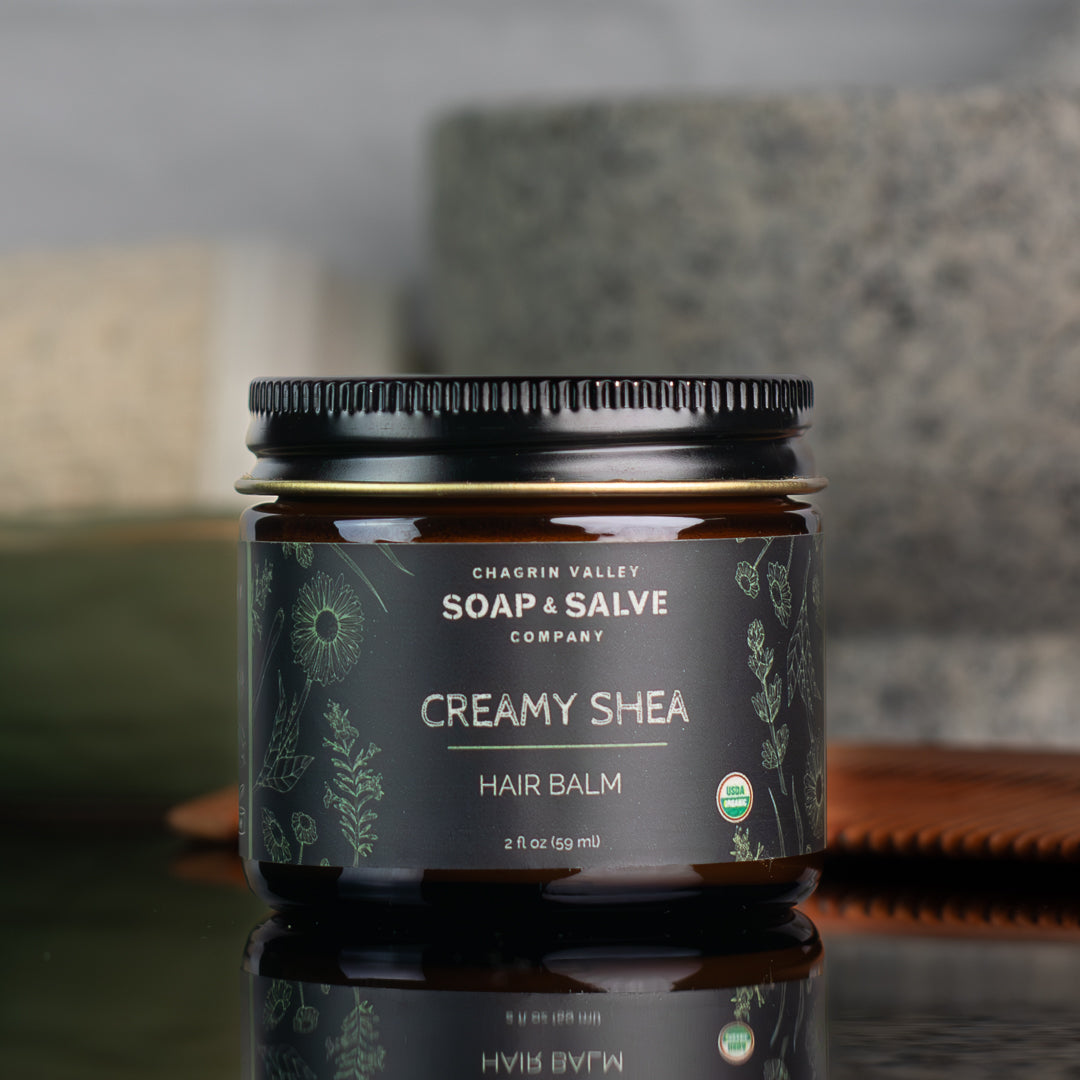
A deeply conditioning organic hair balm made with virgin shea butter and nourishing plant oils that deeply condition, soften, and smooth dry, coarse, or tightly coiled hair while helping tame frizz, improve manageability, and restore moisture to dry, brittle, or over‑processed hair.


Good For: Coarsely Textured Hair · Tightly Coiled Curly Hair · Dry and Over-processed Hair
When hair needs more than a lightweight oil, a richer, more protective layer can make all the difference.
Hair balms are some of the most versatile products in natural hair care — they can be used as pre‑wash conditioners, in‑shower treatments, leave‑ins, or daily styling creams. Creamy Shea is our richest, most nourishing balm, created especially for hair that needs moisture, softness, and control.
At the heart of this formula is organic virgin shea butter, known for its ability to soften coarse strands, reduce dryness, and help protect fragile ends. Its natural fatty acids give the balm a creamy, cushiony feel that helps calm frizz, smooth flyaways, and bring flexibility back to hair that feels brittle or over‑processed.
To balance the richness of shea, we blend in organic jojoba oil, organic sweet almond oil, and organic babassu oil — each chosen for how they condition the hair and support a comfortable scalp. Jojoba’s natural affinity with our own scalp oils helps keep the scalp feeling balanced. Sweet almond oil adds silky slip and softness. Babassu oil absorbs quickly, helping the balm melt into the hair without leaving a heavy or greasy finish.
Together, these ingredients create a balm that feels rich, creamy, and deeply conditioning. It melts easily between your hands and coats the hair with a soft, protective layer that helps reduce dryness, ease frizz, and improve the overall feel of the hair.
A rich, organic balm that melts into the hair to soften coarse textures, smooth frizz, nourish dry ends, and restore the kind of supple, flexible feel that only pure shea butter and plant oils can provide.
Deep moisture for soft, beautifully conditioned hair.
👉 Learn More: For detailed techniques, including deep conditioning treatments and tips for different hair types, visit our Hair Balm FAQ & Application Guide.

The goal is simple: to Harness the Power & Simplicity of Nature® to cleanse, soothe, heal, and protect your skin and hair!
Our unique formulas rely on moisturizing oils and butters, healing botanicals, and pure essential oils. We choose every ingredient with one end-result in mind….the BEST possible natural skin care for YOU!
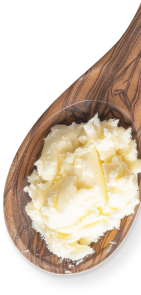
 Organic Virgin Shea Butter*
 Organic Babassu Oil
 Organic Sweet Almond Oil
*Ingredient is Fair Trade Certified
Our Shea Butter is unrefined and has not been bleached or deodorized.
Pure unrefined shea butter has an earthy, nutty, smokey scent that ranges from mild to strong and can be quite pungent. Since our shea butter is a natural, unrefined product it retains its natural scent, color, and nutritional benefits. The scent and color of unrefined shea often vary from batch to batch.
Read our Shea Butter Tutorial which explains the various types of shea butter as well as why we believe that the benefits of unrefined shea butter far outweigh the cons of its smokey, pungent scent.
Overall rating: 4.432099 / 5 from 81 reviews.
Hair Balm: Creamy Shea is an organic hair balm made with virgin shea butter, praised for its ability to revitalize damaged hair. While opinions vary on its feel and smell, many customers appreciate its effectiveness in small amounts and its ability to reduce tangles. Some users report greasiness and frizz, while others find it to be greasy and difficult to maintain.
Review topics: ["quality","feels","consistency","smells","amount","skin","looks","lines","hair","oil","works","balm","conditioner","shampoo","hands","curls","waves","bar"].
"I just recently received this product and only used it once. I gave it. 5 stars because I believe it’s a great product. I will have to come back later to update my review."
— Joycelyn S. (5/5)
"Great product! I purchased countless items hoping to find something i actually enjoy and this is it. It has a nice creamy feel and very mouisterizing."
— Miklo (5/5)
"This was a first time trying a balm as a leave in conditioner. I did my usual wash in the shower (shampoo/conditioner) then immediately applied the balm. The only thing throwing me off is the texture. I have to get used to it. I scoop a nice pea size amout, emulsify by rubbing it in my hands and then do a praying hands technique to apply and then scrunch a bit. I have 3b/3c fine curly hair."
— Danielle (4/5)
"This really helps with my extremely dry hair and I use it also for the top of my hands."
— Andrea (5/5)
"Hydrates my hair very well. When they say less is more they are very serious about it. Definitely different compared to using 4-5 pumps of conditioner like I used to. So far it’s working very well!"
— Chloe (5/5)
"Helps my waves to not look so dry"
— Barbara E. (5/5)
"This is way too heavy to be used on the regular for my hair type (wavy, prone to oil and frizz) but it's great if I'm feeling extra dry and want a special spa day. I only need a tiny amount at a time so it lasts forever."
— L (5/5)
"I have tried other shea hair balms for my curly (often frizzy) and they are either too solid or too whipped to work right. Soap and Salve’s is just right for holding moisture in and keeping my curls smooth throughout the day. I had to buy my husband his own, because I realized he was using mine to keep his super straight, super fine hair in place too."
— Sherri B. (5/5)
"Very light smell, a little bit goes a long way. Works nicely on damaged curly hair."
— Maggie B. (5/5)
"I LOVE this Balm!!! I ordered several products this time. First, I'm over 60 and have used their Carrot & Honey Soap Face soap for over 15 years and my skin looks great! I have now added the Argon Pumpkin facial oil and also purchased the Honey Butter facial soap bar as well to alternate soaps. I love all these! They work! For my hair, because it is getting dry and brittle, I bought the Olive Babassu shampoo bar, the Jojoba Grapeseed oil and the Creamy Shea hair balm. I didn't think I would like the bar but I love it. And, I love the hair oil and balm which I apply both while my hair is wet (oil on the scalp and balm on ends) and then dry with a diffuser and add more balm the next day if needed. I have looked for a very long time and tried many different things for my hair and finally found something that works. Very pleased!"
— Vicki W. (5/5)
In my youth, I had pin-straight hair and was envious of friends with wavy and curly hair. But those friends were jealous of my straight hair! Whether your hair type is straight, wavy, curly, coily, or somewhere in between, your locks are beautiful.
In the same way that understanding your skin type is important for creating an effective skincare routine, determining your hair type can play a huge role in helping you to reach your hair goals.
Hair type has 4 major categories: straight hair (type 1), wavy hair (type 2), curly hair (type 3), and coily hair (type 4). These 4 types of hair are further categorized into A, B, and C subtypes creating 12 total categories.

The best way to determine your hair type is to see your hair in its natural state. By simply looking at your hair you can recognize some obvious characteristics. The next time you wash your hair, allow it to air-dry without any styling or hair products. This will help you to define the natural shape or pattern (texture) of your hair. For example:
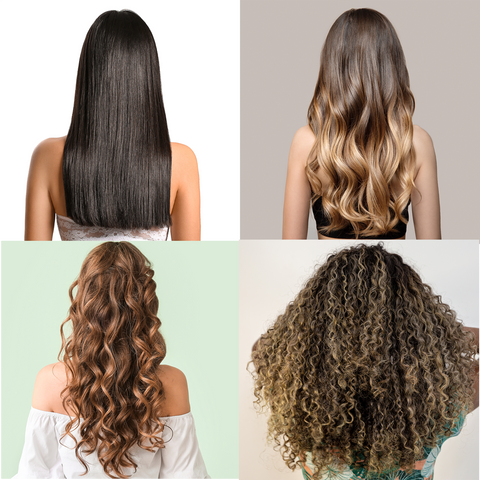
It is important to remember that most people do not have just one type of hair. They often have two different hair textures on various parts of their head.
Each of these hair textures will need special care and attention to enhance its natural best characteristics. Also, even though two people share the same natural wave, it does not mean they possess the same exact hair type. You are unique!
The terms "thick hair" and "thin hair " can be confusing. You can have dense fine hair — meaning lots of thin strands packed together — or coarse hair that’s sparse — fewer thick strands spread farther apart.
The texture of your hair is determined by the thickness or diameter of an individual hair strand. There are 3 basic categories:
To determine your hair texture, use a single strand of hair and compare it to the size of a piece of typical sewing thread.
Thin hair does not style very easily. Medium hair is relatively easy to style and can hold curls for a longer time period. Thicker strands are very easy to curl, but because they are less pliable, they can be difficult to style or hold their shape.
Texture is what determines how your hair feels between your fingers and how it responds to moisture and styling.
Hair density is the number of hair strands per square inch of your scalp.
Density affects how hair looks overall, how hair will react to certain products, and how well it will hold different hairstyles. People with low-density hair often do better with lightweight products, while high-density hair may need richer formulas to coat every strand.
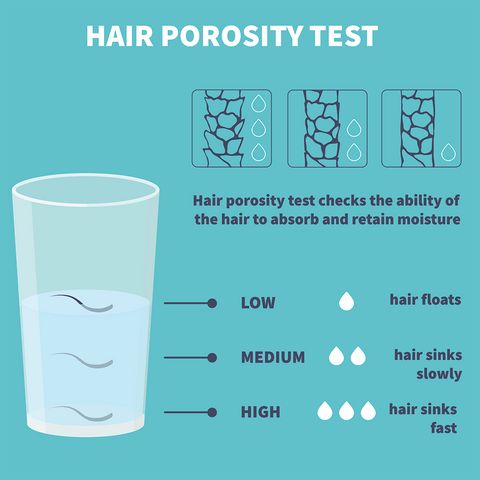
Porosity refers to your hair’s ability to absorb moisture as well as hair products. You can easily determine the porosity of your hair with a simple experiment.
It seems like hair with high porosity would be well hydrated all the time since it can easily absorb moisture easily. However, due to the gap areas around the cuticle, the hair also loses moisture very easily, which can result in hair that is dry, brittle, frizzy, and prone to breakage.
On the other hand, that flattened cuticles of hair with a low porosity actually blocks moisture from being absorbed into the strands. Since hair care products are not readily absorbed, product buildup on hair strands is often a problem. Hair care products should be applied sparingly while hair is still damp so product is more easily absorbed and distributed.
To keep your hair healthy and nourished, it is important to develop a haircare routine that includes proper hydration. Knowing your hair type is crucial, as it helps you choose the right products for straight, wavy, curly, or coily/kinky hair.
The wholesome goodness of our handcrafted soap is available for your hair.
Shampoo bars are an all natural conditioning shampoo in a solid bar form. Yes, this is real shampoo in a solid bar. Shampoo bars are not a new idea.
They were commonly used before liquid detergent shampoos and conditions were invented in the 1940s.
Although the process for making a shampoo bar is the same as making soap, our shampoo bar "recipes" are specially formulated with natural plant oils, butters, botanicals and essential oils that nourish your hair and scalp.
Our shampoo bars contain no artificial fragrance, color, preservatives, detergents, alcohol, urea, formaldehyde, sodium lauryl sulfate, DEA, propylene glycol - or any of the other synthetic hair care additives.
Each of our shampoo bar selections contains a different blend of natural plant oils, essential oils, and herb infused oils. No two recipes are the same.
Click here for help choosing an all natural shampoo bar!
Please read "Everything About Shampoo Bars!"
The most important consideration in any business is its customers. Today's world of misleading claims, false advertising, and simple deception, often leaves consumers trying to discover the truth about personal products and their ingredients.
Some of my favorite products are made with ingredients that just do not exist as certified organic. Why? At this time there are no standards created for ingredients specifically used in the personal care product industry. Organic certification of personal care products is based on the organic food standards set by the National Organic Program of the USDA.
But since we are a certified organic company, we are required to submit documentation that even our "non-organic ingredients" were produced without the use of toxic pesticides, genetically modified organisms (GMOs), sewage sludge, or irradiation.

Why Did We Become a Certified Organic Company?
What Do All of the Organic Labels Mean?


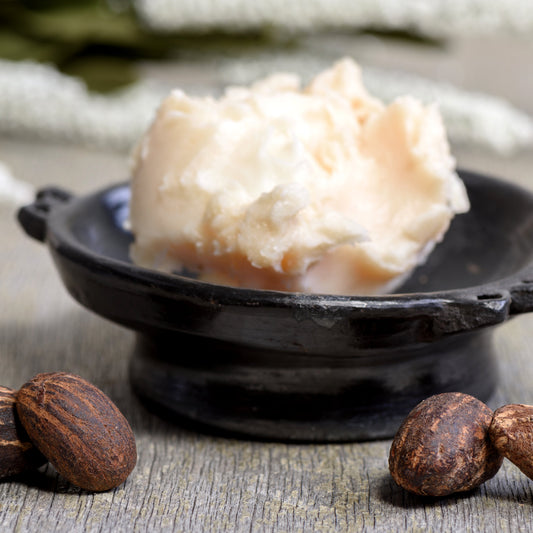
Shea Butter has been used across the African continent for centuries. But, all Shea Butter is not created equal! Let's Find Out Why.
Read Post
Learn how to use herbal hair tea rinses to gently cleanse, soften, and refresh your hair and scalp. This guide covers simple brewing methods, how to apply, and ways to customize your rinse for different hair types and needs.
Read Post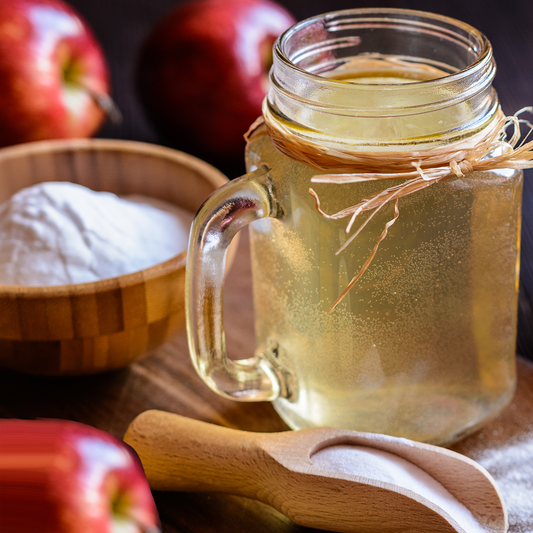
Try these Natural Remedies for hair and scalp build-up.
Read Post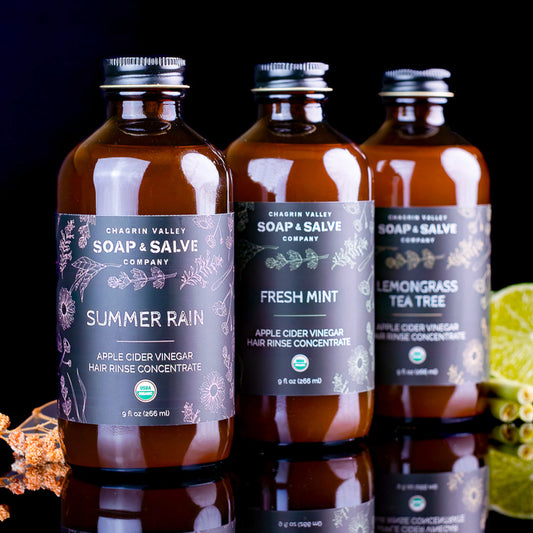
Apple Cider Vinegar is a great addition to any hair care regimen. Learn some tips, FAQs, and Recipes for using Chagrin Valley's Apple Cider Vinegar Rinses.
Read Post