
Great for massage
"The scent is nice, present but not overpowering, and relaxing. The slip is nice for massage, allowing you to apply pressure and not slide around too much."



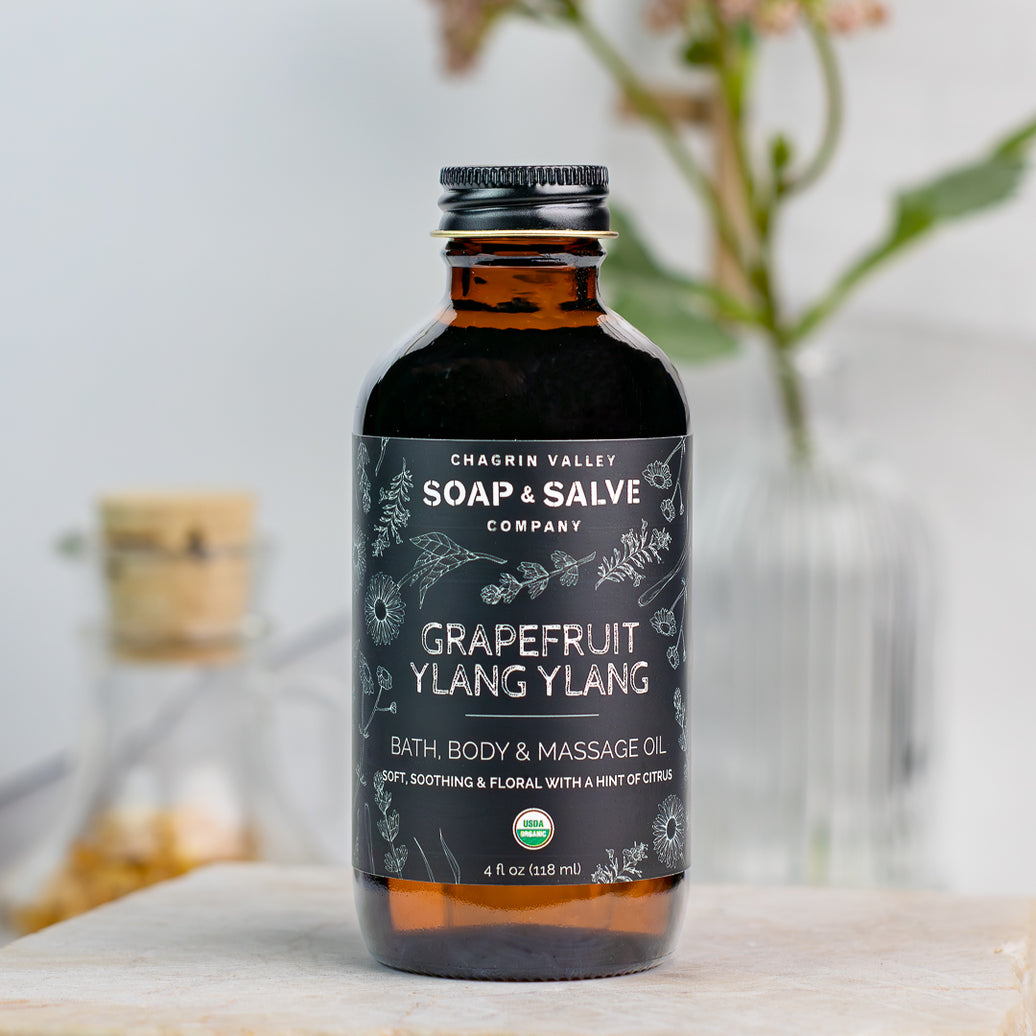
When the day feels heavy, let brightness back in. This skin-softening aromatic oil blends smooth plant oils with gentle notes of citrus and soft florals, creating a light, cheerful scent designed to turn bath and body care into a moment of easy escape.


Some scents invite you to pause
Grapefruit Ylang Ylang is light and quietly uplifting, where bright citrus meets soft florals in a blend that feels gentle, open, and easy to wear on the skin. The aroma is delicate rather than bold—designed to linger softly in warm steam, on towels, and on freshly bathed skin without ever becoming overpowering.
Whether added to a bath, used for massage, or smoothed onto damp skin after showering, this aromatic oil brings a subtle sense of freshness and warmth to simple moments of care, turning them into a small, sensory pause within the day.
The scent opens with the fresh sparkle of grapefruit and sweet orange—clean, bright, and lightly sun-touched. Lime adds a crisp edge, while ylang ylang drifts in quietly beneath, lending a soft floral warmth that feels soothing.
The overall aroma is citrus-forward with a gentle floral finish—light, balanced, and quietly cheerful.
A nutrient-rich blend of soothing organic oils leaves the skin feeling soft, supple, and conditioned. As a massage and body oil, the lightweight texture glides on smoothly and sinks in slowly, creating a velvety finish that feels deeply nourishing.
In the bath, the oil blooms into warm water, forming a delicate, silky layer that settles gently onto the skin, leaving it wrapped in comfort that lingers long after the water is gone.
Plant oils do not add water to the skin; instead, they help slow moisture loss and support the skin’s natural barrier—so skin feels touchably soft and comfortably moisturized long after you step out of the bath or finish your massage.
The oils, infused with borage, lavender, mugwort, lemon balm, chamomile, rose petals, and hops, feel nourishing, softening, and calming, with a subtle herbal‑floral warmth that creates a soothing, comforting skin experience. Each botanical would lend its own character in the way it shapes the texture, aroma, and overall feel of the oil — resulting in a gentle, plant‑rich conditioner that feels grounding, supportive, and quietly restorative. The blend carries that “quiet the nervous system” quality as a sensory experience: warm, gentle, and deeply soothing to apply.
For moments that call for lightness and ease—when you want your space to feel a little brighter, softer, and quietly refreshed.
For a moisturizing after-shower treat, add a treatment pump or sprayer
This aromatic oil is designed to be versatile and intuitive—use it in the bath, for massage, or as a body oil, in whatever way feels most natural to you.
Curious about other ways to use this aromatic oil? From baths and showers to massage and more, you’ll find them all on our How To Use a Natural Bath & Body Oil page.
For external use only.
Avoid eyes and broken skin.
We recommend a patch test before first using any new product.
When using in the bath or shower tub may become slippery.

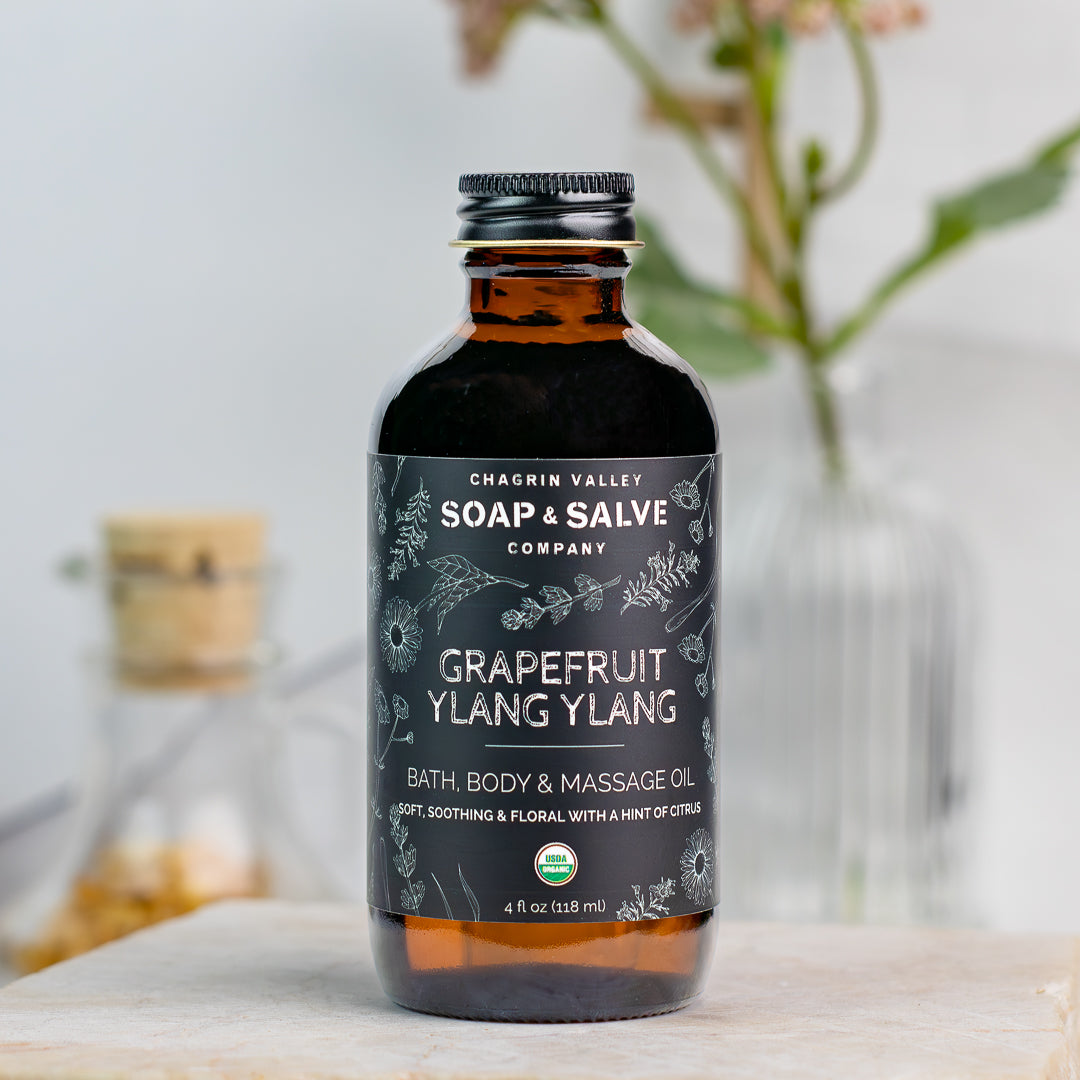
The goal is simple: to Harness the Power & Simplicity of Nature® to cleanse, soothe, heal, and protect your skin and hair!
Our unique formulas rely on moisturizing oils and butters, healing botanicals, and pure essential oils. We choose every ingredient with one end-result in mind….the BEST possible natural skin care for YOU!
 Organic Evening Primrose Oil
 Organic Sweet Almond Oil
 Organic Ylang Ylang Essential Oil
Organic Sunflower Oil infused with Organic Botanicals: Borage, Lavender, Mugwort, Lemon Balm, Chamomile, Rose Petals, and Hops
Overall rating: 4.7608695 / 5 from 46 reviews.
This bath and body oil is praised for its moisturizing and nourishing properties, offering a relaxing and warming scent that leaves the skin feeling soft and luxurious.
Review topics: ["fragrance","oil","skin","smells","feels","amount","face","use","blend","muscles","bath","chemicals"].
"The scent is nice, present but not overpowering, and relaxing. The slip is nice for massage, allowing you to apply pressure and not slide around too much."
— Dave (5/5)
"Needs a dropper!"
— elaine t. (3/5)
"I use this oil after showering to lock in moisture and it’s so much better than lotions I’ve used in the past."
— Catherine B. (5/5)
"Holidaycl giftvthat was well received"
— Laura J. (5/5)
"As a middle aged woman in perimenopause this oil helps to keep my legs, arms, and whole body from getting flaky and dry. It's my absolute favorite purchase! It feels so luxurious going on your skin and absorbs well. It is just the right consistency and the smell is wonderful. Just buy it! You won't be disappointed!"
— Cynthia S. (5/5)
"The Grapefruit and Ylang Ylang Bath and Body Oil is sooooo soothing and moisturizing ! I use it right after I shower. The scent is so relaxing and warming. . one of my favorite scent is Ylang Ylang . . it’s a lovely oil that I highly recommend. Love ALL my products !!!"
— Nancy S. (5/5)
"I love this oil I like the add a cap full to my bath and soak in it. The oil sticks to my skin and makes my skin so smooth when I get out! It smells amazing, it makes my muscles feel so relaxed. This blend of oils is amazing!"
— Dana L. (5/5)
"This was my first time trying a body oil and I’m impressed with how much I love it. -Makes my skin feel amazing: moisturized and soft -A little goes a long way -Not too slick (I don’t slip around after putting it on my feet or anything) -I don’t have any issues with it transferring onto sheets either, it soaks into my skin well -The scent is light and natural -You get a lot of product in the bottle I really can’t think of any cons! This product is something I’ll always keep around now because regular lotion doesn’t replace how luxurious this oil feels on the skin."
— Kelli B. (5/5)
"Love the way it felt on my face after a good, hot shower! It made my skin feel extremely soft! But to me it doesn't smell like grapefruit and Ylang ylang. I really don’t smell much of anything at all."
— Jessica B. (4/5)
"I generally use whipped body cream in winter and body oil in the summer. I just purchased the Grapefruit ylang ylang to mix things up a bit. I love the body oils and was originally surprised how they absorb into my skin without any greasy feeling. I only detect a very light grapefruit scent but results are still excellent!"
— Kathleen N. (5/5)
Have you ever enjoyed the scent of a fragrant flower or herb? The fragrance comes from potent, aromatic compounds called essential oils found in the flowers, stems, seeds, bark, roots, fruits, and other parts of plants. It often requires several pounds of a plant to produce a single bottle of essential oil.
Essential oils not only give plants their unique scents but also help lure plant pollinators and protect plants from insects and other predators.
The chemical composition of essential oils may provide valuable psychological and physical aromatherapeutic benefits for some people.
It is important to note that to be a true essential oil, the oil must be isolated from the plant material by physical means only. Essential oils are NEVER extracted using solvents.
Although synthetic fragrances or "nature identical" oils are available at a much lower cost, only natural plant essential oils will provide any aromatherapeutic benefits.

What Are Essential Oils (Much more detail)
How Essential Oils Are Extracted
Why We Use Only Real Plant Essential Oils?
If you are pregnant or under a doctor's care for any medical condition, please consult your healthcare provider before using essential oils.
Pregnancy & Children: We do not provide information on the safety of essential oils during Pregnancy or for use in Children because the available information is very ambiguous and often contradictory. If you’re interested in using essential oils during pregnancy or with young children please do your own research and consult your doctor, midwife, or health care professional before use.
If you think about it, your skin type is not even the same for all of the areas of your body.
The skin on your face is different from the skin on your hands, which is different from the skin on your back which is different from the skin on your feet ...etc.
Although your skin type is determined by genetics, it will also be affected by other factors and can change with time.
Understanding your skin type is a good starting point before trying or switching to natural products.
There are typically five types of healthy skin: normal, dry, oily, combination, and sensitive.
NORMAL SKIN
This skin is balanced, neither too dry nor too oily. It has regular texture, no imperfections and a clean, soft appearance, and does not need special care.
OILY SKIN
Oily skin is the result of excessive secretions of sebum, an oily secretion of the sebaceous glands. Oily skin tends to attract more dirt and dust than dry skin and may be prone to blackheads, acne, and excessive shine. It is frequent in adolescents and often seen with acne or blemish-prone skin.
DRY SKIN
For some people dry skin is caused by external factors such as the weather, low air humidity, sun, or hot showers, and it is often temporary.
However, for others it may be a lifelong condition. Dry skin is a result of a decrease in natural oil production which often results in skin that is flaky and has a rough appearance. Dry, cracked skin is often prone to skin disorders, such as eczema.
 SENSITIVE SKIN
Truly sensitive skin easily reacts to external stimuli. The skin is often fragile, thin or fine-textured, dry, and prone to allergic reactions.
Sensitive skin often feels uncomfortable, tight, red or itchy. It is a delicate skin that needs a lot of TLC.
COMBINATION SKIN
Combination skin is just what is sounds like, it has characteristics of both dry and oily skin. The area with more oil is usually the T- zone (forehead, nose, and chin), while the skin on the cheeks is normal or dry.
For more information on skin type and help with product recommendations for your individual needs, please read our blog, What's Your Skin Type?
 We hand make all of our own products in small batches to ensure freshness, consistency, and perfection.
Our products are not made to sit on store shelves for years and years.
Although there are natural preservatives within the chemical structure of many natural ingredients, they not as potent as the synthetic preservatives used in commercial products to prolong shelf-life.
Other than soap, our products are remade every few weeks and none are very old when they are sold. Our non-soap products should be opened within 6 months of purchase.
Since we use no preservatives or chemical stabilizers, the more important question is, "how long will the product last once it has been opened?
Once opened, skin care products become exposed to dirt and microorganisms (bacteria, yeasts, and molds) that are found in the air and on the skin.
As soon as you open and begin to use any product, simply the way in which you use it will affect its lifespan.
So, we use the PAO (period-after-opening) symbol. These symbols are already available on the product pages of our website and we are in the process of adding them to all of our labels.
The POA symbol is a standard symbol that identifies the useful lifetime of a skin care product after it has been opened for the first time.
 As you can see from the picture, the symbol is an open jar with a written number and the letter "M" for the word "months."
A product with a "9M" would mean that it is good for 9 months after opening.
Tip: write the date you open a product for the first time on its label so you can keep track of the period after opening.
Our POA number represents our best suggestion. There are many factors that can affect the lifespan of a product. If a product is discolored, has an unpleasant smell or looks odd, the product should not be used and should be discarded.
If you’re like me, and you find an old dusty product hiding in a drawer, makeup bag, or even a suitcase from your last trip, you can call us with the lot number and we can verify its age. Obviously, if it seems off in any way, toss it!
Please note: This PAO symbol is widely used in Europe to recommend the length of time a product remains usable after opening, for products that have a shelf-life of at least 30 months. Our products do NOT have a shelf-life of 30 months before opening.

The most important consideration in any business is its customers. Today's world of misleading claims, false advertising, and simple deception, often leaves consumers trying to discover the truth about personal products and their ingredients.
Some of my favorite products are made with ingredients that just do not exist as certified organic. Why? At this time there are no standards created for ingredients specifically used in the personal care product industry. Organic certification of personal care products is based on the organic food standards set by the National Organic Program of the USDA.
But since we are a certified organic company, we are required to submit documentation that even our "non-organic ingredients" were produced without the use of toxic pesticides, genetically modified organisms (GMOs), sewage sludge, or irradiation.
Why Did We Become a Certified Organic Company?
What Do All of the Organic Labels Mean?


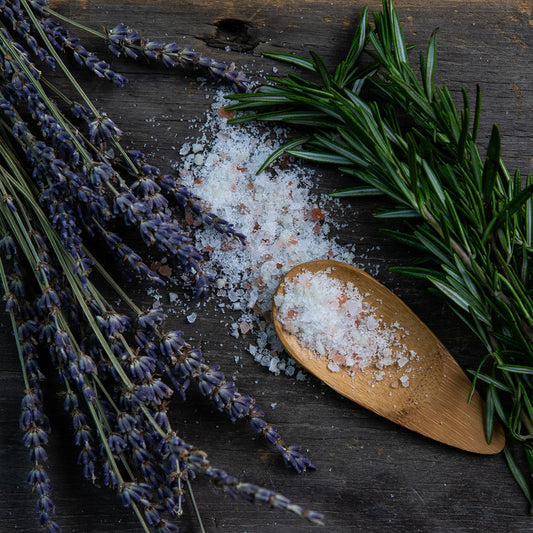
Aromatherapy is the use of aromatic plant essences like essential oils to support wellbeing and help maintain the balance of the mind, body, and spirit.
Read Post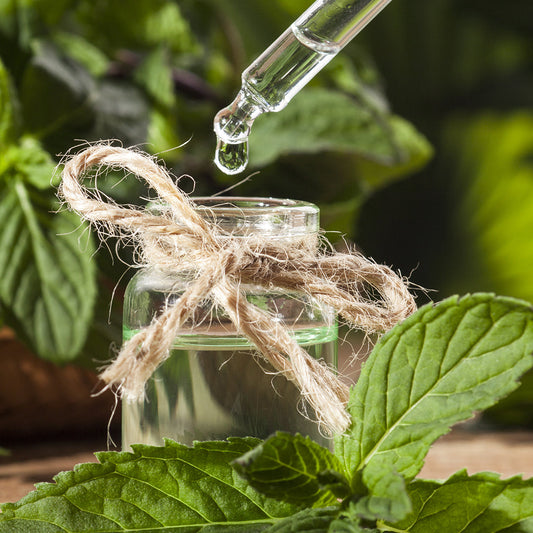
Powerfully fragrant and concentrated, essential oils are pure natural aromatic extracts from a aromatic plant leaves, flowers, needles, twigs, peels of fruit, seeds, bark, branches, and roots.
Read Post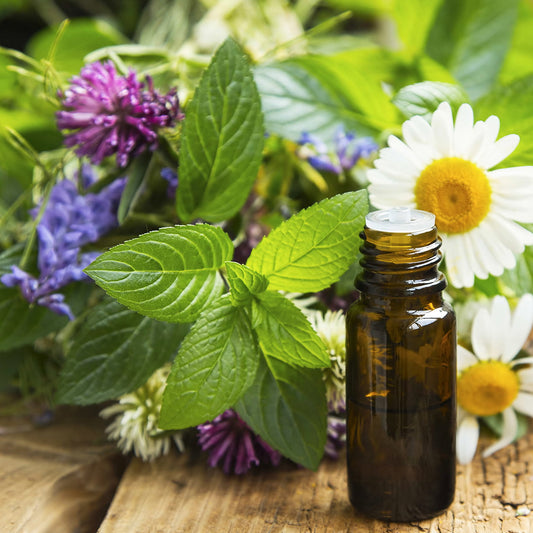
The synergistic composition of essential oils cannot be recreated in a laboratory. Fragrance oils do not offer the natural therapeutic advantages of true essential oils.
Read Post