

Neem & Tea Tree Body & Hair Shampoo
$4.50 - $12.95
- Out Of Stock
Many people search for help using the word “acne” or describe their skin as “acne‑prone,” even when they’re simply dealing with oily skin, visible pores, or skin that feels easily clogged.
While our products are not designed to treat acne as a medical condition, we can support the everyday experience of oily, shiny, or congested‑feeling skin — the kind of skin that often gets labeled as “acne‑prone” in casual conversation.

As a science‑minded brand, we believe it’s helpful to understand how oily skin works.
Your skin contains thousands of tiny openings commonly called pores.
Each pore is connected to a hair follicle, and many follicles have sebaceous glands that release sebum, the natural oil that keeps skin soft and protected.
Some people naturally produce more surface oil than others, especially on the face, chest, shoulders, and back, where oil glands are most active.
Oily skin often feels slick or shiny and may attract more dirt and debris throughout the day.
When excess oil mixes with dead skin cells or heavy products, the skin can feel clogged or congested. Some people describe this as “breakout‑prone,” even though congestion can happen with any skin type.
Understanding how your skin behaves — how much oil it produces, how quickly it feels clogged, and how it responds to different products — can help you choose a routine that feels balanced, clean, and comfortable.


Oily or acne‑prone skin can show up in many different ways, and most people notice it more by how it feels than by any single visible sign.
Some days the skin looks shiny within hours of washing; other days it feels heavy, congested, or easily clogged by products.

The surface may feel slick, the pores may look more noticeable, or the skin may simply feel out of balance — especially in humid weather, stressful seasons, or when using products that don’t agree with it.
Here are some of the most common experiences people describe:
Two common misconceptions can make oily skin feel worse:
“I shouldn’t moisturize.”
In reality, all skin types need hydration. When oily skin is dried out, it may respond by producing more oil.
“I need drying or harsh products.”
Over‑stripping the skin can disrupt its balance and lead to even more shine or sensitivity.
A gentle, balanced routine is often the most comfortable approach.
Cleansing is the foundation of any routine for oily or acne-prone skin, and it’s especially important to choose a cleanser that respects the skin’s natural balance.
When cleansing oily skin, the goal isn’t to strip it dry. Over-drying can trigger skin to produce even more oil, creating an ongoing cycle of shine and imbalance.
A mild, well-formulated natural soap gently lifts away excess surface oil for a fresh feel that doesn’t leave the skin feeling squeaky clean or tight.
 For oily or acne‑prone skin, many people prefer soaps made with ingredients traditionally used to support a clearer, more balanced feel:
These ingredients don’t “treat” acne — but a well-balanced natural soap bar creates a cleansing experience that feels especially comfortable for skin that tends to get shiny, congested, or easily clogged.
A few gentle reminders for best results:
A simple, gentle cleansing routine sets the stage for everything else.


Moisturizing is one of the most misunderstood steps for oily or acne-prone skin.
Many people assume that adding moisture will make their skin even shinier, but the opposite is often true.
 When the skin is stripped or dehydrated, it can feel tight on the surface while still producing excess oil underneath.
The addition of a lightweight, well‑balanced moisturizer can make a noticeable difference in how the skin behaves — less midday shine, less of that “greasy by noon” feeling, and a more comfortable, even texture.
Plant‑based moisturizers work especially well for this skin type because they absorb easily and support the skin’s natural moisture barrier.
Botanical oils like jojoba and squalane are particularly well‑loved because their structure is similar to the skin’s own natural lipids. This allows them to sink in quickly, feel lightweight, and help the skin maintain a sense of balance.
We use golden jojoba oil in all of our Organic Facial Oils, and our Whipped Squalane Face & Eye Cream is our best‑selling moisturizer. They offer moisture in a way that feels breathable, light, and in harmony with the skin’s natural tendencies.
Moisturizing isn’t about adding more oil — it’s about giving the skin what it needs to feel steady, supported, and comfortable.
If you’re exploring moisturizers, take your time reading the descriptions — each formula has its own texture and personality.
🌿 Explore our facial oils and moisturizers designed to keep oily skin comfortably balanced. See Help Me Choose Natural Facial Skin Care
👉 Learn More: What Are Face Oils & How To Use Them
Exfoliation can be helpful for oily or blemish‑prone skin, but only when it’s done with a very gentle touch.
Because oily skin naturally holds on to more surface buildup — makeup, excess oil, dead skin cells, and pollutants — the skin can start to feel dull or easily clogged. A light exfoliation helps lift away that buildup so the surface feels smoother and more refreshed.
 The key is to avoid overdoing it. Scrubbing too hard or exfoliating too often can leave the skin feeling irritated or stripped, which may lead to even more shine or sensitivity.
Gentle exfoliation is less about “deep cleaning” and more about helping the skin feel smooth, fresh, and ready to absorb moisture.
A soft, steady approach supports the skin’s natural turnover without disrupting its protective barrier.
For the face, a delicate touch is essential — think of exfoliation as a way to keep the surface smooth and receptive to moisture, not as a deep‑cleaning treatment.
For the body, slightly more texture can be comfortable, especially on areas like elbows, knees, or the backs of the arms.
Natural exfoliants like adzuki bean powder, fine sugars, clays, and charcoal offer a mild, tactile polish that helps remove surface debris without harshness.
When done thoughtfully, exfoliation becomes a simple ritual that helps oily or easily clogged‑feeling skin feel soft, balanced, and ready for the next step in your routine.
Many of our soaps incorporate these gentle exfoliants, making it easy to refresh the skin without adding an extra step.
Our Adzuki Bean Complexion Soap offers a beautifully mild exfoliation suitable for both face and body.
To find more soaps that provide gentle exfoliation, use the filter on the left side of the Natural Soap collection page and select “Helps With → Exfoliation.”
For those who prefer a dedicated exfoliant, our organic Whipped Body and Facial Sugar scrubs offer a soft, creamy polish that leaves the skin feeling renewed without stripping.
👉 Learn More: The Nitty Gritty of Exfoliation
Clay masks are one of the simplest and most satisfying ways to support oily or acne‑prone skin.
Clays have a natural ability to bind to excess surface oil and everyday buildup, leaving the skin feeling smoother, softer, and more refreshed.

For many people with oily or easily clogged‑feeling skin, using a clay mask becomes a small ritual that helps the complexion feel more balanced.
Each type of clay has its own personality. Bentonite offers a stronger sense of adsorption and a deep‑clean feel, while white kaolin is softer and more soothing.
Our clay masks are made with only natural clays and botanicals, keeping the formulas simple, earthy, and true to the ingredients themselves.
Because our clay masks are powdered, they offer a level of freshness and customization that pre‑mixed masks can’t match. You activate them with water right before use, creating a smooth, creamy paste that feels cool and grounding as it dries. This also means you can adjust the consistency — thinner for a lighter experience, thicker for a more traditional mask feel.
When using a clay mask, apply a thin layer, let it dry until it feels firm but not tight, and rinse gently with warm water. The goal isn’t to dry the skin out, but to give it a moment of clarity and reset.
Our Activated Charcoal Clay Face Mask is especially popular among people who describe their skin as oily, shiny, or easily congested. The blend of activated bamboo charcoal with bentonite and white kaolin creates a mask that feels deeply cleansing yet balanced, offering a refreshed, purified sensation without stripping the skin.
Clay masks don’t need to be complicated. They’re simply a way to give the skin a clean slate — a quiet moment where excess oil, buildup, and the day’s debris are lifted away, leaving the complexion feeling soft, smooth, and renewed.
🌿 Explore our Natural Botanical Clay Face Masks
👉 Learn More: How To Use Powdered Clay Face Masks
Facial steams offer a simple, comforting way to refresh oily or acne‑prone skin.
Warm steam softens the surface, encourages a light natural flush, and helps loosen the buildup that collects throughout the day — makeup, excess oil, and the fine layer of dead skin cells that can make the skin feel heavy or easily congested. It’s a gentle ritual that prepares the skin for a more effective cleanse.
 When botanicals are added to the steam, the experience becomes even more immersive.
As dried herbs meet warm water, they release their natural aromas and plant compounds into the air, creating a soft, spa‑like moment that feels both soothing and clarifying.
The warmth doesn’t “open pores” in a literal sense, but it does help the skin relax, making the surface more receptive to the rest of your routine.
For many, steaming becomes a small moment of pause, a way to reset both the skin and the senses.
For those who prefer not to steam — whether due to comfort, sensitivity, or simply personal preference — herbal toners offer a beautiful alternative.
A toner made from steeped botanicals gives the skin a fresh, hydrated feel without heat. It can be used after cleansing to remove any lingering residue or anytime the skin needs a light, refreshing boost.
Our Astringent and Problem Skin blends work beautifully as toners for oily or easily clogged‑feeling skin. Made from simple, plant‑based ingredients, it leaves the skin feeling clean, balanced, and lightly refreshed.
Whether you choose a warm facial steam or a cool botanical toner, the goal is the same: to give the skin a moment of clarity and hydration, creating a clean, comfortable canvas for the rest of your routine.
🌿 Explore our Facial Steams & Toners
🌿 Explore our Herbal Bathing Herbs (Bathtub Teas)
👉 Learn More: Herbal Facial Steams & Toners Recipes
Bath salts can be a surprisingly helpful part of caring for oily or acne‑prone skin, especially on the body.
 Mineral‑rich salts dissolve into warm water and create a softer, lightly textured bath that feels different from plain water.
This gentle mineral infusion helps loosen surface buildup, soften rough areas, and leave the skin feeling clean and refreshed without the need for added oils.
A salt soak can also help prepare the skin for the rest of your routine. The warm water softens the surface, making exfoliation feel smoother and allowing moisturizers to absorb more easily afterward. It’s a simple ritual that supports the skin without overwhelming it.
🌿 Explore our Bath Salt Blends
👉 Learn More: Organic Bath Salts & Recipes
When caring for oily or acne‑prone skin, a few common habits can unintentionally make the skin feel more unbalanced. Avoiding these helps keep the skin comfortable, steady, and less prone to that tight‑yet‑shiny feeling many people experience.
Over‑cleansing is one of the biggest culprits. Washing too often or using harsh, stripping cleansers can leave the surface feeling tight while prompting the skin to produce even more oil. A gentle, consistent cleansing routine is far more supportive.
It’s also helpful to avoid heavy, waxy, or highly occlusive products, especially those that sit on top of the skin rather than absorb into it. These can make oily or easily clogged‑feeling skin feel weighed down or congested.
Aggressive exfoliation is another thing to skip. Scrubbing too hard or too frequently can irritate the skin and disrupt its natural barrier. A light, steady approach keeps the surface smooth without causing sensitivity.
Finally, try to avoid picking or squeezing at blemishes. It can irritate the skin, prolong redness, and make the area feel more noticeable. Gentle care always leads to a calmer, more balanced complexion.
Keeping things simple, consistent, and non‑irritating helps oily or acne‑prone skin feel clearer, softer, and more at ease.
Oily or blemish-prone skin doesn’t need harsh treatment — it needs balance.
Gentle cleansing, light moisture, and simple, natural care often help skin feel calmer, clearer, and more comfortable over time.
Pay attention to how your skin responds and adjust your routine as its needs change.
For external use only. This product is not intended to diagnose, treat, cure, or prevent any disease. If you are on medication or have a medical skin condition, please consult with your health care provider.

Our face has different zones in which the skin can vary in thickness, texture, pore size and the number of oil-producing glands.
Each zone may have very different needs and require individual attention.
So, what happens if you have multiple facial skin issues, like dryness, oily spots, and blemishes?
The answer is Multi-Masking . . .
Multi-masking is exactly what it sounds like. Instead of applying one face mask over your entire face, you apply different masks to different areas of the face in order to treat multiple skincare concerns at the same time.
For more information please read our blog Multi-Masking and Targeted Application For Combination Facial Skin
Have you ever enjoyed the scent of a fragrant flower or herb? The fragrance comes from potent, aromatic compounds called essential oils found in the flowers, stems, seeds, bark, roots, fruits, and other parts of plants. It often requires several pounds of a plant to produce a single bottle of essential oil.
Essential oils not only give plants their unique scents but also help lure plant pollinators and protect plants from insects and other predators.
The chemical composition of essential oils may provide valuable psychological and physical aromatherapeutic benefits for some people.
It is important to note that to be a true essential oil, the oil must be isolated from the plant material by physical means only. Essential oils are NEVER extracted using solvents.
Although synthetic fragrances or "nature identical" oils are available at a much lower cost, only natural plant essential oils will provide any aromatherapeutic benefits.

What Are Essential Oils (Much more detail)
How Essential Oils Are Extracted
Why We Use Only Real Plant Essential Oils?
If you are pregnant or under a doctor's care for any medical condition, please consult your healthcare provider before using essential oils.
Pregnancy & Children: We do not provide information on the safety of essential oils during Pregnancy or for use in Children because the available information is very ambiguous and often contradictory. If you’re interested in using essential oils during pregnancy or with young children please do your own research and consult your doctor, midwife, or health care professional before use.
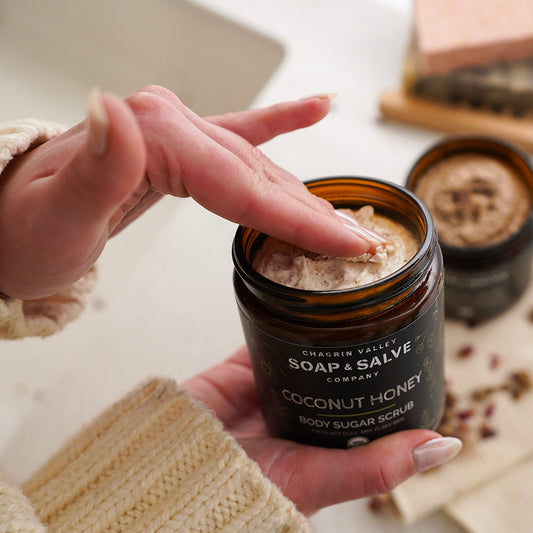
Get informed about exfoliation! Explore the basics, benefits, and best practices for exfoliating your skin so you can make informed decisions about your skincare. Exfoliation can help encourage cell turnover, unclog pores, allow moisturizers to penetrate more effectively, and refresh the skin.
Read Post
Clay facial masks are an easy way to pamper yourself and invigorate your skin. Creating an application technique that works for your skin will get you one step closer to a beautiful complexion.
Read Post
Our face has different zones in which the skin can vary in thickness, texture, pore size and the number of oil-producing glands. Each zone has different needs and requires individual attention.
Read Post
Sustainable, activated bamboo charcoal has become a key ingredient in many skincare products due to its natural ability to draw out dirt and debris from deep inside pores,
Read Post
People with severe allergies—please note: If you have severe anaphylactic-type reactions to ANY of the ingredients in ANY of our products, please do not buy our products. We have dedicated soap rooms and product rooms that are kept meticulously clean, but we cannot guarantee against possible cross-contamination of individual ingredients.
Chagrin Valley Soap & Craft is not responsible for any individual reaction to any particular ingredient. Each product description on our website includes a complete list of ingredients. People with sensitivities to any listed ingredient should not use the product. In case you are in doubt always try an allergy patch test and if at any time irritation occurs, discontinue use of the product.
The content and information on this website, provided by The Chagrin Valley Soap & Salve Company, is for educational purposes only and is in no way intended and should not be construed as medical advice to diagnose, treat, cure, or prevent any disease or health condition. The information regarding folklore or health-related benefits of certain ingredients is for educational purposes only. The information provided is not intended to prescribe or be taken as medical advice.
The information provided is not meant to substitute the advice provided by your personal physician or other medical professionals. Do not use the information found on this website to self-diagnose any medical conditions or treat any health problems or diseases. If you have medical concerns regarding yourself or your family you should seek the advice of qualified, licensed health professionals. Never disregard professional medical advice or delay in seeking it because of something you have read on this website.
This information has not been evaluated by the Food and Drug Administration. This notice is required by the Federal Food, Drug and Cosmetic Act.
Read our Full Medical Disclaimer.