Cocoa Butter & Olive natural shampoo bar with packaging on a wooden surface.
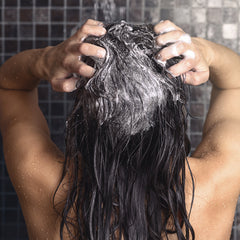
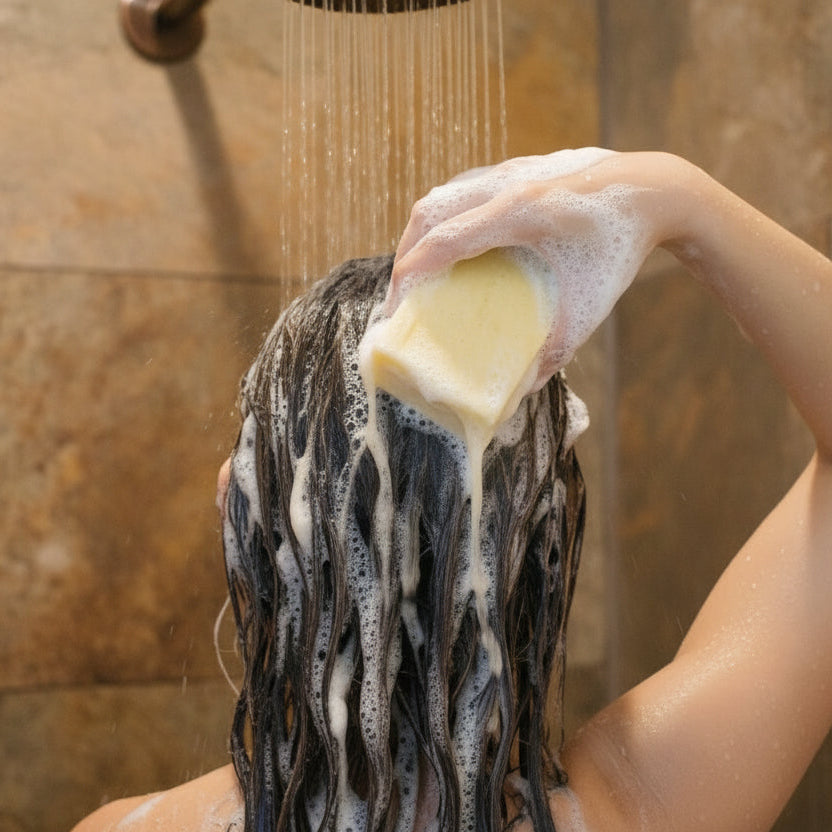
Person washing hair with a shampoo bar in a shower.

Shampoo Bar: Cocoa Butter & Olive

Cocoa Butter & Olive Shampoo Bar is a gentle, coconut oil–free bar made with three thoughtfully chosen oils: extra virgin olive oil, babassu oil, and unrefined cocoa butter. The result is a rich, creamy lather and a softly conditioning wash with no added scent — just the warm, natural aroma of real cocoa butter. A beautifully simple bar perfect for first-time shampoo bar users.

Size:
$11.95
oeffa
vegan
cruelty-free
non-gmo
made-in-the-usa
Product Overview

Good For: All Hair Types · Frizzy Hair · Body & Bounce · Coconut Oil Sensitivity

Ideal for first-time shampoo bar users.

Cocoa Butter & Olive is a study in simplicity. This natural shampoo bar was created for people who appreciate minimal formulas and a gentle, uncomplicated approach to washing hair.

Extra virgin olive oil forms the foundation of the bar, lending a smooth, conditioning character. Babassu oil adds creaminess and lift to the lather, giving the wash a rich, satisfying feel. Unrefined cocoa butter contributes structure and softness, shaping the bar’s signature creamy wash and its naturally warm, comforting character.

The result is a nourishing shampoo bar that’s gentle enough for daily use, easy on sensitive scalps, and versatile across many hair types.

Scent

There are no essential oils and no added fragrance — just the subtle, familiar aroma of natural cocoa butter.

Soft, warm, and lightly sweet in a natural way, offering a comforting scent for those who prefer unscented hair care or are sensitive to essential oils.

How It Feels in Use

The bar glides easily over wet hair, producing a lush, creamy lather that builds quickly without feeling fussy. The wash feels soft and cushioned on the scalp. After rinsing, hair feels clean yet comfortable — smooth through the lengths and lightly conditioned. Despite its simplicity, it’s the kind of bar that works beautifully across many hair types, often becoming a quiet favorite for people who never expected to love a shampoo bar at all.

Ingredients Behind the Bar

Every ingredient has a purpose, working together to create a balanced, refined shampoo bar for hair and scalp.

Highlights of this formula:

  • Extra Virgin Olive Oil: Contributes a smooth, lotion-like lather, brings a naturally soft conditioning quality to the bar, and supports a gentle, balanced wash.
  • Babassu Oil — Brings a light, airy smoothness to the lather and contributes a naturally soothing touch that helps the scalp feel calm and balanced,  while also adding body and manageability — especially to hair that feels dry or limp.
  • Cocoa Butter — Helps create a firm, long-lasting bar with a creamy, stable lather and a gentle, nourishing cleanse, along with its warm, familiar cocoa aroma

Cocoa Butter & Olive is proof that a shampoo bar doesn’t need a long ingredient list to be exceptional. Its simplicity is intentional, its feel unmistakable, and its appeal surprisingly broad — making it a wonderful choice for both longtime bar users and those trying one for the first time

Creamy lather. Gentle simplicity. Quietly beautiful hair.


🍃 NATURAL, VEGAN & ECO-FRIENDLY

Made without synthetic ingredients, fragrance oils, dyes, sulfates, silicones, or preservatives.

Packaged plastic-free in recyclable boxes for a zero-waste, eco-friendly choice.

Crafted with biodegradable, cruelty-free ingredients, including Certified Organic and non-GMO materials, responsibly sourced and ethically traded.

🍃 BIG & TRAVEL-FRIENDLY

Each bar weighs 5.6 oz (159 g) — long-lasting and TSA-friendly. Suitable for travel, the gym, or camping, and versatile enough to double as a body soap or shaving bar.

A sulfate-free, silicone-free, paraben-free natural shampoo

👉 Learn more, read The Ultimate Guide to Natural Shampoo Bars: Answers to Common Questions

How To Use

Why Is A Shampooing Technique Important?

Finding the right bar is important  but we believe that using the proper technique to wash your hair is  the best way to ensure a successful transition from synthetic shampoo to natural shampoo bars.

Our natural shampoo bars are a lot more concentrated than liquid shampoos. They contain extra oils and butters to nourish hair.

If you do not build a nice lather and rinse really well you will have areas that remain coated with the soap oils, which can make it look or feel “gummy.”

***Notice in the techniques below that we do NOT recommend lathering up the length of your hair with the shampoo bar. As you use your fingers to rinse the lather through the strands, there is enough shampoo to clean the length. These techniques help prevent coating your hair strands with shampoo residue.

If you are new to shampoo bars please our blog, "How to Use a Natural Shampoo Bar" for more detailed information. 


Our Favorite Technique

This technique helps prevent pockets of shampoo residue in the length of your hair especially if you have long or thick hair. 


Wet Hair: One of the most important steps is to begin with thoroughly wet hair--I mean a lot of water. Be sure that the water saturates your hair all the way down to the roots.


Create the Lather: There are two possible ways both of which help prevent pockets of shampoo residue left in your hair that can make hair feel tacky.

  • Create a nice foamy lather by rubbing the wet bar between your hands and use only the lather to wash your scalp. This is the best method for people with thick hair, curly hair, coarse coily/kinky hair, and those new to shampoo bars.
  • Create a nice foamy lather by rubbing the shampoo bar on the TOP of your head only. Rub in only one direction to prevent tangling. This method can work well for thinner hair types. 


How To Lather Using a Natural Shampoo BarMassage the Lather into your Scalp only at the roots of the hair until you work up a really good lather

  • It is very important to work the shampoo into your scalp with water and really build up a good lather so there are no patches of shampoo left on your hair.
  • Lathering up also allows the dirt and extra oils to be washed away.
  • If the lather is not foamy enough, add more water.

Using your Fingers like a Comb: smooth the lather down the length of your hair as you rinse with water. To prevent tangles, be sure to always work from the top down, use your fingers like a comb, not a mixer, and don't pile your hair on your head,


Rinse, rinse, rinse, rinse and rinse again. I cannot stress how important this step is to shampoo bar success. In order to remove the excess shampoo, which can leave a filmy feeling and weigh hair down, do NOT rush this step! The rinsing should take longer than washing and lathering time.

  • If your hair is long or thick, lift up sections of your hair to ensure that all of the shampoo is rinsed clean.
  • Don’t neglect parts of your head that are more difficult to reach, such as the nape of your neck or the back of your head.
  • Repeat if desired.

If your hair has a residue before or after shampooing, use an Apple Cider Vinegar Rinse or a baking soda clarifying rinse

FAQs

Frequently Asked Questions

Do Your Natural Soap And Shampoo Bars Have An Expiration Date?

The Short Answer

Yes And No!

Although handmade natural soaps usually get better with age, we recommend using our soaps within 12 months of purchase. Our scented soaps should be used within 3 months after removing them from the box.

Although the soaps will not be "spoiled" after that time, you may notice some changes as natural soap ages.

  • some natural colors may fade over time
  • the scents from pure natural essential oil scents will fade over time


The changes in color and scent happen even more quickly in our sample size bars.

These small natural soap bars have a much greater surface area to volume ratio which allows essential oils to evaporate from the surface more quickly. However, the scent may still be there when you lather up.

I have found some ancient bars hiding in my closet that years old. The scents were gone, but the lather was incredible!


The Long Answer

For a more detailed discussion please read our blog, "The Shelf Life, Color & Scent of an All Natural Soap."


How You Can Help Prolong Shelf-Life

  • Natural soaps need to breathe. Exposure to air promotes hardening of your soap and contributes to longer-lasting quality. Soap should be left unwrapped in their boxes or wrapped with breathable materials. Tight wrappers cause humid conditions by preventing evaporation of moisture.

  • Our soaps are packaged in breathable, recyclable, sustainable packaging! Keep your natural handmade soaps in a dry, cool place away from sunlight, excessive heat and humidity.

  • Our scented soaps, like Lavender Rosemary, can be placed in a muslin bag, old clean sock, or wrapped in a piece of cloth and put in your linen closet or dresser drawer to give a delightful fragrance to your linens and clothes while waiting to be used.

View Answer Page
What Do The Different Organic Symbols Mean?

We use two different organic symbols on our website.

Each symbol has a unique definition!

Organic Labels

The "certified organic" labeling has been developed by the USDA and refers to organic claims and labeling on food and personal care products in the United States. The USDA has very strict guidelines for the percentage of organic ingredients necessary to receive organic certification. Other countries have their own certification procedures, requirements, and standards. Labeling criteria and allowable ingredients differ from those in the US.

USDA Certified Organic Skin Care LogoThe USDA Organic Logo Label can be used on products that meet the standards of the first two tiers of the organic labeling system in which 95 - 100% of the ingredients are certified organic.

Most of our non-soap products fall into this category and display the USDA logo!

OEFFA is a USDA accredited organic certification agencyThe Certified Organic by OEFFA label is used in our company for two reasons . . .

Soaps and Shampoos: These products contain at least 8% of the sodium hydroxide due to the process of soapmaking. Our "organic" soap is about 87% to 92% organic, but the USDA standard states that a product must be made of 95-100% organic ingredients in order to bear the USDA Certified Organic seal shown above. We are also not allowed to use the words "organic soap" on the label.

Wildharvested Ingredients: When using any agricultural ingredient (any ingredient that has a biological origin) that is not certified organic the same labeling rules we use for soap apply.

The USDA rules for proper labeling state that the products may display the certifying agent's logo but not the USDA organic logo. Our USDA certifying agency is OEFFA (The Ohio Ecological Food and Farm Association). Their logo is displayed on our "organic" soaps and shampoos.

Why do some soap companies use the word "organic" on their labels--even though it is against the rules? Click Here to Read More about Rules for Organic Labeling of Soap!

Unofficial Labels

We sometimes use an unofficial symbol for products made with "natural" ingredients that do not meet the criteria for either label above. You may see this type of symbol on products, like the Dead Sea Black Clay, Bamboo Charcoal, and Loofah Pumice Foot Soaps and our Mud & Clay and Rosemary Mint Charcoal Shampoo Bars.

Organic certification is based on organic farming and agriculture standards. As a result, the list of allowable non-agricultural ingredients (like clay, salt, mud etc) is based on raw materials used in agriculture or food production. Unfortunately, ingredients like some Clays, Pumice, Dead Sea Mud and Bamboo Charcoal are not used in farming or food production and thus do not appear on the list.

Although it may seem long, this is really a very brief description. For more detailed information please read, "What Do All Of The Organic Labels Mean?"


View Answer Page

Recently Viewed Products